America, Crimea, and Ukraine: The Desirable over the Achievable
By Alexander G. Markovsky, AMERICAN THINKER
American-Russian relations are characterized by irreconcilable contradictions and the aloofness of history. The American official position is that Crimea-related sanctions will remain in place until Russia returns control of the peninsula to Ukraine. Moscow’s position is that Crimea has been “returned” – back to Russia.
The Crimea and Eastern Ukrainian conflicts are two of many ethnic conflicts that have become common in the post-Cold War period. In many countries arbitrarily created after the Second World War the unifying principle was the power of the state that forced citizens to tolerate a plethora of incompatibilities. Czechoslovakia, Yugoslavia, and Ukraine are prime products of this geopolitical engineering.
The collapse of the Soviet Union and the subsequent demise of the so-called “socialist camp” resulted in weakening or overthrowing the authoritarian regimes. The absence of enforcement gave rise to nationalistic aspirations that challenge the cohesiveness of the established order, in some instances, to the point of no order at all.
Read more…

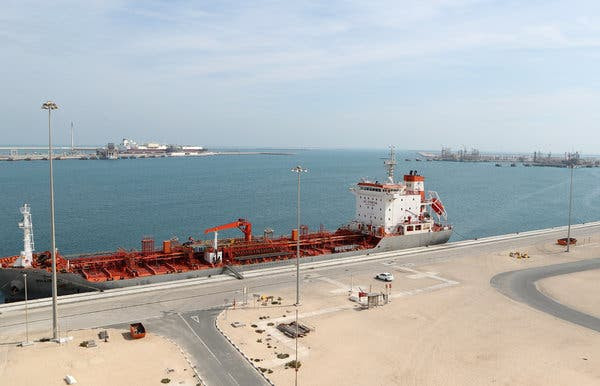 The Ras Laffan Industrial City, Qatar’s principal site for production of liquefied natural gas and gas-to-liquid, administrated by Qatar Petroleum, lies some 50 miles north of the capital Doha.Karim Jaafar/Agence France-Presse — Getty Images