
By
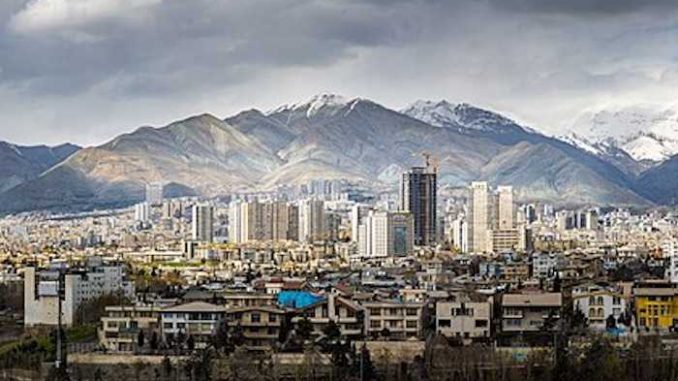 Tehran in a clean day by Amir Pashaei, Creative Commons Attribution-Share Alike 4.0
Iran, trying to force the IDF to stop hitting Hezbollah sites in Beirut, launched 11 ballistic missiles at Israel on June 7. They were all intercepted, causing no damage. But such an attack could not go unanswered. The IDF then responded, giving not as good as it got, but far better.
More on the damage it wrought can be found here: “Watch: IDF strikes key targets throughout Iran in response to missile barrages,” Jerusalem Post, June 8, 2026:
The IDF struck several targets throughout western Iran in retaliation for Iranian missile attacks on Israel on Monday morning.
The strikes come after sources told The Jerusalem Post on Sunday that Israeli officials were still deciding when and how hard to hit Iran, noting that a significant Israeli response to Tehran’s ceasefire breach was expected.
Earlier on Monday, a United States official told Axios that he did not expect an imminent Israeli retaliation against Iran. “I don’t think anything is imminent in terms of an Israeli strike,” he said.
Targets were hit in Tehran, Isfahan, Tabriz, and some other places in western Iran, while explosions have reportedly been heard in Karaj, outside of Tehran, according to Tasmin News Agency, an IRGC-affiliated outlet.
Additionally, Iran’s official state news agency, IRNA, reported that all flights in Tehran’s Mehrabad airport have been suspended until further notice.
The targets include a petrochemical complex near Iran’s southwestern city of Mahshahr, which the military confirmed was used to produce unique materials critical for Iran’s ballistic missile program.
The israeli [sic] Air Force struck several infrastructure sites at the complex, and the area has been evacuated, Iran’s Islamic Revolutionary Guard Corps-run Fars News Agency reported on Monday….
Unlike the most recent Iranian missile attack, that caused no casualties or damages, the IDF response has been effective, destroying both offensive weapons — long-range ballistic missile factories — and defensive weapons, including a large number of air defense radars that the Iranians had been furiously rebuilding-since their earlier destruction by Israel and the U.S. in June 2025 and in early 2026.
Stung by the IDF’s wide-ranging attacks, and after Trump called for both sides to stop their tit-for-tat exchanges, Tehran decided to announce that it would stop its own attacks on Israel, provided Israel stopped attacking Hezbollah sites in Beirut, thereby hoping to elicit the same promise from Israel. Israeli Prime Minister Benjamin Netanyahu was unwilling to oblige. He agreed to stop hitting Iran, but with the caveat that the IDF will continue striking Hezbollah in Beirut as long as the terror group launches more missile and drone attacks against northern Israel. The IDF is itching to launch far more devastating attacks on the Islamic Republic of Iran, and knows that another attack from Iran will be all the excuse it needs.


Leave a Reply
You must be logged in to post a comment.