
Peloni: Also see Revealing The Education Promoted by the Board of Peace
Nahum Bedein Center for Near East Policy Research Director David Bedein has released a ten point policy proposal urging Israel to strengthen oversight of Palestinian Authority and UNRWA institutions, increase security measures, and enforce existing agreements aimed at combating antisemitism and terrorism.
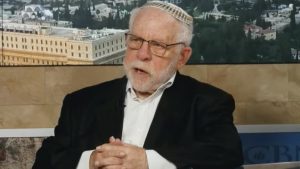 David Bedein discusses incitement in Gaza on November 11, 2025. Screengrab via Youtube.
David Bedein, Director of the Nahum Bedein Center for Near East Policy Research, has released a ten-point policy proposal calling on the Government of Israel to adopt a series of legislative, diplomatic, and security measures aimed at combating what he describes as entrenched antisemitism, incitement, and terrorism connected to the Palestinian Authority, UNRWA, and other regional actors.
The document, titled “Antisemitic Policies Thrive in Israel. Each Can Be Reversed,” outlines recommendations that Bedein argues would strengthen Israeli security while increasing oversight of foreign-funded institutions operating in Judea, Samaria, Jerusalem, and Gaza.
The proposals reflect positions long advocated by Bedein and his research organization, which has published investigations into Palestinian educational materials, UNRWA operations, and regional security issues.
While presented as policy recommendations rather than government findings, the document urges Israeli decision makers to adopt a more assertive approach in several key areas.
Reforming Palestinian Education
The first recommendation focuses on Palestinian Authority educational curricula.
Bedein argues that Israel should no longer remain passive regarding educational materials used in Palestinian Authority schools.
He contends that the curriculum contains antisemitic content and incitement against Israel and recommends that Israeli authorities insist upon comprehensive educational reform.
According to the proposal, meaningful oversight by the Knesset and Israel’s judicial system should accompany any future engagement regarding Palestinian education.
Increased Oversight of UNRWA
Several recommendations focus on the United Nations Relief and Works Agency for Palestine Refugees in the Near East, commonly known as UNRWA.
Bedein argues that international funding continues to flow to the agency without sufficient accountability.
The document states that approximately 58 percent of UNRWA’s budget is allocated to education and contends that the agency has adopted Palestinian Authority educational materials throughout its school system.
Bedein further argues that educational facilities should be monitored for signs of incitement and that donor governments should require greater transparency before providing additional financial support.
He calls for increased scrutiny of educational environments within UNRWA-administered schools and recommends broader international accountability regarding humanitarian assistance.
Humanitarian Aid and Financial Oversight
Another recommendation urges tighter monitoring of humanitarian aid provided to both the Palestinian Authority and UNRWA.
According to Bedein, aid intended for civilian purposes should be subject to enhanced oversight to ensure that resources are not diverted for military or terrorist activities.
The proposal argues that stronger auditing mechanisms would help reassure donor nations that humanitarian assistance is reaching its intended recipients.
Enforcement of Existing Agreements
Bedein also calls for greater enforcement of provisions contained in agreements signed between Israel, the United States, and the Palestine Liberation Organization following the Oslo Accords.
He argues that commitments requiring the removal of language calling for Israel’s destruction have not been fully implemented.
The proposal recommends that Israeli officials insist upon compliance with these existing obligations before advancing future diplomatic initiatives.
Security Measures in Jerusalem
The report further recommends stronger enforcement against Palestinian officials operating in Jerusalem whom Bedein alleges maintain affiliations with terrorist organizations.
It calls on Israeli authorities to review such activities and take appropriate legal and administrative action where warranted.
No specific individuals or organizations are identified within the proposal.
Commercial Safeguards
Another recommendation addresses Israeli companies supplying goods to Palestinian communities in Judea, Samaria, and Gaza.
Bedein argues that commercial suppliers should implement stronger verification procedures to ensure products cannot be diverted for terrorist purposes.
The proposal does not specify particular products but advocates broader due diligence throughout commercial supply chains.
Weapons Inspections
Drawing upon investigations conducted by his organization, Bedein states that his research team has documented alleged weapons storage inside some Palestinian educational and medical facilities.
The proposal recommends expanded inspections of schools and medical institutions where security concerns exist.
These assertions reflect the findings of Bedein’s organization and are presented in the proposal as justification for enhanced inspection policies.
Palestinian Security Forces
Bedein also raises concerns regarding elements of the Palestinian Security Forces.
The document argues that some personnel have allegedly participated in attacks against Israelis and recommends that the Israel Defense Forces respond decisively to such incidents whenever they occur.
The proposal does not cite specific operational cases but calls for a more immediate military response.
Monitoring Qatari Financial Activity
The final recommendation concerns Qatar’s financial presence in Israel.
Bedein argues that Israeli authorities should ensure Qatari funding is not directed toward organizations or activities that promote antisemitism.
The proposal recommends expanded financial oversight while maintaining transparency regarding foreign funding entering Israel.
Broader Policy Debate
Bedein’s recommendations contribute to ongoing debate within Israel regarding security policy, Palestinian education, UNRWA’s future, and oversight of foreign funding in the region.
Supporters of stronger oversight have argued that educational reform, financial accountability, and enhanced security measures are necessary to reduce incitement and improve regional stability.
Critics of some of these proposals have previously maintained that broad policy changes involving humanitarian organizations and Palestinian institutions should be carefully balanced against humanitarian considerations and international legal obligations.
The Nahum Bedein Center for Near East Policy Research has published numerous reports over the past two decades examining Palestinian educational materials, UNRWA operations, and Israeli security policy. The organization advocates what it describes as evidence-based research to inform public policy and governmental decision-making.


I thought UNRWA was banned. He wants to reform it?
@Sebastien
See here for an explanation:
https://www.israpundit.org/revealing-the-education-promoted-by-the-board-of-peace/
I just posted it.
@Peloni But he’s still calling it UNRWA in the article.
@Sebastien,
I think it is a distinction without a difference. The name is all that changed.
https://palwatch.org/page/695
– Hillary Clinton in 2007
(AI Overview “+4 Hillary Clinton served as a United States Senator from New York from January 3, 2001, to January 21, 2009. She was elected in November 2000 and re-elected in 2006, resigning early in 2009 to become the U.S. Secretary of State.” {in which capacity, ever the Alinskyite* opportunist and “ambidexter philosopher”**, she switched gears and became an Israel basher, again [As First Lady, in the 90s, she had pushed the Palestinianist narrative and lobbied her husband for Pal statehood.].
*”The issue isn’t the issue, power is the issue.” – Saul Alinsky. Both Hilary Clinton and Obama had been Alinskyite “community organizers” in their youth.)
**”Thomas Jefferson ambidexter philosopher AME Baptist Church NY end of slavery 1827″
” +17 Thomas Jefferson has been characterized in African American political thought as the “ambidexter philosopher”—a phrase capturing the deep paradox of a liberty-writing Enlightenment author who was also a lifelong slaveholder. This critical perspective intertwined with historic milestones like New York’s final abolition of slavery on July 4, 1827, celebrated by Black institutions including the African Methodist Episcopal (AME) and AME Zion communities which served as hubs for early civil rights activism.The “Ambidexter Philosopher” and SlaveryThe Paradox: Framed in Black historical discourse for holding two opposing positions—professing the ideals of human liberty while maintaining ownership of hundreds of enslaved people.Philosophical Legacy: His drafted words in the Declaration of Independence inspired free Black abolitionists, even as they sharply critiqued his racial prejudices and failure to enact universal emancipation during his lifetime.New York Emancipation in 1827The Timeline: New York’s gradual emancipation act, passed earlier, fully culminated on July 4, 1827, legally freeing the remaining enslaved individuals in the state.Community Celebration: African American leaders and ministers, such as Rev. Nathaniel Paul in Albany, delivered powerful addresses commemorating the end of bondage and anticipating universal freedom.The Role of AME and AME Zion Churches in New YorkThe Freedom Church: New York’s Mother A.M.E. Zion Church (founded in 1796) and sister congregations acted as sanctuaries, spiritual homes for figures like Sojourner Truth, and vital safehouses along the Underground Railroad.Post-1827 Activism: Following the 1827 abolition, these independent Black churches remained central organizing platforms to fight remaining Northern racism and agitate for the complete eradication of slavery nationwide.Would you like to explore Rev. Nathaniel Paul’s 1827 address, the history of Mother A.M.E. Zion Church, or deeper analysis on how early Black intellectuals viewed the Founding Fathers?”
My comment: It’s been how many generations of indoctrination? Will the teachers be bound by course material they abhor? Will the students be separated from their families and all other Arabs from birth? Will their radio, television, and internet access be restricted and individually monitored? Khomeini built his following by his followers circulating cassette tapes of his speeches, hand to hand.
The very premise of reforming an unrepentant nazified population just by switching out their books is silly on the face of it.
They must all be transferred to the Muslim countries that hate Israel anyway, preferably voluntarily. ” And, not:
“with all deliberate speed”
” +8 “With all deliberate speed” is a famous legal phrase from the 1955 U.S. Supreme Court ruling known as Brown v. Board of Education II (Brown II). The Court used these words to tell local authorities to desegregate public schools.Background and MeaningThe Origin: The phrase came from Chief Justice Earl Warren in the implementation ruling a year after the historic 1954 Brown v. Board of Education decision.The Goal: The Court wanted to end race segregation in public schools.The Problem: The words were very vague.Impact of the PhraseDelays: Local leaders used the vague wording to stall integration for many years.Resistance: Many southern states kept schools segregated instead of moving fast.Change: True progress took a long time because the order lacked a strict end date.”
David Bedein’s proposal list reminds us of Trump’s tale of the scorpion and of the snake. We essentially took the so-called Palestinians in and cared for them. They bite at every opportunity and are not only proud of that, they name their streets and institutions after their heroes.
We should enforce David Bedein’s proposals as much as possible.
Sure, the world will scream, but they would scream even more if we simply stopped caring for them. They would call it genocide.
@dreuveni
Psycho Jew-Haters.
https://lel817.substack.com/p/psycho-jew-haters?r=1q2uiq&utm_campaign=post&utm_medium=web&showWelcomeOnShare=true