
Gadi Eisenkot: The reassuring man with the troubling doctrine

Peloni:  A disturbing and revealing record for the man who would lead Israel in the next govt.

The former IDF chief running for prime minister commands respect, but his security concept and political alliances deserve tough scrutiny from voters

Eitan Chikli | TOI Blogs | Aug 11, 2026
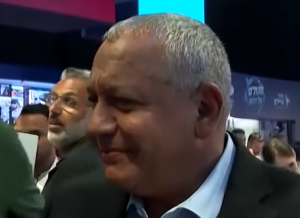
Gadi Eisenkot. Screengrab via Youtube.Gadi Eisenkot. Screengrab via Youtube.

As Israel approaches the October 27, 2026 elections, Gadi Eisenkot possesses an advantage that few of his rivals can match: he is reassuring.

A former IDF chief of staff, sober in manner and largely averse to political theatrics and grandstanding, he projects a down-to-earth decency that naturally inspires sympathy and trust. Added to this is a family tragedy that has deeply touched Israelis: his son Gal was killed in Gaza in December 2023, his nephew Maor Cohen Eisenkot the following day, and another nephew, Yogev Pazy, in November 2024.

Such personal loss, combined with a lifetime of service to the country, commands respect.

But an election is not a contest of personal virtues. Israel will be choosing a prime minister. It is therefore necessary to look beyond the reassuring man and examine the doctrine he represents.

When several episodes from Eisenkot’s career are considered together, a pattern emerges: he has often seemed to approach Israel’s security primarily in terms of managing, limiting and accommodating threats rather than fundamentally altering the balance of power.

What may be presented as realism can, under certain circumstances, become a doctrine of resignation. And that is where the problem begins.

The gamble of a smaller army

The first issue concerns Eisenkot’s tenure as IDF chief of staff from 2015 to 2019.

The multi-year Gideon Plan reduced personnel, restructured units and significantly cut the number of reservists as part of a concept favoring a smaller, more technological and more precise military.

It was during this period that reserve Maj.-Gen. Yitzhak Brik issued some of his gravest warnings. He criticized the state of logistics, emergency stockpiles, maintenance, technical manpower and, above all, the actual ability of Israel’s ground forces to sustain a prolonged war.

Eisenkot challenged Brik’s assessment and had his findings examined by an internal committee. Brik, for his part, argued that the General Staff was refusing to confront the army’s true condition.

After October 7, that controversy inevitably takes on a different significance.

Brik may not have been right about everything, and Eisenkot cannot be held solely responsible for a doctrine that had developed over many years throughout Israel’s security establishment. Yet the question remains: did he contribute to building an army that was too small and too dependent on intelligence, technology and air power to cope with a prolonged regional war?

The gamble on economic moderation

Even more revealing is Eisenkot’s approach to relations with the Palestinians.

At the height of a terrorist wave in 2016, Eisenkot was already defending the employment in Israel of some 120,000 Palestinians from Judea and Samaria. His reasoning was explicit: their salaries supported several hundred thousand people and therefore constituted, in his view, a moderating factor.

He later argued that allowing roughly 150,000 Palestinian workers into Israel helped contain violence. Even after October 7, he has continued to contemplate the large-scale return of Palestinian workers to Israel. In July 2026, Eisenkot spoke in favor of eventually allowing between 100,000 and 150,000 Palestinian workers into Israel, based on the same underlying rationale.

This is not merely an economic policy. It is a doctrine: according to this approach, giving the Palestinian population more to lose economically should reduce the appeal of terrorism.

In a different form, this was also one of the elements of the conceptzia applied to Gaza before October 7: work permits, improved living standards and economic interests were expected to contribute to preserving calm.

We know how that concept ended.

The strategic question is therefore unavoidable: can Israel still base its security on the assumption that economic prosperity will neutralize a radical nationalist, religious or Islamist ideology?

Eisenkot appears to continue believing that it can.

From Lebanon to security zones

This philosophy is not new.

Eisenkot served as Ehud Barak’s military secretary when Barak decided on Israel’s unilateral withdrawal from southern Lebanon in May 2000. Eisenkot has since repeatedly expressed pride in having supported that decision.

The withdrawal ended a costly war of attrition. But Hezbollah Secretary General Hassan Nasrallah also interpreted it as proof that Israeli society, subjected to sufficient pressure, could eventually be forced to retreat. Hezbollah was subsequently able to establish itself directly along Israel’s border and spend two decades constructing an enormous military infrastructure.

Even today, Eisenkot tends to view the security zones established in Gaza, Lebanon or Syria primarily as “means” or “levers” for obtaining future arrangements, rather than necessarily as strategic depth worth retaining.

After October 7, such confidence in security arrangements deserves serious scrutiny.

Nasrallah and the limits of operational morality

An older presentation by Eisenkot about the Second Lebanon War is equally revealing.

He recounted that the IDF had identified buildings in Beirut associated with Hassan Nasrallah. Rather than striking immediately, the army warned the civilian population, dropped leaflets and waited before attacking. Eisenkot concluded: “I think this demonstrates the morality of the IDF.” The statement appears in an INSS publication dealing with the military and strategy.

The episode raises a question that can no longer be avoided after seeing what Hezbollah eventually became: should military morality be measured solely in terms of the immediate risk to enemy civilians, or must it also take into account the future cost of allowing an enemy leader to survive and spend years building a massive army on Israel’s border?

It is legitimate to ask whether restraint that appears morally admirable in the short term can sometimes produce a far greater human cost in the long term.

Nasrallah survived for another eighteen years. Under his leadership, Hezbollah built a gigantic military force designed to fight Israel.

The hostages: Prudence or an underestimation of military power?

The same tendency reappeared during the Gaza war.

In January 2024, Eisenkot argued that it was impossible to bring the hostages home alive quickly without reaching an agreement and described as an “illusion” the hope that they could be recovered primarily through military pressure.

After leaving the war cabinet, he advocated what could reasonably be described as “capitulation” to Hamas’s demands in order to guarantee the hostages’ survival.

Subsequent events, driven by massive IDF military pressure, showed that his assessment was mistaken and that he had underestimated the necessity and potential effectiveness of force.

The chronology is also striking. Eisenkot left the war cabinet on June 9, 2024. In the months that followed, Israel eliminated Mohammed Deif, Fuad Shukr, Ibrahim Aqil, Hassan Nasrallah and Yahya Sinwar, severely disrupted Hezbollah and dared to strike military targets directly inside Iran.

In light of the caution Eisenkot had consistently advocated while serving in the cabinet, the question deserves to be asked: would he have approved the same succession of high-risk initiatives?

Criticism of Eisenkot therefore often begins with his understanding of the limits of Israeli power. Prudence can certainly be a virtue. But it can also become a weakness when it leads a leader to regard as impossible what boldness and sustained military pressure may ultimately make possible.

Kaplan, Brothers in Arms and Eisenkot’s real political position

The crisis of 2023 also provides a clearer picture of Eisenkot’s ideological position.

He personally participated in protests against the judicial reform and marched alongside Brothers in Arms, describing its members as “patriots who love the country.”

The problem is that Brothers in Arms was not merely a civilian protest movement. A significant element of its strategy involved announcements by volunteer reservists — including pilots, intelligence personnel and members of elite units — that they would stop volunteering for reserve duty if the government continued with its reform.

Eisenkot refused to describe those individual decisions as “refusal to serve.” He emphasized the legal right of volunteers to terminate their voluntary reserve service and described such a choice as a “personal and moral” decision, while warning that collective action could cross the line into rebellion.

Yet when a pilot or member of an indispensable military unit announces that he will no longer serve if a democratically elected government pursues a policy he opposes, the IDF’s operational readiness becomes an instrument of political pressure.

And that is precisely what a former chief of staff should have rejected without ambiguity.

This episode therefore also helps clarify Eisenkot’s supposed “centrism.”

When his closeness to the Kaplan protest camp and Brothers in Arms is considered alongside his approach to the Palestinian issue, his preference for territorial arrangements and the alliances he is now contemplating, his political position appears considerably less neutral.

The political future

His extreme caution is accompanied by a troubling degree of political ambiguity.

Eisenkot is currently working to coordinate what he calls the “Zionist majority” with Bennett, Lapid and Liberman, but also with Yair Golan — a highly controversial political figure in Israel — and his far-left party.

There is no basis for claiming that Eisenkot has promised Golan a major ministry; doing so would go beyond the facts. But a government dependent on the Democrats would inevitably have to take their political weight into account.

A similar question arises regarding Mansour Abbas, leader of the Islamist Ra’am party. The current campaign has made clear that Eisenkot refuses to treat Ra’am as an inherently unacceptable political partner, even as he seeks to secure an independent Zionist majority.

Even more revealing was Eisenkot’s comparison with Arab influencer Yoseph Haddad when defending his attitude toward Abbas.

But what, politically, do Haddad — an Israeli Christian Arab and former Golani soldier wounded while serving Israel — and Mansour Abbas, leader of a party originating in the Islamic Movement, actually share other than their Arab background?

Conflating ethnic identity with political ideology in this way is, to say the least, surprising, and raises questions about Eisenkot’s political judgment.

His choices are entirely legitimate in democratic terms. But right-wing and center-right voters who see Eisenkot simply as a “reasonable” former chief of staff should understand what kind of coalition his candidacy might ultimately produce.

Conclusion

This, ultimately, is the central ambiguity surrounding Gadi Eisenkot.

The man inspires respect, confidence and sympathy. But a prime minister should not be chosen for his affability or his personal story.

He must be judged by his discernment, strategic vision, authority, alliances and ability to make decisions when circumstances demand something more than caution.

On each of these fronts, Eisenkot leaves serious questions unanswered.

His security doctrine remains marked by a culture of managing threats rather than decisively transforming them. His political positioning now places him clearly closer to the left and the Kaplan protest camp. Several of his past assessments have proved questionable, and in some cases profoundly mistaken. And his temperament may prove inadequate when what is required is the ability to impose a clear direction on a country at war.

The problem with Eisenkot, therefore, is not that he is a frightening man.

It is almost the opposite: he is reassuring enough that voters may fail to notice, until it is too late, what his ideas, alliances and weaknesses could mean once he is in power.

About the Author
The author holds a Doctor of Hebrew Letters from the Jewish Theological Seminary of New York and an MPA from Harvard University’s Kennedy School of Government. He is the former director of the TALI Education Fund and former rector of Universidad Hebraica in Mexico. He is also the father of Minister Amichai Chikli.

Israpundit is entirely dependent on readers support. Please help me continue educating people with the truth about what is going on in Israel and around the world.

USD:

ILS:

CDN:

August 13, 2026 | 5 Comments »

Leave a Reply

5 Comments / 5 Comments

  1. “Peace at Last: Palestine in 2013
    After Israel gave the Palestinians everything they wanted, the newly formed Palestinian government just wanted a few more things.”
    May 3, 2011 by Steven Plaut

    “It was in the year 2013. The Israelis at long last gave up their attempts to resist the pressures of the world. Their newly elected national unity government approved the plan. The Palestinians, led by a coalition of the PLO and the Hamas, had already earlier announced the creation of a Palestinian state. Israel’s Left had been holding weekly protests in support of Palestinian statehood. When the UN had officially and unanimously called for such a state, even the United States of Barack Obama voted in favor.The national unity government of Israel announced that Israel was willing to accept the unanimous UN proposal for peace, supported by every single country in the world. Israel would return to its pre-1967 borders, remove all Jewish settlements from the territories of the new state of Palestine, recognize Palestine, and grant Palestine all of East Jerusalem, that is, all of the city located east of a line running north-south through Zion Square, renamed Martyrs’ Square.

    The world had not seen celebrations like this, celebrations that greeted the Israeli decision and the creation of Palestine, since the fall of the Berlin Wall or the transfer of power in South Africa to the black majority. All-night celebrations were held in every city of the planet, but none so enthusiastic as the party held in Tel Aviv in Rabin Square. Speaker after speaker appeared under a banner “Liberation at Last” and praised the decision to agree to the terms of the accord as the ultimate completion of the work and dreams of Yitzhak Rabin.
    The settlers were marched out of the lands of Palestine at bayonet point, with crowds of jeering Israeli leftists pelting them with garbage as they moved into their temporary transit camps inside Green-Line Israel. Liberal Jews in the United States organized a march in Washington to celebrate. ”Peace at Last” was the number one pop single everywhere.

    The State Department sent out a message urging Israel and Palestine to conduct good-faith negotiations and round-the-clock talks on all outstanding issues of disagreement still separating the two sovereign states. At long last, there were two states for two peoples. Land had been exchanged for peace. Peace had at long last broken out in the world´s most troubled region.
    The morning after the Palestine Independence Celebrations, the message arrived in the Israeli parliament, brought in by special messenger. The newly formed government of Palestine had only a small number of issues it would like to discuss with Israel. It proposed that peaceful relations be officially consummated, as soon as Israel turned over the Galilee and the Negev to Palestine.

    Israeli cabinet ministers were nonplussed. We thought we had alreadysettled all outstanding territorial issues by giving the Palestinians everything, they protested. The spokesman for the Palestine War Ministry explained: the Galilee was obviously part of the Arab homeland. It was filled with many Arabs and in many areas had an Arab population majority. Israel was holding 100% of the Galilee territory, while Palestine held none at all, and surely that was unfair. As for the Negev, it too has large areas with Arab or Bedouin majorities, but is in fact also needed by the Palestinians so that Palestine can settle the many Palestinian refugees from around the world in lands and new homes.
    Israel´s government preferred not to give offense and sour the new relations, and so offered to take the proposal under consideration. Within weeks, endorsements of the Palestinian proposal for stripping Israel of the Galilee and the Negev were coming from a variety of sources. The Arab League endorsed it. The EU approved a French proposal that the Galilee and Negev be transferred to Palestine in stages over 3 years. Within Israel, many voices were heard in favor of the proposal. Large rallies were held on the university campuses, organized by leftist faculty members. Sociologists from around the world produced studies showing that these Arabs were victims of horrible discrimination and that Israel as a state is characterized by institutional racism. Israeli poets and novelists wrote passionate appeals for support of the Galilee and Negev ‘Others.’

    When Israel´s cabinet rejected the proposal, the pressures mounted. A Galilee and Negev Liberation Organization (GNLO) was founded and immediately granted recognition by the UN General Assembly. It established representative consulate facilities in 143 countries.
    Weeks later, the infiltrations began. Squads of terrorists from Gaza and the West Bank infiltrated Israel through the new borders separating Palestine and Israel. The border fences were reinforced, but to no avail. The US State Department proposed that Israel defuse the situation by considering compromise on the matters of the Galilee and Negev.
    Six months later, the ‘victims of Jewish discrimination’ in the Galilee and Negev decided to escalate their protests. Gangs of Arabs lynched Jews throughout the disputed territories. Roadblocks were set up, and entire families of Jews were dragged from their cars by the activists and militants, and beaten to death or doused with flames. The EU sent in observers, but warned Israel that there is no military solution to the problems of terrorism and violence. When Israel arrested gang leaders from the riots, the General Assembly denounced Israeli state terrorism against Galilee and Negev Arabs. French universities gave the pogrom leaders honorary doctorates. Dozens of universities around the world held special Israel Apartheid Week events to denounce the rump Zionist entity.

    Meanwhile, boycotts of Israel arose throughout Europe.
    Israel´s own leftists launched a Movement against Apartheid, and the foreign press reported that 400,000 protested attended a rally by the Movement in Rabin Square. Cars around Israel had bumper stickers that read “My Son Will Not Die for Nazareth” and “Peace Now”. The Israeli Left urged people to refuse to do army service outside metropolitan Tel Aviv. The Israeli Labor Party proposed erecting a series of separating barriers throughout the Galilee under the slogan “Good Fences Make Good Neighbors”.
    But Palestine could not sit idly by. Even before the formal demands by Palestine for the Negev and the Galilee were presented, Qassam rockets and mortars were being fired into Israel from Tul Karem, Beit Jalah, and other towns in Palestine. Over time, the rocket attacks escalated. Barrages of rockets and mortars drenched Israeli cities. The death toll rose to 1,000 Israelis per month. The White House and State Department threatened to cut off all supplies from Israel if it dared to launch reprisal raids against independent Palestine. Large cargo ships from Turkey and Egypt, laden with advanced arms, entered the besieged port of Acre to provide munitions to the Galilee militants. Thousands of volunteers streamed into Palestine from around the world to assist in the campaign to rescue the Galilee and Negev Arabs from Israeli oppression.
    On the afternoon of Yom Kippur, tank columns from Palestine cut Israel in two just north of Tul Karem, near Netanya. Palestine offered to withdraw in exchange for immediately transferring the Negev and Galilee to its control.

    Meanwhile, outside Israel, synagogues in Belgium and France were torched. Teach-ins for the Negev and the Galilee were held on US campuses. A new conference was called in Durban to denounce Israeli apartheid. The White House insisted that Israel not use force to expel the invading Palestine troops who had divided the country, for the dispute was a matter for negotiations and dialogue.
    Increasing numbers of Israeli politicians urged that Israel respond to the situation by granting limited autonomy to the Negev and the Galilee. The Americans offered to send in ground troops to protect the remaining Israeli territories, if Israel would only decide to accept the proposal to give up the Negev and Galilee. Let´s have peace in the hills that Jesus roamed at long last, suggested the President.
    Jews living in the Galilee and Negev were under siege everywhere and the roads were unsafe. The road through the Negev to Eilat was cut by Arab gangs in four places. Leftist Israeli professors officially joined the Arab militias fighting for liberation, as did solidarity protesters from Western countries. Two of the latter blew themselves up on a Jewish school bus to show their solidarity with the oppressed Arabs. Ahmed Tibi, head of the largest Galilee militia, insisted he was doing everything possible to stop the suicide attacks on buses and cafes in Tel Aviv and Haifa by Arab activists from the Galilee, but the Americans demanded that he do more. The UK demanded 100% effort to stop the violence.

    The Negev and Galilee liberation organizations raised their flags over their towns and proposed that the Jews living in their territories be resettled elsewhere. The Palestine War Ministry was shipping them guns and explosives. The first word came of a detention camp north of Nazareth in which Jews expelled from their Galilee homes were being concentrated, with a second camp opened in the Negev near Rahat.
    Strange black smoke rose from the chimneys…”

    https://www.frontpagemag.com/peace-last-palestine-2013-steven-plaut/

  2. Eiisenkot as IDF Chief Pushed to Transfer Land to the ‘PA’

    By: C14 Desk
    Editor: Asaf Nissan

    https://www.c14news.com/article/1501633

    Col. (res.) Hezi Nehama, former commander of the Menashe Regional Brigade, revealed on Tuesday that then-IDF Chief of Staff Gadi Eizenkot advocated ceding Area C lands to the ‘Palestinian’ Authority in 2017. Recounting a field tour overlooking the evacuated Jewish community of Sa-Nur in northern Samaria, Nehama stated that when he urged re-establishing an Israeli military foothold, Eizenkot turned to senior generals and proposed transferring Israeli-controlled territory to ‘Palestinian’ governance as “confidence-building gestures.”

    Col. (res.) Hezi Nehama, former commander of the Menashe Regional Brigade, asserted on Tuesday in a radio interview with Yinon Magal on 103FM that former IDF Chief of Staff Gadi Eizenkot sought in 2017 to advance the transfer of land from Area C to Areas A and B as “confidence-building measures” toward the ‘Palestinians’.

    Gadi Eizenkot portrays himself as straightforward and right-leaning. I was the Menashe brigade commander,” Nehama said. “I stood with Gadi Eizenkot at the end of the intifada, what was termed the lone-wolf intifada, in 2017. He was chief of staff, I was brigade commander, and we were standing on the hilltop in Sa-Nur.”

    According to Nehama, he turned to Eizenkot and told him: “Chief of Staff, in 2005 we removed the communities of Ganim, Kadim, Sa-Nur, and Homesh from here. It is time to restore our foothold here, because this is Area C.” However, Nehama claimed that Eizenkot’s response was entirely the opposite: “He grabs the head of Central Command and the division commander and says to them in these exact words: ‘This is the place where we can grant more benefits to the ‘Palestinians’. We can take more Area C lands and transfer them to become Area A and B territories.’”

    Radio host Yinon Magal pressed to clarify the account, asking: “He was saying to convince the Prime Minister to concede more territory, to transfer it into Areas A and B?” Nehama confirmed: “Yes. Confidence-building measures following the lone-wolf intifada. That is the man.”

    • chelm buttered the wrong side of the bread

      The wise men and elders of Chelm concluded that the bread fell buttered-side up because it had been buttered on the wrong side.

      In this classic Jewish folktale, a villager drops a slice of buttered bread and is shocked when it lands buttered-side up instead of facing down like the laws of physics dictate. After days of intense fasting, praying, and debating by the town council, the sages arrive at the ultimate logical solution: the mistake was not in gravity, but in the housewife’s application of the butter. [1]

      Would you like to hear another classic story about the wise men of Chelm (such as how they tried to catch the moon or measure a river)?