
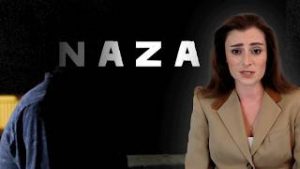
 Video Loads Below
A new documentary about Israel’s conduct of the war in Gaza has made serious allegations about how the IDF selects targets and assesses potential civilian casualties.
NAZA relies heavily on testimony from 24 anonymous Israeli military and intelligence personnel to portray a system in which large numbers of civilian deaths were knowingly accepted and artificial intelligence allegedly played a significant role in identifying targets. The IDF has strongly rejected that portrayal.
UKLFI Charitable Trust has not seen the documentary itself. This interview is based on published reports about its contents, the film’s trailer and a clip that has circulated publicly.
In this interview, UKLFI Charitable Trust Legal Director Natasha Hausdorff examines the allegations against the legal framework governing armed conflict.
She explains the principle of proportionality and why anticipating potential civilian casualties does not, in itself, make an attack unlawful. Hausdorff argues that assessing expected civilian harm before a strike is an essential part of complying with the law of armed conflict, rather than evidence of an intention to harm.
The discussion also examines one of the documentary’s most striking reported allegations: that an IDF attack was approved in which as many as 500 civilians could be killed to eliminate a single Hamas target. The IDF has described that claim as “completely false”. Hausdorff discusses both the evidential problems surrounding the allegation and the legal question it raises: international humanitarian law does not prescribe a fixed numerical ceiling for civilian casualties. Proportionality requires expected civilian harm to be assessed against the concrete and direct military advantage anticipated in the particular attack.
Hausdorff also addresses claims concerning the IDF’s use of artificial intelligence, including systems such as Lavender and Habsora. She discusses the IDF’s stated position that technological systems assist intelligence analysis but do not make decisions to attack, which remain decisions for human personnel. The IDF’s published account says each strike requires an individual assessment of anticipated military advantage and expected civilian harm.
The interview considers how much evidential weight can be placed on anonymous testimony when the identities, roles, access and first-hand knowledge of sources cannot independently be examined; the distinction between allegations concerning individual incidents and evidence of a systematic IDF policy; the legal significance of Hamas operating within a densely populated civilian environment; and allegations that Israel is being judged by standards not applied to other Western militaries.
Hausdorff concludes that the material described publicly does not establish the systematic policy alleged by the filmmakers. She also stresses that this doesn’t mean every individual strike during the war was lawful and that specific allegations with identifiable dates and locations should be investigated.
References
Additional Protocol I to the Geneva Conventions, Article 51 – Protection of the Civilian Population https://ihl-databases.icrc.org/en/ihl-treaties/api-1977/article-51
Rome Statute of the International Criminal Court https://www.icc-cpi.int/sites/default/files/2024-05/Rome-Statute-eng.pdf
IDF Targeting Methods During the First Weeks of the Hamas-Israel War https://www.idf.il/en/mini-sites/idf-press-releases-israel-at-war/january-25-pr/idf-targeting-methods-during-the-first-weeks-of-the-hamas-israel-war-response-to-a-new-york-times-query-published-january-26-2025/
The IDF’s Use of Data Technologies in Intelligence Processing https://www.idf.il/en/mini-sites/idf-press-releases-israel-at-war/june-24-pr/the-idfs-use-of-data-technologies-in-intelligence-processing-published-june-18-2024/
International Court of Justice: Judgment of 26/2/2007 in Bosnia and Herzegovina v Serbia and Montenegro https://www.icj-cij.org/case/91/judgments
About Natasha Hausdorff
Natasha Hausdorff is an international lawyer specialising in international law, foreign affairs & national security. She is Legal Director of UKLFI Charitable Trust and a sought-after commentator on the law of armed conflict, the International Criminal Court and international humanitarian law. She has addressed governments, legislators, international organisations and media audiences around the world on legal issues relating to Israel and international law.
Footage Notice
This video contains limited excerpts of third-party material used solely for the purposes of news reporting, criticism, review and commentary.


Leave a Reply
You must be logged in to post a comment.