
by Bassam Tawil • Gatestone Institute • October 12, 2026 at 5:00 am
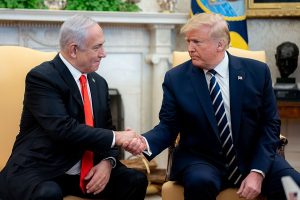 The question is no longer simply what Washington and Jerusalem have achieved together. It is whether they can turn those achievements into lasting security. Pictured: President Donald J. Trump with Israeli Prime Minister Benjamin Netanyahu Monday, Jan. 27, 2020, in the Oval Office of the White House. (By The White House, Public Domain, Wikipedia)
- The Middle East… remains far from stable. Hamas continues to resist disarmament, Iran remains a major threat, and Hezbollah’s armed presence in Lebanon continues to undermine the authority of the Lebanese state. The future of Gaza, including who will govern it and who will control its weapons, stands unresolved.
- Can Gaza really have a new beginning while the organization that launched the October 7, 2023 massacre retains the ability to obstruct the transition and launch more massacres — not just of Israelis but of its own citizens and other neighbors?
- The achievements of recent months could be weakened, or even reversed, if the remaining challenges are left unresolved.
- The question is no longer simply what Washington and Jerusalem have achieved together. It is whether they can turn those achievements into lasting security.
- A ceasefire without disarmament, a transitional administration without operational authority, and military victories without a strategy for the future will leave the region exposed to endless instability.
- The task ahead is therefore clear: turn the gains already made into a strategic reality in which Palestinians in Gaza can live under civilian government rather than an armed factional rule; in which Israel’s security is strengthened, and in which Iran and its Middle Eastern allies can no longer threaten its own people or the region in any way.
Over the past year and a half, the Middle East has undergone dramatic changes. Israel, increasingly encircled for decades by an Iranian “noose of fire” on seven fronts, inflicted severe damage on its enemies’ military capabilities; the United States finally demonstrated its willingness to use military force against the Islamic Republic of Iran, and a US-backed agreement brought home all the Israeli hostages still held by Hamas.
President Donald J. Trump and Israeli Prime Minister Benjamin Netanyahu played central roles in these developments. Their partnership combined America’s diplomatic leverage and military power with Israel’s intelligence capabilities and military operations.


Leave a Reply
You must be logged in to post a comment.