
By Oded J.K. Faran and Walter E. Block
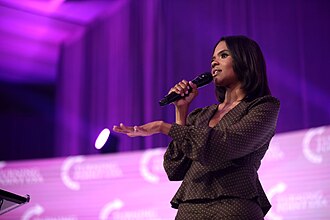 Candace Owens speaking with attendees at the 2021. By Gage Skidmore from Surprise, AZ, United States of America – Candace Owens, CC BY-SA 2.0, Wikipedia
Dear Ms. Owens,
We have been observing your recent commentary on the tragic death of Charlie Kirk with considerable interest. You have built a substantial platform on the foundation of aggressive skepticism, refusing to accept official narratives at face value and demanding transparency from public figures. Given these principles, we trust you will appreciate when we apply the same rigorous scrutiny to your own conduct and circumstances.
After all, you have established the standard. You have demonstrated that in the pursuit of truth, no question is impermissible, no subject too delicate, and no relationship too sacred to examine. You have shown that considerations of propriety, grief, and basic courtesy must yield to the imperative of asking hard questions that others lack the courage to pose.
Let us proceed with those questions.
The Uncomfortable Question About Charlie Kirk’s Death
Did you pay to have Charlie Kirk assassinated?
Before you dismiss this inquiry as beyond the pale, recall that this is your framework, not ours. Questions are not accusations. Questions are merely instruments of investigation. And in a free society, no question should be forbidden. Is that not your position?
We’re just asking questions.
On Professional Resentments and Their Consequences
The professional rupture between you and Kirk’s organization is well-documented. The ideological disagreements, the organizational tensions, the acrimonious separation, these are matters of public record. What remains unclear is the depth and intensity of the animosity that accompanied that separation.
Professional disagreements are commonplace. What is less common is the sustained attention you have devoted to your former employer and its leadership in the years since your departure. This continued focus suggests something beyond ordinary professional rivalry. Does it indicate unresolved bitterness? Personal vendetta? Or did that resentment evolve into something darker, something actionable?
We’re just asking questions.
The Financial Records You Won’t Release
You have argued persuasively that individuals with nothing to hide should welcome opportunities to open their records to public examination. You have maintained that privacy concerns are often pretexts employed by those with something to conceal.
If you are innocent of any involvement, and we presume you are, then comprehensive financial disclosure would immediately exonerate you. Bank statements, wire transfer records, payment applications, cash withdrawal histories, these documents would silence speculation and resolve doubts conclusively.
Yet you have not provided such documentation. Why not? What consideration outweighs the value of clearing your name? Surely you cannot claim the privacy protections you have spent years arguing are insufficient justification for others to withhold information from public scrutiny. Or do those standards only apply to other people?
We’re just asking questions.
The Suspicious Pattern of Deflection
From the immediate aftermath of Kirk’s death, your response has been notably active. Rather than grief, silence, or private mourning for someone you once worked alongside, you have engaged in sustained public theorizing, speculation, and investigation. You have suggested involvement by Ben Shapiro. You have implied conspiracies within conservative media. You have constructed elaborate narratives about professional rivalries escalating to lethal violence.
The vigor of this effort is remarkable. Why are you so determined to point fingers elsewhere? Why have you invested such extraordinary energy in constructing alternative theories? Is it journalistic duty, or is it something more self-serving?
Individuals genuinely uninvolved in a crime typically do not immediately begin constructing alternative theories and redirecting investigative attention. They do not transform tragedy into content. They do not make themselves the central figure in speculation about who might be responsible. But those who need to ensure that investigators look elsewhere behave precisely as you have behaved. They maintain offensive posture. They keep suspicion scattered across multiple targets.
We’re just asking questions.
What Multiple Sources Say About Your True Feelings
These accounts originate from various quarters. Some sources are former colleagues at Turning Point USA who witnessed your interactions with Kirk directly, who attended meetings where tensions surfaced, who heard private conversations. Others are journalists covering conservative media who noted the coldness in your public interactions and the carefully calibrated language you employed when discussing Kirk after your departure from his organization.
Additionally, there are anonymous sources who have provided information through confidential channels, claiming knowledge of your authentic feelings toward Kirk. How do you explain these consistent reports? Are all these people lying? Are they coordinating some elaborate conspiracy to frame you?
You have built your career on crediting such sources when they support your preferred narratives. You have relied extensively on anonymous whistleblowers and unnamed insiders who “cannot speak publicly for fear of retaliation.” Why should a different evidentiary standard apply when anonymous sources provide information about you?
We’re just asking questions.
Ignoring a Widow’s Plea
A widow, suffering the violent loss of her husband, issued a direct, public, unambiguous request. She asked specifically that people, including you, stop exploiting her husband’s murder for speculative content. She requested space, dignity, and the fundamental human courtesy of allowing her family to mourn without their grief being monetized.
You ignored her entreaty. Not merely once, perhaps in an excusable moment of poor judgment, but systematically and repeatedly. You have continued to make Charlie Kirk’s death the centerpiece of your content strategy. You have devoted entire programs to the subject. You have promised revelations and teased bombshell disclosures.
Why? Why did you refuse Erica Kirk’s explicit request to cease and desist? What compelled you to continue despite her direct plea for respect and privacy? Are you pursuing truth so important that it overrides a widow’s grief? Or are you purposefully leveraging your former colleague’s death for profit, ratings, and renewed relevance?
The data are unambiguous. Your engagement metrics have increased substantially. Your audience has expanded. Your name appears in every major headline covering this story. Charlie Kirk’s death has been extraordinarily beneficial to the Candace Owens media brand. And you have demonstrated no inclination to allow that momentum to dissipate by honoring his widow’s wishes or transitioning to other subjects.
We’re just asking questions.
The Strategic Brilliance of Staying Loud
Consider the strategic logic. Suppose, purely as a hypothetical exercise, that you were involved in something terrible. What would be your optimal move? Silence would be catastrophic. Silence invites questions, suggests consciousness of guilt, and creates a vacuum that investigators and journalists would inevitably fill with critical speculation about your involvement.
Aggressive public engagement, however, transforms you from potential subject of investigation to active investigator. You control the narrative framework. With your large public megaphone, you determine which theories receive attention, which suspects undergo scrutiny, and which directions public discourse pursues.
Moreover, this approach creates a psychological shield. The more vocally you demand answers about others, the more implausible it appears to question your own involvement. Would a guilty person really draw this much attention to themselves? Or is that exactly what a sophisticated media operator would do, knowing that the best hiding place is in plain sight?
If you were guilty of orchestrating something terrible, wouldn’t this be precisely the strategy you would employ?
We’re just asking questions.
The Convenient Timing of Your Career Revival
Let us examine your professional trajectory with dispassionate clarity. Prior to Kirk’s death, your position in conservative media had deteriorated significantly. The Daily Wire had terminated its relationship with you. Your podcast metrics, while respectable, reflected stagnation rather than growth. You faced serious allegations of antisemitism that had damaged your reputation and cost you platform access. Major advertisers were reassessing their associations with you.
Then Charlie Kirk died.
Immediately, your fortunes reversed. You became the story. Every major news organization sought your commentary. Your social media metrics spiked dramatically. Your podcast episodes trended across platforms. You secured high-profile appearances. You dominated the conversation. The Candace Owens brand, which had been languishing, experienced sudden and dramatic revitalization.
Isn’t the timing remarkably convenient? Don’t you find it strange that just as your career was declining, the death of your former colleague suddenly made you relevant again? Did you plan this to rejuvenate your ratings?
The pattern is striking: declining relevance, then unexpected death of a former colleague, then explosive return to media prominence. Consider the incentive structure. A media personality watching her cultural moment slip away, suddenly presented with an opportunity to become the central figure in the most significant conservative media story in recent memory. Who benefits most from Charlie Kirk’s death? Who has gained the most visibility, the most attention, the most career momentum?
We’re just asking questions.
The Sudden Shift on Israel: Follow the Money
The transformation has been notable: from a commentator who previously supported Israel to one who now regularly produces content critical of the Jewish state, often employing rhetoric that crosses from legitimate political criticism into territory that many observers characterize as antisemitic.
Qatar has invested billions of dollars in influence operations throughout Western media and academia. The emirate funds Al Jazeera, which consistently produces anti-Israel propaganda. It provides sanctuary to Hamas leadership. It channels resources to various organizations and individuals who promote narratives aligned with its geopolitical interests, particularly regarding Israel and the broader Middle East.
Your content increasingly aligns with Qatari messaging priorities. You amplify narratives about disproportionate Jewish influence. You question Holocaust history, suggesting the numbers are inflated. You promote conspiracy theories about Israeli control of American foreign policy. You provide platform to individuals who openly espouse antisemitic views.
Is Qatar funding your operations? Are you receiving money, directly or through intermediaries, from the Qatari government or Qatari-backed entities? Why has your content so perfectly aligned with Qatari strategic interests?
We’re just asking questions.
The Transparency You Demand From Others But Refuse Yourself
If you receive no money from Qatar, directly or through intermediaries, your financial records would demonstrate this conclusively. If foreign governments or their proxies are not subsidizing your content, transparency would immediately resolve the question. Yet you have not provided such transparency.
Why haven’t you released your banking information? What are you hiding? If you have nothing to hide, wouldn’t you welcome the opportunity to prove your independence from malign foreign influence?
The same standard you apply to others should apply to you, no? When politicians refuse to disclose funding sources, you question their motives and suggest corruption. When media figures decline to reveal their financial backers, you imply they are compromised. Why should you be exempt from the transparency you demand from everyone else?
We’re just asking questions.
Did Your Positions Change When the Checks Started Coming?
Follow the timeline carefully. When you were associated with Turning Point USA and The Daily Wire, your content reflected generally pro-Israel positions consistent with mainstream conservative thought. After those relationships ended, after you needed to develop independent revenue streams, your commentary shifted dramatically.
Qatari money does not flow to supporters of the Jewish state. To access those revenue streams, one must adopt appropriate positions. The shift was not gradual or nuanced. It was dramatic and comprehensive. You did not develop more sophisticated critiques of specific Israeli policies. You adopted wholesale the narratives promoted by entities hostile to Israel’s very existence.
Did your funding sources dictate your shift away from pro-Israel commentary? Did you recognize that opposing Israel would open financial doors that supporting Israel would close? Did you effectively sell your commentary to the highest bidder?
We’re just asking questions.
On Holocaust Denial and Curious Alliances
Your commentary has featured individuals who question fundamental facts about the Holocaust. You have suggested that the number of Jewish victims has been exaggerated. You have provided sympathetic platform to figures who promote conspiracy theories about Jewish fabrication of historical atrocities.
The Holocaust is perhaps the most thoroughly documented genocide in human history. The evidence is overwhelming, the scholarship rigorous, the survivor testimony extensive. Yet you choose to platform those who deny or minimize it.
Why do you consistently amplify voices associated with Holocaust denial and minimization? What purpose does this serve? Is it genuine conviction that mainstream Holocaust scholarship is flawed, or is it because such content appeals to certain audiences and funding sources that reward antisemitic messaging?
We’re just asking questions.
Manufacturing Distraction From Uncomfortable Questions
It is a curious coincidence that your most aggressive anti-Israel rhetoric has intensified precisely during the period when questions about Charlie Kirk’s death might otherwise focus attention on you. By generating controversy around Israel, Jews, and Holocaust history, you created alternative narratives that dominate public discussion.
Is this intentional? Are you deliberately manufacturing controversies to redirect attention away from uncomfortable questions about your professional history, your financial backers, and your possible motives regarding Kirk’s death?
Nothing generates more intense media focus than accusations of antisemitism. By ensuring that discourse about you centers on Israel rather than on Kirk, you control which aspects of your conduct undergo scrutiny. The timing is too convenient to ignore. Just as questions about your relationship with Kirk and your potential involvement in his death might gain traction, you pivot to Holocaust revisionism and anti-Israel conspiracy theories. Does your anti-Israel advocacy serve as distraction from other matters you prefer remain unexamined?
We’re just asking questions.
Who Benefits From Your Anti-Israel Crusade?
Cui bono? Certainly not American conservatives, who have traditionally supported Israel. Certainly not the Republican Party, which counts strong support for Israel as a core foreign policy position. Certainly not your former colleagues in the conservative media, who have watched with dismay as you’ve adopted positions indistinguishable from those of the far left and the antisemitic right.
Qatar benefits. Iran benefits. Hamas benefits. Hezbollah benefits. Every entity dedicated to Israel’s destruction benefits when a prominent American commentator with conservative credentials adopts their narratives and amplifies their propaganda.
Your rhetoric serves the interests of America’s adversaries. Your content advances the goals of authoritarian regimes that oppose American values and American allies. Your platform has become a vehicle for narratives that undermine Western interests and empower totalitarian movements.
Is this coincidence? Or is it coordination? Is someone paying you to make this happen?
We’re just asking questions.
Conspiracy theories
There are a lot of conspiracy theorists out there in the fever swamps. You have recently become a conspiracy theorist par excellance. This is not to say that no conspiracy theories have ever been correct in this history of the world. Some undoubtedly have been. But most of them are pure intellectual garbage. Yet, there’s money in them thar hills. Conspiracies, especially unhinged, wild-eyed ones, capture media attention, and bring about new paying customers. Have you now adopted this manner of speaking, engaged in conspiracies in order to make a buck? We are not accusing you of any such thing.
We’re just asking.
Intellectualism
You have also taken out after intellectuals. You’ve been on the warpath against them. This, too, makes good business sense, since everyone hates a “pointy headed intellectual” especially those carrying a briefcase. We even have phrases for this target: “brains” (spoken derisively), nerds, teachers’ pets, etc. But don’t you realize that a large swath of the American public sees you precisely in his category? You can’t be a total dummy and be as articulate as you are. Are you engaging in self-contradictory behavior when you light out after this category of people? Are you doing it for the money, the publicity, or what?
Just asking.
The Methodology You Have Perfected
Ms. Owens, everything in this letter follows precisely the methodology you have established and refined. Every insinuation, every demand for proof of innocence, every suggestion that silence indicates guilt, every violation of the presumption that decent people deserve basic respect, all of it derives directly from the template you have created.
We do not believe you paid to have Charlie Kirk killed. We do not think you are concealing financial transactions that would demonstrate culpability. We do not believe Qatar is funding your operations, though the alignment between your content and Qatari interests is certainly noteworthy. We do not think you are cynically exploiting tragedy for commercial gain, though the metrics unambiguously show you have benefited professionally from Kirk’s death.
But according to the standards you have articulated and applied, our beliefs are irrelevant. What matters is that we are asking questions. Just questions. The kind of questions that brave truth-seekers ask when they refuse to accept convenient explanations or official narratives.
You have taught us that questioning is never inappropriate, that suspicion is always justified, that demanding answers represents the highest form of civic responsibility. You have demonstrated that the phrase “I’m just asking questions” can sanctify any speculation, legitimize any conspiracy theory, and justify any violation of decency, fairness, or basic human consideration.
So we apply your lessons. We ask our questions. We demand your answers. We note your silence on these matters and wonder what that silence signifies.
We’re just asking questions.
These are legitimate questions. They are not of the sort of “have you stopped beating your wife yet?” With regard to that type of question, no matter how you answer, you are pleading guilty. If you say you have stopped, you are guilty of doing just that in the past. If you say you have not stopped, matters are even worse for you, since you are now admitting ongoing criminality. The questions we have just asked, in sharp contrast, do not damn you, either way, that you answer them. One answer condemns you, but the other most certainly does not.
Just asking.
Oded J.K. Faran, LL.B, LL.M.
Walter E. Block, Ph.D


Leave a Reply
You must be logged in to post a comment.