
Peloni
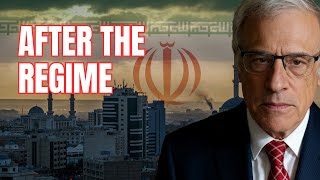 Video Loads Below Discussion
Harold Rhode provides a contrasting perspective to the view put forward yesterday by Martin Sherman who called for sectioning Iran into its regional districts. Rhode makes it clear that any attempt to split Iran would be met with opposition by the Iranian people who identify themselves as Iranians more so than their relative ethnic identities.
Rhode also warns that if Iran would spiral into a state of disintegration into its ethnic regions, it would worsen the situation for Israel and the West because it would likely give rise to anti-Western/Israel tyrants in these ethnic states. Instead, Rhode calls for supporting the rise of Reziv Pahlavi to lead the transition from the Mullahs into whatever comes next. He makes the case that Iran has no concept of democracy, indicating that any push towards such nation building under Western values would be a disaster. Instead, he notes that Iran has always been ruled by a central figure who could act as the glue which bound the nation together. While Pahlavi is poised to lead Iran while calling for a national assembly to choose the nation’s future, what will be needed to hold Iran together is a strong central figure capable of filling the gap which will exist following the fall of the Mullahs. Rhode cautions that this would be the best possible outcome for the West.
What goes unaddressed in his analysis, however, which Sherman specifically cited in his own presentation, was that there is no basis upon which to believe that the people of Iran are actually sympathetic or supportive of the West. In fact, Or Yissacr of the IDSF Director of Research, has repeatedly made the case indicating that he sees no reason to believe that the Iranian people hold any support for the West. Notably, the reaction which caused the Iranian people to spill into the streets from every aspect of Iranian society was not the assault on the Iranian regime during last summer’s 12 Day War, but was in fact a response to the Iranian financial collapse which directly affected the people themselves. The consequence of all of this calls into question what sort of figure the Iranian people might come to chosse, should the existing regime in Iran fall. Indeed, would they choose a Western oriented figure such as Pahlavi, despite the fact that the current Iranian population have little real knowledge or connection of or with the West, or would they choose something less supportive, or actually antagonistic to the West? The uncertainty of the answer for this question is what supports Sherman’s conclusion that a series of smaller unstable hostile states would be better than a single potentially hostile state comprising a population of 90 million with access to the full set of resources which is now in the hands of the Mullahs.
This is an important debate, but the arguments made by Rhode do not entirely address the concerns raised by Sherman. So perhaps we will hear more from these two and their relative perspectives in the coming days.
Harold Rhode is a American specialist on the Middle East who has studied in and traveled extensively throughout the Islamic world. He also served as an advisor on Islamic Affairs in the U.S. Department of Defense for more then 25yrs while focusing on Turkey, Iran, and Iraq. He is currently a senior fellow at the Gatestone Institute.


Sounds a bit like, “The Allies should not have waged war on Hitler because he made the busses run on time.”