
Amb. Alberto M. Fernandez | MEMRI | Mar 9, 2026
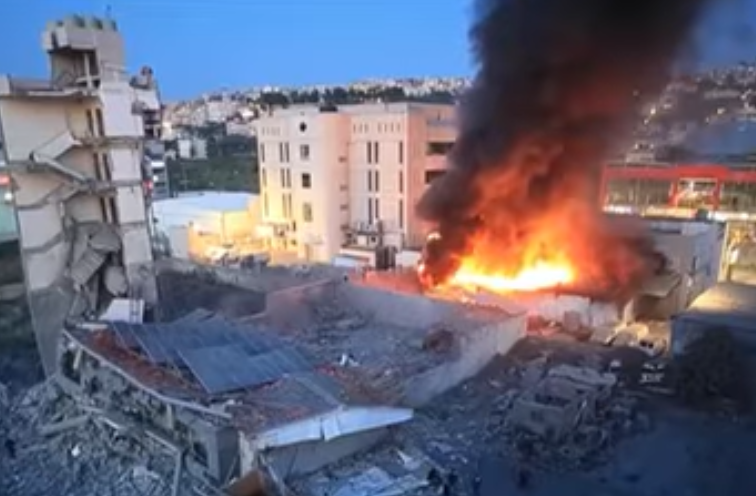 Screengrab via X
A little over a week into the latest Iran War and certain patterns are emerging. But while they may be evident today, that does not mean that they reveal the war’s ultimate outcome. Victory or defeat can be one bold strike away – Normandy, Kursk, Dien Bien Phu, 1980s Operation Eagle Claw in the Iranian Desert all come to mind.
What is clear is how the various sides will shape whatever happens. For the Iranian regime, the formula is simple: Survival will equal victory. Simple and easy to understand. This is nothing new, Iran said this before and it mirrors exactly what Iranian-aligned groups like Hezbollah and Hamas have said for years, that “steadfastness,” taking a beating while still breathing, is winning. That strategy worked for years for Hezbollah and Hamas until it did not. In the end, in 2024-2025, the gap between “survival is victory” and the sheer actual destruction absorbed by those groups was too big. No one in Gaza or Lebanon – except for a tiny, delusional hardcore – was left feeling very victorious.
The Israelis, but especially the Americans, also have to manage the expectations of the endgame. How do you declare victory, at some point in the near future, if you do not land a knockout blow? One could see a grim situation of an even more radical Iranian regime surviving and ruling from the rubble, over an even more impoverished and oppressed population while spouting defiance. At that point, the U.S. will have sailed away but the Tehran regime could be locked into being periodically wacked by Israel – a nightmarish “late Assad regime” type of scenario – while it feverishly tries to produce strategic weapons again.
Aside from the unclear fate of both Iran and the United States, the region’s winners and losers seem much more obvious, even if the war ended today or if it ends inconclusively in a few weeks.
Israel is an obvious (military not political) winner. Coming on top of tough but astonishing Israeli victories in Lebanon and Gaza, Iran has taken a drubbing at the hands of Israel like never before. Israeli air supremacy and intelligence penetration of Iran have been remarkable. And, as of writing, Israel has been hit less in this war by Iran than it was in the June 2025 war as Tehran targets the Arab Gulf states more than it has the Jewish state.
Turkey, and to a lesser extent, its close ally Qatar are winners. Turkey gains by doing almost nothing. Iran – sometimes a rival, sometimes a partner in crime – is weakened. Those who distrust Israel can turn to Turkey as an alternative. Qatar has been repeatedly hit by Iran and many see it as playing a double game with the West in its dealings with an Iranian regime that it has helped in the past. But Qatar reportedly closing the Iranian Embassy and capturing IRGC saboteur cells certainly positions it nicely for the future. The Doha authorities take measures against Iran while Qatar-controlled media like Al-Jazeera consistently present pro-Iranian content in Arabic.
Qatar’s rival, the United Arab Emirates also seems like a winner having successfully borne the brunt of Iran’s missile and drone attacks, more than any other country (42.8 percent for the UAE versus 20.1 percent for Israel). The UAE’s victory is a financially costly one but both militarily and politically the country’s leadership, people and armed forces have demonstrated great resolve and resilience.
For the GCC countries in general, the picture is much more mixed. They have been exposed as being exquisitely susceptible to Iranian strikes, some (Bahrain, Kuwait) more than others. They will have to adapt, investing much more in air defense or deferring more to the Iranians (or a combination of both). Saudi Arabia – which has the GCC’s largest military and which can export oil through the Red Sea, not just the Gulf – faces the challenge of having Iran in front of it and the pro-Iranian Yemeni Houthis behind it, a strategic dilemma with no easy answers.
All GCC states will be boosting spending after the war, in repairing what has been damaged and to defend themselves more robustly. Whatever they do – either boosting defense or deferring to Iran – GCC states have been disabused of the idea that Iran can easily appease. This is an aggressive, would-be regional hegemon who sees the smaller Gulf states as prey, big juicy targets. The Gulf states may want greater distance between themselves and Washington but there is no clear alternative to the United States/Israel as powerful counterweights to Iranian ambitions.
Russia and China have also been rudely exposed. Much of their military equipment has been revealed as second-rate. While Russia may profit in the energy sector as a result of Iran’s troubles, it risks losing a major ally, one which, at best, will emerge from the war deeply battered. China’s energy Achilles’ Heel, depending on easily disrupted Gulf energy is unmasked. But this crisis also enhances Russia’s value to China in being able to safely deliver energy overland from Siberia.
One last possible loser is Lebanon. When Hezbollah decided to enter this latest war on Iran’s side it infuriated the majority of Lebanese, even many Shia Muslims who form the group’s natural base. The party is less popular than ever before and under greater political pressure than ever. Lebanon has never had a greater opportunity to free itself from Hezbollah’s ability to plunge the country at any time into regional war. But while the state has announced some significant steps – placing visa restrictions on Iranians, banning the party’s “military wing” and calling for the arrest of its Secretary General – these seem symbolic than substantive. The sense is the Lebanese state still expects others to solve this problem and may have missed a rare opportunity to change the internal political dynamic forever.
*Alberto M. Fernandez is Vice President of MEMRI.

Leave a Reply
You must be logged in to post a comment.