
By Pamela Geller |
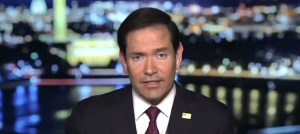 Screengrab via X
As of April 2026, Marco Rubio is weighing a dramatic overhaul of the American military footprint in Europe—reviewing plans to shutter as much as 80% of U.S. bases after key NATO allies, including Spain and France, refused to grant access to bases and airspace during the Iran conflict.
Framed under an “America First” doctrine, Rubio is openly questioning why the U.S. should continue spending roughly $60 billion annually to defend Europe if those same allies won’t back American operations when it matters—calling the current arrangement a “one-way street.” The proposal signals a potential strategic pivot away from the long-standing U.S. security umbrella over Europe, igniting debate between critics who warn of abandoning NATO commitments and supporters who argue it’s a long-overdue reckoning with allies seen as unwilling to carry their share of the burden.
Trump: “NATO nations have done absolutely nothing to help with the lunatic nation, now militarily decimated, of Iran.
The U.S.A. needs nothing from NATO, but ‘NEVER FORGET’ this very important point in time!”
Trump: NATO is a paper tiger now… it all began with Greenland, we want Greenland. They don't want to give it to us. And I said, bye bye. pic.twitter.com/P8WUibHNKL
— Open Source Intel (@Osint613) April 6, 2026
?BREAKING: 100,000 U.S. troops and $60 billion a year defending Europe — and zero help on Hormuz.
Time to bring them home.
No more free rides. pic.twitter.com/rJ4AEiyOKZ
— Dralone&_DR145 (@draloneboy) April 6, 2026
Trump: NATO is a paper tiger now… it all began with Greenland, we want Greenland. They don’t want to give it to us. And I said, bye bye.
? JUST IN: President Trump EVISCERATES useless European allies, says he will never forget NATO's abandonment
Leave NATO! What do they do for us?
"No, sir. We'd rather wait till you win!"
"I have to tell you, I'm VERY disappointed in NATO. Very. I think that NATO, I think… pic.twitter.com/TWi869L3Rk
— Eric Daugherty (@EricLDaugh) April 6, 2026
? BOOM: Trump drops hammer on NATO for giving ZERO assistance during Operation Epic Fury.
“It’s a mark on NATO that will NEVER disappear…”
Now they suddenly want to help before Wednesday’s meeting? Too late.
Time to leave and defund NATO. pic.twitter.com/Z331fndvdq
— Gunther Eagleman™ (@GuntherEagleman) April 6, 2026
«Die Nato ist ein Papiertiger»: Trump kritisiert Deutschland und Nato-Bündnispartner https://t.co/d4n9DVKW5Q
— Die Weltwoche (@Weltwoche) April 7, 2026
- The Conflict: Rubio, acting on an “America First” directive, stated the U.S. must “reexamine” its relationship with NATO allies after they denied support during the crisis.
- “One-Way Street”: Rubio questioned the utility of funding and staffing bases for European security if those allies refuse to support U.S. security interests.
- Proposed Shift: The proposal argues for reducing the $60 billion annual cost of protecting Europe, suggesting a pivot away from maintaining the large, existing footprint.
- Allied Reactions: While some critics view this as a potential abandonment of NATO commitments, proponents argue it is a necessary reaction to allies “freeloading”.


Leave a Reply
You must be logged in to post a comment.