Currency crisis threatens Turkey’s Syria strategy
Turkey’s economic turmoil might challenge Ankara’s grip over opposition-held areas in Syria, where in-house rivalries among the armed factions over financial resources have escalated.
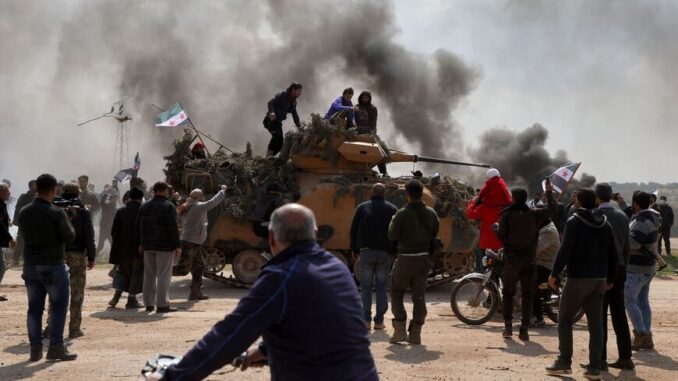
Syrians in protest climb atop a Turkish military infantry-fighting vehicle as they attempt to block traffic on the M4 highway, which links the northern Syrian provinces of Aleppo and Latakia, about 14 kilometers southeast of the city of Idlib on March 15, 2020.
With economic turbulence rattling Turkey’s economy, the question is rising of whether Ankara can maintain its grip on Syria’s opposition-held areas where the Turkish lira is the de facto currency.
The meltdown in the lira has heated up the in-house rivalries over financial resources between armed opposition factions and fueled public discontent in opposition-held areas. The turmoil threatens to erode Turkish-backed militia’s control in al-Bab, Jarablus, Azaz, Afrin, Tel Abyad and Ras al-Ain.


 The events of the past five or six years have demonstrated to America that the FBI is no longer the unbiased law enforcement agency it once was. Between the Hillary Clinton investigation-in-name-only, the Crossfire Hurricane hoax, the targeting of Americans as domestic terrorists, and playing three blind mice with the Biden graft machine, the bureau’s issues can’t be ignored any longer. If we don’t take corrective action soon, the FBI will finish its transition from law enforcement to being a political functionary advancing the interests of one party.