
US president still considering seizing Kharg Island as Strait of Hormuz remains closed
| Published: March 16, 2026
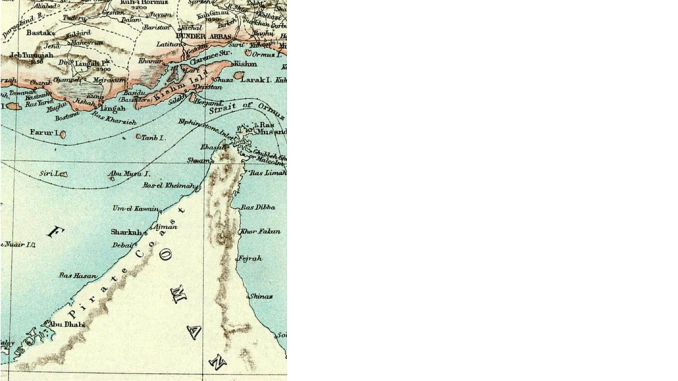 Strait of Hormuz. Public Domain, Wikipedia
U.S. President Donald Trump said overnight that he is “demanding” that about seven countries join a coalition to secure the Strait of Hormuz and help reopen the critical waterway amid the ongoing war with the Iranian regime.
While President Trump did not name the countries he is speaking with, he noted that many of them depend on oil shipments from the Middle East for their energy needs.
“I’m demanding that these countries come in and protect their own territory, because it is their own territory,” Trump told reporters aboard Air Force One.
? GLOBAL ALERT: Donald Trump says the U.S. is working with 7 countries to secure the Strait of Hormuz, one of the world’s most critical oil routes, as the conflict with Iran threatens tanker traffic pic.twitter.com/r1SW0vzS06
— GeoWatchHQ (@GeowatchHQ) March 16, 2026
“We are talking to other countries about policing the straits. It will be nice to have other countries policing with us. We will help. We are getting a good response,” Trump added.
According to an Axios report, Trump and senior administration officials spent the weekend in discussions with other world leaders, working on assembling a multinational coalition.
“It was a busy weekend of diplomacy between the U.S. and European, Gulf and Asian allies,” a source familiar with the details told Axios. “The Trump administration’s primary focus is to build political commitment from allies for a Strait of Hormuz grouping.”
The official echoed President Trump’s claim that many countries need Middle Eastern oil more than the United States does.
“Most of this oil isn’t our oil – it goes to other countries,” the official said. “So if they want it and they want the price to come down, they need to help out.”
In an interview with the Financial Times on Sunday, Trump warned that the North Atlantic Treaty Organization (NATO) faces a “very bad” future if U.S. allies fail to assist in securing the Strait.
“It’s only appropriate that people who are the beneficiaries of the Strait will help to make sure that nothing bad happens there,” Trump said.
“If there’s no response or if it’s a negative response, I think it will be very bad for the future of NATO,” he added.
Despite devastating strikes by the U.S. and Israel on Iran’s military capabilities, the over 1,400-kilometer-long Iranian coastline in the Persian Gulf is littered with multiple facilities for launching attack drones, missiles, and small fast-attack boats to harass shipping in the important waterway, through which about 20% of the world’s oil supply traverses.
Trump has so far had little success in convincing allies and other nations to help in the effort.
The U.S. president, who has previously been critical of NATO, renewed his criticism, telling the Financial Times, “We’ve been very sweet. We didn’t have to help them with Ukraine. Ukraine is thousands of miles away from us?…?But we helped them. Now we’ll see if they help us. Because I’ve long said that we’ll be there for them but they won’t be there for us. And I’m not sure that they’d be there.”
On Monday morning, both Japan and Australia said they would not send naval vessels to help secure the strait.
Japanese Prime Minister Sanae Takaichi said her country has not decided whether to send vessels, while insinuating that the problem could be due to Article 9 of the Constitution of Japan, which forbids it from maintaining military forces.
“We have not made any decisions whatsoever about dispatching escort ships. We are continuing to examine what Japan can do independently and what can be done within the legal framework,” Takaichi told parliament.
Catherine King, a member of Australian Prime Minister Anthony Albanese’s Cabinet, told state broadcaster ABC that the country is not planning to contribute to such an effort.
“We know how incredibly important that is, but that’s not something that we’ve been asked or that we’re contributing to,” she said.
German Foreign Minister Johann Wadephul also said he sees no role for NATO in addressing the blockade of the Strait of Hormuz.
Speaking ahead of the European Union foreign ministers’ meeting in Brussels, Wadephul said, “I don’t see that NATO has made any decision in this direction or could assume responsibility for the Strait of Hormuz. If that were the case, then the NATO bodies would address it accordingly.”
Dutch Foreign Minister Tom Berendsen did not rule out a role for the Netherlands, but said the decision about what to do requires careful thought.
“We are going to check exactly what the options are. These are very serious decisions and we need to know what is possible and what can be done,” Berendsen told reporters outside a meeting of the EU foreign ministers in Brussels.
Axios also reported that President Trump is still considering the seizure of Kharg Island – Iran’s main oil terminal – if the strait is not opened soon. The U.S. is reportedly sending an amphibious ready group and its Marine Expeditionary Unit, headed by the amphibious assault ship USS Tripoli, to the Middle East.
An amphibious ready group typically consists of around 5,000 sailors, including about 2,200 Marines.
Republican Senator Lindsey Graham Lindsey Graham has advocated striking Kharg Island, praising the initial attacks in a social media post: “President Trump’s decision to take the war to Kharg Island – the crown jewel of Iran’s oil and gas economy – was necessary, bold and in my view, highly effective.”
“If Iran loses control or the ability to operate its oil infrastructure from Kharg Island, its economy is annihilated. He who controls Kharg Island controls the destiny of this war,” Graham added.
Iran’s attempt to close the Strait of Hormuz is done at its own peril.
President Trump’s decision to take the war to Kharg Island – the crown jewel of Iran’s oil and gas economy – was necessary, bold and in my view, highly effective. This will help shorten the war. Seldom in…
— Lindsey Graham (@LindseyGrahamSC) March 14, 2026
Any such move would likely require U.S. boots on the ground – something President Trump has said would not be necessary. However, any Iranian retaliation could risk damaging its own oil infrastructure. At the same time, escalation could also lead to attacks on energy facilities across neighboring Gulf states.


If Kharg Island is taken over, it will require long-term presence to make sure it doesn’t wander back to the IRGC or whoever takes control of Iran.
The numerous facilities along the 1400 km coastline of Iran also poses a serious threat to shipping in the gulf and must also be dealt with. If those manning these facilities are suicidal, that may take a few weeks to disperse.
All in all, this is not a minor task but one that could benefit from help from those in need of oil from the gulf states. Of course, NATO countries could depend on the USA to take care of that too, but it looks like that is not about to happen. First things first: Iran’s economy will be broken and then we can see how much effort will be required to reach peace in the region.