
Peloni: Fascinating!
by
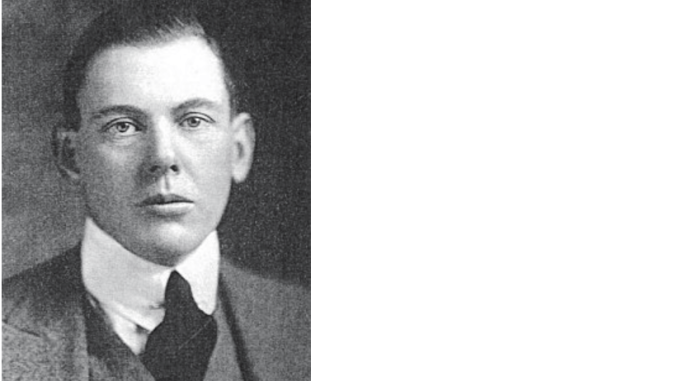 Vice Consul for the American Diplomatic Mission in Persia, later Iran. Buried with full military honors in Arlington National Cemetery.By U.S. Foreign Service Memorials – Findagrave.com, Public Domain, Wikipedia
Long before the Iranian hostage crisis or the suicide bombings that would follow, Iranian Islamists and their Communist allies teamed up to murder a top American diplomat.
When Vice Consul Robert Whitney Imbrie set out to take some pictures of a ‘sacred well’ in Tehran for National Geographic Magazine, he did not take any special protection with him.
The Muslim riots in the Iranian capital might have worried ordinary diplomats, but this was 1924 and the American delegates of the era were a hardier breed than today’s paper pushers. Major Imbrie was a big game hunter who had been the longest serving ambulance driver in WWI, and had fled Russia disguised as a Scandinavian journalist ahead of the Communist takeover and the death sentence and $100,000 reward for his capture that the regime had put on his head.
Assigned to Turkey, he married an American volunteer who had been working with Christian victims of the Armenian genocide, while trying to stay ahead of the Communists who were offering tens of thousands in gold at a time when their own people were starving. “The Soviets will get me if there is any way of doing it,” he had remarked to a friend.
Taking a few photos of a mystical well must have seemed like a relaxing excursion.
But Iran was torn between Soviets, who had already carved off parts of it, and the Mullahs, who would eventually take it over. Holding them both back was Reza Shah, the father of the shah overthrown by the Islamic Revolution who had hoped to turn Iran into a republic. The Communists and the Mullahs both had an interest in preventing that. Like the Ayatollah Khomeini, the ayatollahs of the twenties believed American diplomats had to be driven out.
“At every teahouse a Mullah harangued the crowd. Mobs, fired by oratory,” Imbrie warned the State Department “swarmed through the streets, unhindered by the police” in riots “engineered by the mullahs”.
The well that National Geographic had asked Imbrie to photograph, according to the New York Times, had become “a shrine and was visited by crowds of Moslems.” Newspaper accounts reported that the “fanatics protested against his taking the picture on the grounds that there were Mohammedan women present” who could not be photographed even in their hijabs and chadors. Imbrie did not actually take the picture, but the mob began to chase after him anyway, screaming that Imbrie had poisoned the well and “killed Musselmen women and children.”
“A mob of excited Moslems followed the carriage and overtook it,” a newspaper account described. Imbrie and his companion were “dragged from the vehicle and attacked with sticks, stones and knives” by the mob. “Major Imbrie, who was unarmed, did his best to defend himself until he became unconscious from a blow on the skull, evidently delivered with a sabre. While he was lying on the ground a stone broke his jaw”. Finally he was brought into a military barracks.
But the Muslim mob was “joined by shopkeepers and bystanders until it numbered about five thousand.” The soldiers turned Imbrie over to the police, some of whom however joined in the attacks on the Americans. “For twenty minutes Major Imbrie fought alone”. Finally the soldiers rescued him again and the two Americans were taken by car to the American Hospital.
But the mobs gathered again outside the hospital.
“A Mohammedan named Seyed Hossein, a direct descendant of their great prophet, aged 24, got up on a box in front of the hospital and addressed the already demented mob, urging them to break into the hospital and kill those Americans.” The report to the Secretary of State stated that he wanted to have “have the blood of this infidel dog to avenge the death of Hossein and his grandfather.” This is believed to be a reference to Imam Hussein, the grandson of Mohammed and the founder of Shiite Islam, whose death during the first Islamic civil war is marked by Shiites to this day with orgies of violent self-mutilation during their festival of Ashura.
The attack in Imbrie came at the beginning of the Islamic month of Muharram during which Shiites wear black and bewail their Imam Hussein leading up to the Ashura mutilations.
Little is known about this particular Hossein, but his name is similar to that of the Ayatollah Sayyid Hassan Modarres, a fierce opponent of the future shah who was obsessed with imposing Islamic law on Iran, and who was a major influence on Ayatollah Khomeini. American diplomats had met with him and dismissed him as a backward “senile old man”.
The Muslim mob broke into the hospital’s operating room. “One young Mohammedan boy about seventeen years old tore the flagstones from the floor of the operating room and beat in the face of Major Imbrie.” One of the hospital attendants later showed an American delegation one of “the tiles of the floor which had been torn up and shattered on the body of Imbrie, as well as a chair which was smashed in assaulting him”.
The State Department telegram stated that Imbrie was assaulted “by a mob which practically cut him and beat him to death” and in other accounts suffered “more than 180 wounds” on his body in a brutal assault carried out “with a viciousness and savagery” and Muslims “a day or two later insulted his widow in the street, tearing her veil from her face and spitting upon her.”
While he was not the first American diplomat to have been killed while on assignment, he was only the second to have been murdered for political reasons. And Washington D.C. was furious.
Unlike some future administrations, President Coolidge understood that showing weakness would endanger Americans abroad. Imbrie’s body was conveyed home by warship and was buried with the president in attendance at Arlington National Cemetery. Imbrie had also been a personal friend of Allen Dulles, later to play a major role in the CIA, who monitored the case.
Rabbi Joseph Kornfield, then serving as the American ambassador, was told to press for the death penalty for the murderers and to demand military protection for American diplomats. When the death sentences for members of the mob were commuted, pressure was swiftly applied, and American personnel insisted on seeing that the executions were carried out.
“If you ask them to execute a Moslem for the death of a Christian,” Dulles observed. “If they do it, you accomplish more for the prestige of your country than if they paid a million.”
The Coolidge administration was worried about the growing Communist expansion and suspicions remained that Imbrie’s murder had been solicited from the Mullahs by the Soviets.
Ayatollah Mohammad Khalesizadeh, another strong influence on the Ayatollah Khomeini, who had campaigned for Islamic law, and worked to oust the British and build an alliance with the USSR, was among those arrested after Imbrie’s murder. Some in D.C. suspected that he had been the vital link in the chain that allowed the Communists to finally finish off an old foe.
The Bolsheviks had adopted Islamic slogans and advocated for the Shiite cause. And Russians, better than anyone else, knew the potential of a murderous Muslim mob in Tehran, like the one that had brutally murdered the famed Russian playwright Alexander Griboyedov in 1828 at the incitement of the Mullahs after he had provided shelter to fleeing Christian women, and waved his head around because he had defied the right of Muslims to take Christian sex slaves.
The first Muslim murder of an American diplomat has largely been forgotten outside the ranks of diplomats and historians, but it was another incident in the power struggle between Iran’s secular rulers, its Islamic clergy and the Communists. In 1979, far larger mobs ousted the Shah and brought Islamic terror to Iran and to the world. A new class of diplomats under the Carter administration had forgotten the hard lessons of the Coolidge administration in the 1920s, and welcomed the Islamist takeover as an improvement over the Shah and secularism.
“The recrudescence of clerical power in Persia in the last two years has supplied the background and, in large part, the motivation for the tragedy which has just occurred,” an American diplomat in Iran wrote in the 1920s. “It is worth noting that never since the Persian Revolution of 1906, when the clergy was terrified into immobility by the public execution at the hands of the Revolutionaries of their Chief Mujtahed, Sheik Fazlullah, have the clergy been in possession of such dangerous power as is theirs today. So complete was their eclipse, that by 1918 it was possible to disregard their constitutional and religious right to interpret and execute the laws of the land in accordance with the Koran when a new Penal Code, based on the ‘Code of Napoleon’, was drafted and put into temporary execution.”
But, “for the first time since the establishment of Bolshevism in Russia, Great Britain and the Russians joined hands cordially in support of the clergy.” He concluded by warning that “unless the malign power of the clergy can be broken forever in the land, there is every reason to believe that the killing of Imbrie is but a foretaste of more terrible events to come.”
55 years after Imbrie’s murder, American diplomats were taken hostage in Tehran.


Leave a Reply
You must be logged in to post a comment.