
Peloni: Trump listed a number of Americans who have been the victims of the Maduro regime’s exploitation of America with its support of drug trade and terrorist groups in America. Such existential threats are important to both recognize and to eliminate. Hopefully, this action alongside his recent embrace of Netanyahu at Mar-a-Lago marks a change in US policy which saw Trump ordering Israeli planes home, preserving the threat from Iran in place. As Trump has eliminated the threat from Venezuela for Americans, Israel should encouraged to end the existential threats which emanate against the Israeli people from Iran and her proxies. The neutralization of the Iranian threat could have been ended early last summer, and the threat from Hamas could have been ended long ago. As was true with Maduro, negotiations with Iran and Hamas have only serve to preserve terrorists in power, and only resolved actions against these terrorists can serve to remove the threats that they pose, a threat which is not pointed exclusively at Israel but also at Americans as well.
American Thinker | January 4, 2026
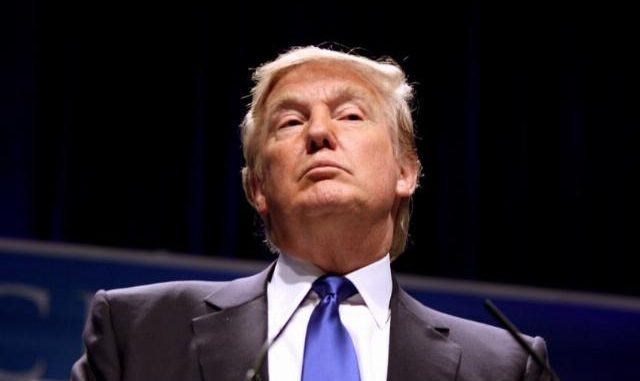 Gage Skidmore via Flickr, CC BY-SA 2.0.
Early Saturday morning, details emerged of a U.S. military operation in Venezuela that effected the successful capture and extradition of Venezuela’s illegitimate president, Nicolás Maduro, to the United States. Delta Force operators executed a daring mission in Caracas while combat pilots led the effort to destroy key military installations on the ground. The narcoterrorist Maduro will no longer wield power over the Venezuelan people or serve as a conduit for America’s enemies to poison Americans and wage hybrid warfare against the United States. Maduro was blindfolded aboard the USS Iwo Jima as he began his journey toward becoming a criminal defendant in New York (maybe he’ll feel at home with fellow communist Zohran Mamdani at the helm in NYC).
President Trump reportedly warned the Venezuelan dictator weeks ago that if he refused to peacefully relinquish power and go into exile, the American military would reach down and collect him like an arm coming from the sky. As Vice President Vance dryly observed, “Maduro is the newest person to find out that President Trump means what he says.”
Hopefully this decapitation strike upon Venezuela’s illegitimate government serves as a warning to all communists and narcoterrorists in positions of power along latitudinal lines below America’s southern border: Your days of endangering the Western Hemisphere are numbered.
The success of this mission will lead casual observers to conclude that there were few risks. On the contrary, there were extraordinary risks. Putting U.S. servicemembers in harm’s way invites the possibility of catastrophe. When elite operators are tasked with complex objectives on battlefields with many unknown variables, the best laid plans lead the needle toward success only so far. The fact that Secretary of War Hegseth and the U.S. military executed this mission successfully while avoiding American losses is a testament to the planning, skill, and courage of all involved.
Aside from paramount concerns for the lives of U.S. servicemembers, this operation carried significant political risk for the Trump administration. War with Venezuela has not been high on the list of policy expectations for most of Trump’s MAGA supporters. Although “America First” voters have been more than willing to listen to the president’s rationale for blowing up drug boats and seizing oil tankers in the Caribbean, the majority of Americans who have grown painfully tired of D.C.’s “forever wars” are wary of new areas of operations for boots on the ground. Had the mission to capture Maduro gone sideways and required the rapid deployment of contingency forces to secure American personnel, the political repercussions would have been staggering.
That said, President Trump was prepared to get the job done one way or another and told journalists after the successful mission that the U.S. Navy was bearing down with an “armada like nobody’s ever seen” should it be needed.
Observing the president’s chess moves from afar, it appears obvious to me that the president sees “luck” as nothing more than the product of opportunity and preparation. Nobody can doubt that intense preparation went into this strike. For months, the U.S. military has been slowly squeezing Maduro’s assets like a boa constrictor coiling around its prey. As U.S. Navy personnel took out narcoterrorists one speedboat at a time and covert American forces operated inside Venezuelan territory, the Trump administration went after Maduro’s ill-gotten oil shipments and other sources of revenue. Combining economic sanctions with kinetic strikes, President Trump wound tightly around Maduro’s narco-regime as Delta Force operators prepared to cut off the head of the enemy. Luck is for suckers. Those who diligently prepare seize opportunity.
As if to drive this last point home, the U.S. military obliterated a mausoleum honoring Venezuela’s dead dictator — a man who transformed his nation from one of the wealthiest in the Americas to one of the poorest — after sweeping up Maduro in the dead of night. It was a fiery middle finger to communism and a Trump-sized American signature to a hemispheric course correction two and a half decades overdue.
Now Nobel Peace Prize winner Maria Corina Machado and other Venezuelan opposition figures have an opportunity to lead their country away from misery and back toward prosperity. Let us hope that they, too, have prepared accordingly.
President Trump’s strike on Venezuela resembles his strike on Iran’s nuclear facilities back in June in that both operations were “high risk” and “high reward.” Had either Iran or Venezuela been successful in repelling American forces — or worse, killing American personnel — the loss to American military prestige would have been severe. Although “peace through strength” may sound like a banal mantra to some, America’s reputation for unparalleled lethality casts a long enough shadow to prevent violent altercations before they have a chance to begin. Gustavo Petro of Colombia surely isn’t the only guerrilla narco-terrorist soiling his trousers right now as he worries about Delta Force operators knocking down his front door sometime soon.
As with all foreign policy maneuvers and military actions, the chessboard is much bigger than it initially appears. Decision-makers sitting in capitals around the world are paying attention. They are intently aware that when President Trump makes promises, everyone should listen.
For twenty-five years, the communist regime in Venezuela has been a constant source of chaos in the Western Hemisphere. After stealing American infrastructure built as an investment in the country, first Chávez and then Maduro turned Venezuela into a South American hub for exporting drugs, murder, slavery, terrorism, and organized crime into the United States. One might understandably ask why successive presidents since Bill Clinton have failed to defend the Monroe Doctrine and Americans’ inherent interest in a peaceful Western hemisphere. The answer is that President Trump’s immediate predecessors lacked grit, strength, and vision.
To serve effectively as president of the United States, America’s chief Executive must be a skilled multitasker. There was a time when I assumed that anyone crafty enough to reach the White House probably knew a thing or two about artfully juggling numerous responsibilities.
Watching Donald Trump serve as president has made me realize that I gave previous officeholders too much credit. While his predecessors might have occasionally proven capable of keeping three or four rings in the air, President Trump appears always to be juggling several dozen chainsaws, machetes, and grenades all at once. However else one thinks of the president, he is a multitasker extraordinaire, and most of those who served before him were pikers by comparison.
To secure the Western Hemisphere, we didn’t need a new Monroe Doctrine. We just needed a new president.


Leave a Reply
You must be logged in to post a comment.