
Peloni: This concurs with Netanyahu stating that he wants Iran free and united, indicating no support for the separatist movements in Iran such as the that of the Kurds. And as always, the Kurds are left without support for their own state.
“I don’t want to see the Kurds get hurt and killed. And we’ve had a good relationship. They’re willing to go in. But we really, I’ve told them I don’t want them to go in,” the US president said.
By SETH J. FRANTZMAN | MARCH 8, 2026
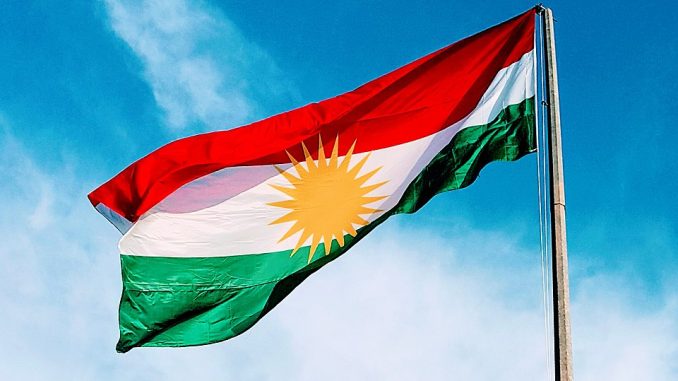 Flag of Kurdistan (Kurdish Flag). Photo by Sarchia Khursheed – Own work, CC BY-SA 4.0, Wikipedia
Trump has noted that the Kurdish fighters are willing to fight in Iran. “They’re willing to go in, but I’ve told them I don’t want them to go in…The war is complicated enough as it is… We don’t want to see the Kurds get hurt or killed.”
The Kurdish Iranian groups were thrust into the spotlight after February 28, when the US and Israel began strikes on Iran.
Kurdish groups targeted over inaccurate reports
Initially, the reports indicated that these groups were preparing to fight the Iranian regime. Within two days, the reports said the Kurdish groups were being armed by the US. It was not clear how this was possible in such a short period. The reports about the Kurds kept growing over the coming days. A false report was pushed by several major media outlets that suggested the groups had launched an offensive into Iran.
The spotlight on the Kurds has led to pushback. Some Iranians call the Kurds “separatists.” Others argue that the Kurds would end up as cannon fodder or that it would be hard for them to take control of the Kurdish region in western Iran. The Kurdish region in Iran is relatively small, despite 8 million Kurds. It is possible that if the Kurds led an uprising, it would trigger a domino effect across the rest of Iran.
Other groups in Iran don’t appear to be well-armed. There is also controversy, it appears, between the Kurdish groups and the groups backing other Iranian opposition, such as backers of the crown prince. This controversy could divide the opposition groups. Without the spotlight on the Kurds, it’s possible that the spotlight could now move to other Iranian groups.
There are many minorities in Iran, such as Azeris, Baloch, and Arabs. The Persian opposition in Iran generally argues that the minorities are “separatists.” This creates challenges for the US in deciding who to back. The Trump administration seems to keep most of the groups at arm’s length. However, the administration has a long experience working with Kurds. It worked with them in Syria and Iraq. Some Kurds feel the US walked away from the Kurds in 2017 when the Iraqi army attacked them in Iraq, and also when the Syrian government attacked them in January 2026 in Aleppo.
As Trump changes tack, it appears that cool heads have prevailed. The Kurdish groups are waiting to see what happens. They have trained for years, but they are also cautious.


Leave a Reply
You must be logged in to post a comment.