
Peloni: Evidence based medicine requires the pursuit of medical evidence to wherever it leads. Unfortunately, special interests too often have the final word on the use of lucrative medications and expensive technical hardware. Is it a lack of awareness which keeps the door closed on further investigation of the relevance of any connection between neonatal sonar exams and autism, or is it the motive related to a captured medical bureaucracy?
The HHS secretary promised to look into the causes of autism. There’s a long and disturbing evidence trail (not to vaccines!) that he should have paid more attention to.
Am Thinker | June 19, 2026
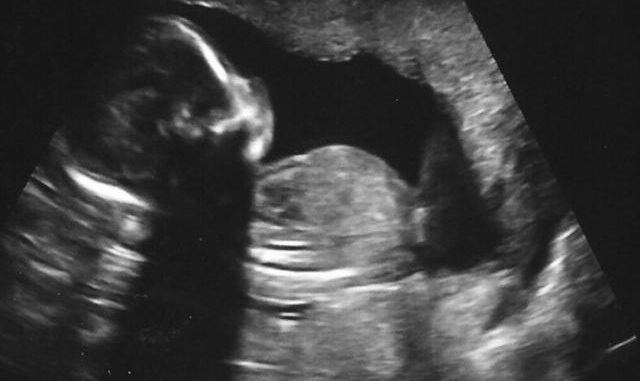 Image: Nogwater via Flickr, CC BY-SA 2.0 (cropped).
At 72, Robert F. Kennedy, Jr. is an impressively educated environmental lawyer, author, aggressive activist on vaccines, critic of the pharmaceutical and food industries, and a lifetime political activist, many of whose credentials — particularly his creative thinking — appealed to President Trump, who nominated him to be Secretary of Health and Human Services.
Of course, lifetime Democrats went crazy, as did a good number of his still prominent relatives, as well as Big Pharma and also 75 Nobel laureates who urged the U.S. Senate to oppose Kennedy’s nomination. But RFK Jr. was ultimately confirmed and sworn in by Supreme Court justice Neil Gorsuch in the Oval Office on February 13, 2025.
Since then, RFK Jr. has accomplished many groundbreaking initiatives, including — this is the very short list — the following:
1. Establishing the Chemical Contaminants Transparency Tool (CCTT), an online database that the public can use to search for the levels of harmful chemicals allowed in food.
2. FDA GRAS Rule Reform. RFK Jr. wants to close the current loophole in food safety checks in which companies bypass these safety checks and fail to ensure that ingredients being introduced into foods are safe. Some of the ingredients pushed through were linked to tumors in animals; damage to DNA; and liver, kidney, and intestinal issues in high doses, plus possible heart and brain defects.
3. Operation Stork Speed was launched to ensure that baby formula in the U.S. is safe, nutritious, and always available.
4. Proposing that the MAHA Commission ban candy and sugary drinks from the food stamp program (SNAP). In 2023, 41.7 million Americans received SNAP benefits, costing taxpayers nearly $94 billion. But “sweetened soda water has no nutritional value,” said RFK Jr.
6. School lunch improvements. To tackle the chronic childhood health crisis, RFK Jr. has proposed an immediate ban on ultra-processed foods, with obesity affecting 20% of children in the U.S., and school meals playing a critical role in shaping kids’ diets.
7. Studying the cause of autism. This was not only the most important item on RFK Jr.’s list, but the one with the farthest-reaching consequences, considering that in 2020, the Atlanta-based U.S. Centers for Disease Control and Prevention (CDC) said that one in 36 children (approximately four percent of boys and one percent of girls) was estimated to have autism-spectrum disorder, and just five years later, the Department of Health and Human Services stated that autism had surged in America nearly 400% and now affects 1 in 31 American children.
What is wrong with this very disturbing picture?
Well, duh! Tylenol? Are you kidding? Most women I’ve known and taught wouldn’t even take a handful of M&Ms while pregnant, much less enough Tylenol to cause autism!
A month later, on October 11, 2025, my article about the possible roots of autism was published. In that article, I cited my years as a delivery room nurse and my own observations over a 20-year period of teaching Lamaze childbirth classes and the startling connection I observed between the precipitous rise of autism diagnoses and the equally precipitous rise in sonogram exams, starting in the mid- to late 1970s.
I also mentioned the deadly effect — literally — of sonar waves, and the intense heat they produce, from Navy ships on pods of dolphins and whales, even two hundred miles away from these sea creatures. How, then, do all those sound waves and all that heat affect the delicate brain development of gestating human embryos?
Also, the important research being done at Yale University and the University of Pittsburgh about the sonogram-autism link.
Also, the scrupulous research by author Jennifer Margulis, author of Business of Baby, who wrote that the Yale professor Dr. Rakic “concluded that all nonmedical use of ultrasound on pregnant women should be avoided.”
In her research, Margulis said she discovered that “there is mounting evidence that overexposure to sound waves — or perhaps exposure to sound waves at a critical time during fetal development — is to blame for the astronomic rise in neurological disorders among America’s children.”
Putting the Most Important Issue on the Back Burner
Clearly, there is a vast human tragedy — a true man-made disaster — taking place before our eyes.
For whatever reasons — follow the money? — the mountain of evidence that points to a causal relationship between prenatal ultrasound exams and an escalating pandemic of autism is being systematically ignored.
Could it have anything to do with the huge investments doctors and scientists have made in ultrasound technology, which, according to Jennifer Margulis, “adds more than $1 billion to the cost of caring for pregnant women in America each year”?
Could it have anything to do with the revenue now pouring like an avalanche into the coffers of diagnostic and treatment centers?
Could it have anything to do with modern journalism’s almost complete abandonment of hard-nosed reporting and life-saving exposés about this subject?
As researcher Caroline Rodgers has said, there is an elephant in the room when it comes to the subject of autism. That elephant is the worldwide blitzkrieg of ultrasound exams on pregnant women — exams that have bombarded the babies they’re carrying with sound waves and heat that could have effects that last every second of their lives.
Yoo-Hoo, RFK Jr.
I sent my article via X to the entire Trump Cabinet, with RFK Jr. being the first on the list. Then I sent my article to RFK Jr. via X and email. Then I sent it one more time.
The response was silence — not even a “thank you,” not even an acknowledgment of receipt.
But much, much worse! A complete refusal on RFK Jr.’s part to look into the compelling and quite convincing evidence that the overuse of prenatal sonograms is directly associated with the frightening, terrifying, catastrophic rise in autism.
It’s way past time to give the billion-dollar industry of pregnancy sonograms the same attention and warnings RFK Jr. gave so confidently to Tylenol.
Joan Swirsky is a New York–based journalist and author. Her website is www.joanswirsky.com and she can be reached at joanswirsky@gmail.com.


From Gemini AI:
Researchers have studied whether exposure to sound, including ultrasound, during pregnancy could affect fetal brain development. The short answer is that there is no established evidence that medically used prenatal ultrasound causes autism, but the question of how sound waves interact with the developing brain is scientifically interesting.
How sound waves can affect a developing fetus
Sound waves are mechanical vibrations that travel through tissue. Depending on their frequency and intensity, they can:
Stimulate sensory systems, including the developing auditory system.
Produce tiny amounts of heat in tissues.
Cause mechanical effects such as pressure changes and microscopic tissue movement.
The fetal brain is rapidly developing, so in principle it can be influenced by environmental factors. However, whether a physical influence translates into a meaningful developmental effect depends heavily on the strength, duration, timing, and location of exposure.
Ultrasound is different from audible sound
Diagnostic ultrasound uses frequencies typically in the millions of cycles per second (megahertz), far above the range of hearing. Medical ultrasound does not primarily act through hearing; it creates images by reflecting off tissues.
Scientists have identified two main biological effects of ultrasound:
Thermal effects (small temperature increases).
Mechanical effects (pressure fluctuations and, in some circumstances, cavitation).
Modern obstetric ultrasound is designed to keep these effects below established safety limits.
What does the evidence say about autism?
Large epidemiological studies have generally not found a causal link between prenatal ultrasound exposure and autism. Autism is understood to have a strong genetic component, with environmental influences likely playing a role as well, but no major medical organization considers routine prenatal ultrasound a proven autism risk factor.
Some researchers have proposed hypotheses that ultrasound could theoretically influence:
Neuronal migration (how brain cells move during development),
Gene expression,
Neural connectivity.
Animal studies have occasionally found biological effects under certain experimental conditions, but translating those findings to human pregnancy is difficult because exposures are often much higher or different from routine clinical use.
Could ultrasound affect the fetal brain at all?
The scientifically cautious answer is:
Any physical energy delivered to biological tissue can potentially have biological effects.
The existence of a biological effect does not automatically mean there is harm.
Current evidence does not demonstrate that standard diagnostic prenatal ultrasound causes autism or major neurodevelopmental disorders.
Autism and fetal brain development
Current evidence points much more strongly toward:
Genetic factors,
Early brain developmental differences,
Complex interactions between genes and prenatal environment,
than toward ultrasound exposure as a major cause of autism.
If you’re interested, I can also explain the specific animal studies that raised concerns about ultrasound and fetal neuronal migration, and how experts evaluated those findings.
I remember reading reports of possible damage to unborn babies from ultrasound way back in 1991. This is difficult for the pro life community, of which I am a part, to accept since ultrasounds are a key device in persuading pregnant women not to abort. Perhaps it is better to go back to leaning heavily on the old argument that every human life is God given and precious. Anyway, the abortion rate has increased now that morning after pills are readily available. So the arguement that the fetus looks human through the ultrasound is often irrelvant.