
Janatan Sayeh
 Screengrab via Youtube Click Photo for Video
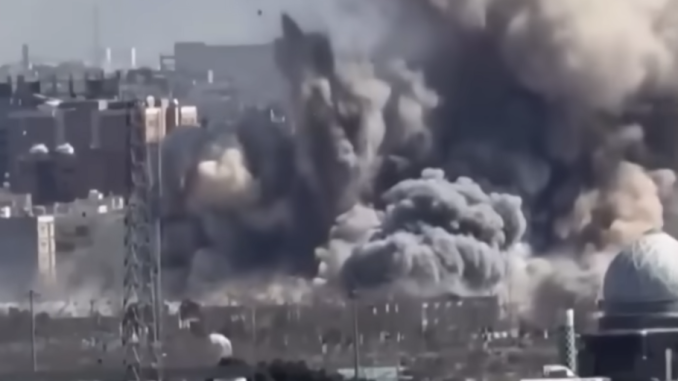
The Iran conflict has entered a new phase after US–Israeli strikes have destroyed key military infrastructure, killed thousands of regime personnel, and degraded Iran’s missile and drone launch rates. Israel has shifted toward hyperlocal targeting of repression units and regime figures inside Tehran, often aided by intelligence from Iranians on the ground. Simultaneously, the Islamic Republic has publicly projected stability after Mojtaba Khamenei’s elevation to supreme leader, despite Khamenei’s continued absence from public view and some signs of internal strain.
Military overview
According to The Jerusalem Post, Iran’s ballistic missile launch rate fell 92 percent during the first 10 days of the US-Israeli campaign, dropping from 480 launches on February 28 to 40 by March 9, while drone launches fell from 720 to 60. Israeli forces “conducted 2,600 sorties in 150 strike waves, dropping roughly 6,500 munitions” during the same period. As of March 11, US forces have hit “more than 5,500 targets inside Iran, including over 60 naval ships,” according to figures provided by US Central Command (CENTCOM).
Iran has fired 2,410 missiles and 3,560 drones during the conflict, far exceeding the 2025 Twelve-Day War totals (627 missiles, 735 drones). Only 12.8 percent of the projectiles targeted Israel, while 48 percent struck the UAE (1,468), followed by Kuwait (562) and Bahrain (231), reflecting a strategy aimed at economic pressure on Gulf states rather than military victory over Israel.
As of March 13, the Israel Defense Forces (IDF) assesses that 4,000 to 5,000 Iranian soldiers and commanders have been killed in Israeli strikes since the start of the war, including many from the Basij paramilitary and internal security forces, which have been key targets. Operations are expected to continue for several more weeks.
The regime has reportedly deployed naval mines in the Strait of Hormuz, part of a broader strategy to disrupt global energy flows and raise the economic cost of the war. The United States says it has destroyed at least 16 Iranian mine-laying vessels and is considering naval escort operations for commercial ships, though officials say the area remains too dangerous for escorts at the moment. Washington has warned Tehran to remove the mines while continuing strikes on Iranian naval and military infrastructure tied to the operation.
The war enters a new phase of hyperlocal targeting of repression units
Iranian opposition leader Crown Prince Reza Pahlavi, the son of deposed Shah Mohammad Reza Pahlavi, stated on March 11 that Iran has entered “the decisive stage” of what he described as the “final struggle” against the Islamic Republic. Addressing the armed forces of the regime, he noted that “This is the last chance to separate yourselves from the repressive forces and join the people,” concluding his message by telling Iranians to “await my final call [to take to the streets].”
Fars News, which is affiliated with Iran’s Islamic Revolutionary Guard Corps (IRGC), reported on March 11 that explosions and clashes occurred at several checkpoints across Tehran. According to the report, the attacks targeted checkpoints in District 14 (Mahallati Highway), District 15 (opposite Hashemabad gas station), District 16 (Fadaiyan-e Islam Street), and District 1 (at the end of Artesh Boulevard). Fars said at least 10 security personnel were killed in the attacks.
The IDF posted footage of strikes the next day and said that the Israeli Air Force, “guided by Military Intelligence, attacked checkpoints and Basij soldiers” in several areas of Tehran, after identifying that the paramilitary unit had set up positions across the city. It noted that the Basij forms part of the regime’s internal security apparatus that is responsible for suppressing protests and carrying out arrests and violence against civilians, adding that such forces would remain targets.
Fars attributed the attacks to the Mossad and “monarchists.” The term refers to the nationalist pro-Pahlavi opposition movement, which led large anti-regime protests in early January dubbed the “Sun and Lion Revolution,” a reference to the lion-and-sun emblem used on Iran’s flag before 1979. The symbol is widely adopted by protesters to reject the Islamic Republic.
This new campaign also targeted officials traveling in moving vehicles, resembling the Israeli military’s strike pattern previously used in Lebanon. Videos posted by Tehran residents show that on March 11, a vehicle belonging to an unidentified regime figure was targeted by a drone strike on Tehran’s Chamran Highway, with footage circulating on social media showing the car engulfed in flames after the attack.
Videos circulated later that night show Tehran residents chanting anti-regime slogans from rooftops while the skies filled with the sound of drones and air defense systems. Some chants targeted new Supreme Leader Mojtaba Khamenei, with crowds shouting, “Death to Mojtaba.”
Reuters reported March 13 that Israel has targeted Iranian security checkpoints using tip-offs from informants on the ground, with sources saying local contacts helped identify Basij and other security positions for strikes in Tehran. The Wall Street Journal wrote on March 12, citing a senior Israeli security official, that ordinary Iranians have been sending potential target information to Israel through Persian-language Israeli social media accounts, with the information vetted by Israeli intelligence before being acted upon, including in a strike by a Hermes drone on Basij checkpoints in Tehran.
Unconfirmed reports claim that part of the new campaign targeting Basij and police personnel at checkpoints is being conducted using municipal surveillance cameras. The Financial Times had reported earlier that Israeli intelligence used Tehran traffic-camera feeds to monitor Ali Khamenei and his security detail ahead of the strike that killed him.
Latest on the Islamic Republic’s internal politics
Images released by Iranian state media show senior Islamic Republic officials attending the regime’s Quds Day rally in Tehran on March 13, an annual pro-Hamas event organized by the state. Those seen included Judiciary Chief Gholamhossein Mohseni-Ejei, President Masoud Pezeshkian, Police Chief Ahmadreza Radan, Supreme National Security Council Secretary Ali Larijani, Foreign Minister Abbas Araghchi, and Judge Abolghasem Salavati. During a state TV interview with some of the officials, loud blasts from nearby strikes were heard, causing chaos and preventing the Iranian leaders from delivering their speeches.
Iranian pro-regime media outlets have moved to frame Mojtaba Khamenei’s succession as wartime continuity, portraying him as a “commander of the revolution” with IRGC backing and rapidly elevating his clerical status in coverage. Khamenei’s first message was delivered by a state TV anchor over a still photograph, urging continued resistance and pressure through the Strait of Hormuz. Mojtaba himself has not appeared publicly or spoken directly, as outlets highlight pledges of loyalty from military commanders, clerics, and officials to project unity after Ali Khamenei’s death.
After Reuters said that around 150 regime officials and their families were seeking to flee to Russia, Iran International reported March 12 that two Iranian diplomats, one from the regime’s embassy in Copenhagen, Denmark, and the other in Canberra, Australia, had submitted asylum requests.
Iran’s Khatam al Anbiya Headquarters confirmed March 11 that a branch of Bank Sepah on Haqqani Street in Tehran was struck by a missile, as reports circulated of disruptions to online services and ATMs at Bank Sepah and Bank Melli. The headquarters threatened that the strikes have given the IRGC grounds to target economic infrastructure and banks linked to the US and Israel across the region and warned people in neighboring countries to avoid areas within roughly a kilometer of bank branches and headquarters.
Repression in Iran continues
The Human Rights Activists News Agency (HRANA) reported on March 13 that five Iranians were arrested for filming missile strikes and bombing sites and sending the footage to a “foreign media outlet.”
The IRGC Intelligence Organization (IRGC-IO) threatened in a statement addressed to “the people of Iran” that any new protests would face a harsher response than the January uprising, claiming that hostile actors were attempting to trigger street unrest as battlefield efforts failed. The statement labeled protesters as “traitors” and “neo-ISIS agents” and vowed round-the-clock confrontation with internal opponents, referencing the January protests in which thousands were killed.
Janatan Sayeh is a research analyst at the Foundation for Defense of Democracies focused on Iranian domestic affairs and the Islamic Republic’s regional malign influence.


Leave a Reply
You must be logged in to post a comment.