
Peloni
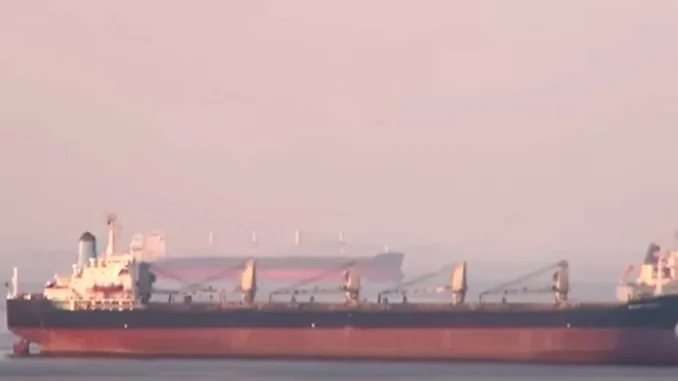 Feature image: Tanker traffic in the Strait of Hormuz. Social media.
In an article by SIGNAL’s Carice Witte, “From Hormuz to Beijing: How war is recasting China’s green energy strategy – opinion”, she explains that the Iran war and Iran’s use of the vulnerability of the Strait of Hormuz highlighted the inherent risks of Beijing’s heavy reliance on imported oil and natural gas.
She notes that China entered the crisis better prepared than other countries, including India, Japan, and South Korea, because it had already developed multiple layers of energy security to offset the challenge of war in the Persian Gulf. These layers of energy security include large oil reserves, expanded storage capacity, domestic crude production, coal-fired backup capacity, state-managed fuel pricing, and extensive investment in hydropower, solar, wind, batteries, and electric vehicles.
Witte goes on, however, to highlight China’s renewable-energy sector, particularly solar power, is facing significant economic challenges. These industries are currently struggling with overcapacity, falling prices, low profit margins, intense competition, and weakening demand. Consequently, China’s continued support for solar energy may come to be increasingly driven by strategic considerations rather than commercial success alone.
Witte also emphasizes the fact that China has not fully solved the challenges associated with renewable energy. Major issues remain in integrating renewable power into the energy system through adequate storage, transmission infrastructure, grid flexibility, and balancing capacity. Without these, renewables cannot fully replace the security provided by hydrocarbons.
Witte suggests that coal remains an important part of China’s energy strategy and it acts as a backup source which provides it with reliability and flexibility when renewable generation is found to be insufficient on its own. She describes China’s approach as that of a hybrid resilience model which employs renewables, batteries, electric vehicles, strategic reserves, domestic oil production, coal, and price controls to serve different security needs.
Witte concludes that other countries which are likewise seeking greater use of renewable energy, as does China, should take note of the lesson that energy security requires more than installing renewable capacity. Strategic reserves, storage systems, grid improvements, maritime security, and backup energy sources are also necessary. Witte also suggests that the Iran war may actually reinforce the notion with China that the dependence on imported hydrocarbons transported through vulnerable maritime chokepoints creates strategic risks, making energy-system resilience an increasingly important objective of China’s energy policy.
https://www.jpost.com/opinion/article-898581
Israpundit is entirely dependent on readers support. Please help me continue educating people with the truth about what is going on in Israel and around the world.


Leave a Reply
You must be logged in to post a comment.