
Peloni: Must read essay by Bob Goldberg!
Israel made Trump’s Iran deal possible. Washington should not repay it by letting Tehran use Hormuz to rebuild Hezbollah.
Bob Goldberg | The New Zionist Times | Jun 18, 2026
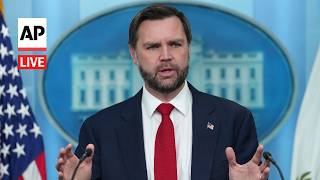 Screengrab via Youtube
JD Vance is worried that Israel is isolated.
He should ask why.
If Donald Trump is now the only head of state in the world openly sympathetic to Israel, the explanation is not mysterious. Israel is isolated because it did what the rest of the world would not. It entered the war against Iran. It took the risk. It supplied the intelligence. It absorbed the retaliation. It made America’s victory possible.
This is not a sentimental point. It is a strategic one.
Operation Epic Fury destroyed Iran’s nuclear infrastructure, gutted its missile inventory, wrecked key manufacturing capacity, crippled its defense-industrial base, neutralized air-defense networks built over two decades, and eliminated senior IRGC leadership, including the Supreme Leader himself. This was not a raid. It was the systematic dismantling of a regime’s war-making architecture.
And it was, in crucial respects, an Israeli achievement.
Israel made Epic Fury devastating because it supplied the things American power often lacks on its own: intimate access, human intelligence, target geometry, and real-time knowledge of the regime’s military architecture.
The core contribution was intelligence penetration. Israeli networks had reportedly mapped Iranian procurement channels, nuclear-support facilities, command nodes, missile infrastructure, and hardened sites that satellite collection alone could not reliably characterize. That mattered because destroying a nuclear or missile program is not just a matter of dropping heavy ordnance. You have to know which tunnel mouth matters, which power node feeds which cascade hall, which workshop produces guidance systems, which warehouse holds solid-fuel components, and which “civilian” facility is actually part of the defense-industrial chain.
Israel also supplied targeting architecture. Israeli intelligence gave Washington the “eyes and maps” needed to distinguish symbolic targets from system-critical ones: Fordow and Natanz layouts, missile-launch infrastructure, air-defense nodes, IRGC command centers, manufacturing sites, and logistics chokepoints. That allowed Epic Fury to move beyond punishment strikes into something much more consequential — the dismantling of Iran’s war-making system. Your draft states the result directly: the operation damaged Iran’s nuclear infrastructure, missile inventory, air-defense network, military leadership, and manufacturing base.
Israel’s air campaign also appears to have opened the battlefield. Public reporting on the 2026 Iran war describes Israel’s “Roaring Lion” campaign as involving roughly 200 Israeli aircraft striking hundreds of targets in western and central Iran, including air defenses and missile launchers, in what Israel described as its largest combat sortie. That would have degraded Iran’s ability to detect, track, and contest follow-on American strikes.
Cyber and electronic warfare were another multiplier. Reporting summarized in open-source accounts says U.S.-Israeli cyber operations disrupted Iranian command-and-control, communications, sensor networks, media, and domestic internet connectivity during the opening phase. That would have compounded the air-defense collapse: Iran was not merely hit; it was blinded, confused, and partially cut off from its own response mechanisms.
Finally, Israel — check that, Israeli citizens – absorbed the retaliation. Iran’s missile salvos against Israel were not random; they were punishment for the Israeli role in making the American strike effective. That matters politically because Israel did not merely benefit from an American operation. It helped enable one, then took the blowback. Israel supplied the intelligence, opened the skies, identified the organs of the regime’s war machine, and then stood under the missiles when Iran tried to exact the price.
Israel made Epic Fury possible by supplying what American firepower could not generate on its own: penetration of Iranian procurement networks, granular mapping of hardened nuclear and missile facilities, target geometry for sites satellites could not read, cyber and electronic disruption of Iranian command systems, and the air campaign that helped collapse Iran’s defenses.
Israeli intelligence had penetrated Iranian procurement networks, mapped the hardened facilities at Fordow and Natanz, and supplied the targeting architecture for sites the United States could not have located with comparable precision on its own. American logistics, refueling, and suppression assets amplified the campaign. But the eyes were Israeli. The maps were Israeli. The operational knowledge was Israeli.
That is why the operation did not merely punish Iran; it crippled the machinery by which Iran builds, hides, launches, and commands its wars.
Iran knew this. Iran attacked Israel not because Israel was a helpless client sheltering under American protection. Not because Israel had dragged America into someone else’s war. Iran struck Israel because Israel had helped America strike Iran.
That is the fact that the Trump administration seemingly finds inconvenient.
Israel absorbed the retaliatory risk. Iran’s missile salvos against Israel were not random; they were punishment for the Israeli role in making the American strike effective. That matters politically because Israel did not merely benefit from an American operation. It helped enable one, then took the blowback.
Israel supplied the intelligence, opened the skies, identified the organs of the regime’s war machine, and then stood under the missiles when Iran tried to exact the price.
Israel was the indispensable partner in an American campaign. It was then hit for being that partner. America used American-funded defenses, including THAAD, to help keep Israel alive under Iranian retaliation, as it did in defending other Gulf states. The difference is that the other countries (the Emirates being the exception) did not join the fight, did not offer America their blood and treasure as did the Jewish State.
Then Washington signed an MOU that constrains Israel in Lebanon while handing Iran new leverage over Hormuz.
There is a word for this. It is not gratitude.
Trump and Vance owe Israel a thank-you. Not a lecture or unseemly pissing contest with the contemptible Ben Gvir. A strategic thank-you. Without Israel, there is likely no Epic Fury. Without Epic Fury, there is no Iranian military collapse to convert into diplomacy. Without Israeli intelligence and Israeli willingness to absorb retaliation, there is no MOU for Washington to announce.
That is the irony. The agreement exists because Israel helped weaken Iran enough to sign it. And now Israel must live with the consequences of the agreement America signed.
For thirty years, Pentagon wargames reached the same conclusion: fight Iran, and the IRGC closes the Strait of Hormuz with mines, fast boats, and anti-ship missiles.
This was not obscure. It was the central Iranian play.
Yet six months before Epic Fury, the Navy retired its MH-53E Sea Dragon mine-countermeasure helicopters. A month later, it decommissioned Bahrain’s four Avenger-class minesweepers. Their replacements — three LCS vessels with bolt-on mine-countermeasure packages — were magnetically vulnerable and rated below 30 percent effective against modern moored mines.
Then Iran mined Hormuz within hours of the first strike.
Washington had no viable unilateral way to clear it. Admiral Caudle later admitted escort operations would exceed the Navy’s effective capacity. Translation: the Navy had spent thirty years gaming the exact crisis it entered the war unable to solve.
Worse, the war plan appears to have rested on a wager: that Hormuz would reopen before emergency oil reserves reached politically critical levels.
It did not.
The oil reserve was not a strategy. It was a timer. Once the timer started running, Iran did not need to defeat the United States Navy. It needed only to wait until the economics of the crisis weakened Washington’s negotiating position.
That is how the MOU became possible. Not because Iran was strong. Because America had made itself dependent on Iranian cooperation to solve a crisis America had long known Iran would create. On the other hand, Iran
The June 14 MOU addresses mine clearance in the most revealing way: not by placing Hormuz under American, coalition, or neutral control, but by allowing full reopening within 30 days after “de-mining by the Islamic Republic of Iran.”
Translation: Iran mined the strait. Iran now certifies it safe.
After three months of war, blockade, casualties, and $130 oil, Washington left Hormuz clearance and certification to the IRGC Navy — the force that mined it, re-mined it, kept no reliable map of its own ordnance, and had declared the strait “closed to all vessels” days earlier.
This is not peace. It is leverage.
After 60 days, Iran and Oman are to define the strait’s future “management and maritime services” with Gulf-state consultation. Temporary reopening becomes institutionalized Iranian control. Once shippers, insurers, and operators adapt to IRGC-supervised transit, Tehran’s threat to close the strait becomes stronger, not weaker.
A rebuilt chokepoint is a better hostage.
The MOU’s economic terms do not merely reward Iran. They help fund Hezbollah’s recovery. The Institute for the Study of War June 17 report captures the Iranian end-state framing with precision: top Iranian officials were publicly claiming they had satisfied their core war aims by “controlling the Strait of Hormuz and preserving Hezbollah.” Now the MOU allows Iran to use the strait to finance it’s proxy
Iran’s renewed access to money, shipping, banking, insurance, and transport gives Hezbollah what it needs most: time, cash, and commercial cover. The pipeline was already operating before the MOU. Hezbollah was paying fighters, procuring weapons, and developing drones and missiles. When air and land routes became harder, the IRGC expanded maritime smuggling.
The MOU’s normalization of Hormuz traffic gives that network cover. At commercial scale, dual-use cargo becomes just another container in the flow.
This is the part Vance should study carefully.
Israel helped America break Iran’s war machine. The MOU gives Iran a protected interval to rebuild Hezbollah, the forward trigger aimed at Israel.
The mechanism is simple. Israel strikes Hezbollah in Lebanon. Iran calls it an “all-fronts” ceasefire violation. The IRGC slows transit, suspends permits, threatens re-mining, or closes Hormuz again.
The strait is the financial gun. Hezbollah is the trigger. Lebanon is the wedge.
This is not theory. Iran has already used Hormuz as a response mechanism to Israeli operations in Lebanon. It has already tried to transform negotiations over Iran into negotiations over Israel’s freedom of action against Hezbollah. The MOU gives that strategy a framework.
Which is why the agreement should be understood for what it is: not merely a framework for ending a war, but a mechanism for isolating Israel from the ally whose campaign it helped win.
Israel made Epic Fury possible. Israel absorbed Iran’s revenge. Israel now faces Hezbollah’s reconstitution under cover of the agreement made possible by Iran’s defeat.
And Washington calls this diplomacy.
There is a familiar pattern here. Israel acts. The world condemns. America benefits. Then Washington discovers complications and asks Israel for restraint.
Restraint, in this case, means allowing Iran to use Hormuz as a weapon while Hezbollah rebuilds under the cover of a ceasefire. It means turning Israel’s battlefield contribution into Israel’s strategic liability. It means thanking the fireman by handing the hydrant over to the arsonist.
If Israel is isolated, it is isolated because it stood where others would not. Europe postured. The Gulf states hedged. The international community issued statements. Israel acted.
Because Israel acted, America could strike Iran’s nuclear infrastructure with historic success. Because Israel acted, Iran was weakened enough to negotiate. Because Israel acted, Trump had an MOU to announce.
The thanks Israel received was an agreement that gives Iran leverage over Hormuz and time to rebuild Hezbollah.
The test now is simple. Will Washington let this architecture harden, or stop it?
Stopping it means rejecting Iran’s “all-fronts” reading of the MOU. It means tranching assets against verified compliance. It means interdicting Hezbollah resupply before normal commerce hides it. It means independent mine-clearance verification, not faith in “Iranian arrangements.”
None of this is elegant. All of it is necessary.
JD Vance is right to care about American interests. But American interests are not served by treating Israel as a liability after relying on it as an asset.
Israel helped America win. Trump should say so. Vance should remember it.
And Washington should not repay the only ally that entered the fight by leaving it alone with the consequences of the deal its courage made possible.


https://c14news.com/article/1474522
https://www.c14news.com/article/1471383
Nasser decided on attaining power to get up the noses of the West or at least try to inherit their regional power. He ran into the Dulles anti-Communist mania then the real interests of UK and France besides Israel who had been restrained by size, resources and political risk from socking it to him for his Fedayeen border raids. UK and France then realised they could use Israel’s irritations as an excuse to settle their own score with Nasser. That let Israel take Sinai as prep for UK and France going for the Canal. Enough of the plan succeeded BUT it went off too soon before the US election and the US was still isolationist enough NOT to risk a war espacially as the Russians had the N-bomb and big rockets. If the French and British had heeded Ben Gurion’s question “What about the US” and put off the Israeli drop into Mitla Pass, Sinai till the night of the US election they would have all got away with more of it as the ballots were already boxed. As it was Eisenhower was peeved at his junior allies working a surreptitious scheme behind his back and stamped on them as much to insist on US leadership as to assure the USSR that the US could control the Western bloc. In the end forcing out ISrael from Sinai as in 1949 WITHOUT a peace signed first just let the Arabs pretend they had won and prolonged the conflict for a re-run in 1967 – 77 when Egypt finally twigged it was NOT so difficult to make a peace in order to retrieve Sinai. What we have seen in 2026 is the Trump US playing the parts of both 1956 UK and France and 1956 USA. How we see the 1967 re-run with Egypt for Iran will be interesting but it will be easier for everybody if the Iranians rebel and hound out the ayatollahs.
The US must give free hands to IL to finish Hezbollahs. The bridge to international terrorism.
It shouldn’t be up to the US. Was Jewish sovereignty reclaimed only for the Jewish nation to be a vassal state of America?
Israel is a beacon of light to the world, because Israel ultimately derives her morality from the Ten Commandments and faith in the G-d of the Bible. The rest of world either lives according to the values of Mammon or of a demonic death cult that must, for the world’s survival, be completely destroyed. There is no compromise possible. That is why the world hates Israel, while those of us who believe in G-d love and revere the Jewish State. Trump must remember with Whom he is dealing. The Bible spells it out: G-d blesses and protects those who bless Israel, and curses those who curse her. If Trump perseveres with this deal, he will lose the blessing and protection of G-d.
I switched from independent to Republican in 2015, so I could vote for Huckabee in 2016. . When he dropped out I voted for Ted Cruz in the primary, Trump only in the general election. In 2027, I probably will switch back to Republican again so I can vote for Huckabee, Cruz, Rubio, Fine, Stefanik, or any of many other pro-Israel Republicans against Vance. The rest of the time I’m a registered Dem because in NYC, that’s where the battle for Israel is and New York’s a one party town and a closed primary state. Then, at some point, in 2028, though voting Republican, I will switch back to Dem because changes in existing party registrations only take effect after the November General Election. I don’t believe it behooves American Jews to have fixed party loyalties.
“ We have no eternal allies, and we have no perpetual enemies. Our interests are eternal and perpetual, and those interests it is our duty to follow.”
– Lord Palmerston (Henry John Temple)
I switched my party affiliation from Dem to independent at the end of Obama’s first week in office, in January, 2009, when he dissed Israel three times, once with his feet on his desk and a sadistic smile on his face as was brilliantly parodied by Caroline Glick’s LatmaTV.
I used to be registered as an independent. I became a registered Republican around 2020, but I no longer have any loyalty to the GOP. I would go back to independent, but I want to have a voice in the primaries, so I’ll stay a Republican. But as you said, I have no fixed party loyalties. If Fetterman by some miracle were to be the Democrat nominee, I would choose him over any Republican. We’ve been told for a decade how Trump is the best friend Israel ever hand and even he threw us under the bus. So, I trust NO ONE.
@Laura I could vote for Fetterman, though Huckabee remains my favorite. So, I will wait until it becomes clear who the presidential candidates will be for 2028 next year. But, what are the odds?
And there are a number of Republicans who support Israel to the extent Fetterman does. But, among the Dems, is there anyone else besides him?
Not even Fetterman said:
August 15, 2015
https://www.timesofisrael.com/huckabee-israels-claim-to-judea-and-samaria-stronger-than-us-tie-to-manhattan/
After Huckabee dropped out in January 2016, there were 17 candidates, 2 by the time the NY primary rolled around. All but one – Rand Paul, an enemy – talked more or less the same, supportive of Israel but with lip service to the TSS, Trump did it obliquely, saying he wanted to make everyone happy. I had no idea who to vote for. So I followed Caroline Glick’s endorsement of Ted Cruz, as Israel’s champion in the senate.
“ does fetterman support Israeli sovereignty over Judea and Samaria in 2026 +6 Senator John Fetterman has not taken a public position supporting formal Israeli sovereignty over Judea and Samaria. While he remains a staunch defender of Israel’s military objectives, his political stance on the region has focused on security and support rather than the formal annexation of the territory.Key Details:Focus on Security: Fetterman’s primary message regarding the Middle East has centered on backing Israel’s right to self-defense, military aid, and joint operations against Iran and its proxies.Break with Democrats: His vocal, unwavering support for Israel during the conflict has created significant friction between him and the progressive wing of the Democratic party, prompting him to state that he is willing to stand alone on the issue.Silence on Annexation: Despite his firm stance on Israel’s defense, he has not actively supported or introduced legislation advocating for the application of Israeli sovereignty over the West Bank. When specific measures, such as Israeli Knesset votes regarding settlement expansion or annexation, have been brought forward, Fetterman has indicated he was not following or actively engaged with those particular issues.For more context on ongoing legislative and foreign policy debates, you can track Fetterman’s public statements via his official U.S. Senate Website.”