
PELONI: It is a sad commentary to have political rallies being simultaneously orchestrated around the remembrance events of the horrors of October 7. We should not forget that the deep political divides of early and later 2023 were the context in which Hamas’ attack was not only launched and that this context was also a primary motivating feature of their savage assault. Israeli division with deep international support, including both financial and geopolitical aspects, around the right of the Israeli govt to act upon policies over which they were elected to enforce was the very backdrop around which the October 7 slaughter took place. Three years later, much has changed, but with the coming elections just three weeks away, Israeli division is ever present. What must be understood about October 7 is that October 8 followed that calamity, and with it came a sense of unity and solidarity which shocked our enemies and have ultimately faced them on every front of this 8 front war. It is this spirit of unity which must come to dominate over the divisions of politics for that is the path to victory rather than defeat, and Israel is ever just one defeat from utter calamity which will see the horrors of October 7 played out on a national scale. It is ever important to realize that the communities which were specifically targeted for slaughter and captivity were those which were most sensitive to the interests of the people of Gaza, highlighting the reality that, as was true in the Holocaust, the political differences which divide our people elicit no inference with our enemies. They simply seek to see our people destroyed…only the pursuit unity dims their hopes of succeeding, and unity of our people is what simultaneously presents us as both a powerful force in the region and around the world. There are many lessons to learn about October 7, but the need to provide a central sense of unity should surely be counted among them and demonstrated for all to see, particularly during any event meant as a remembrance of October 7.
Families of hostages and terror victims renew calls for state commission of inquiry
| Published: October 7, 2026
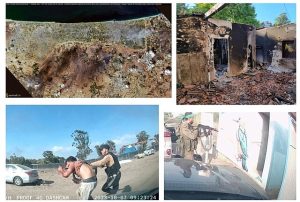 October 7 Collage by Hnuden – Own work, CC0, Wikipedia
Today, Israel marks three years since the Oct. 7 Hamas invasion and terror attack, which shocked the nation and represented the deadliest massacre of Jews since the Holocaust.
Memorial commemorations began at 6:29 a.m. with ceremonies, performances and events across the country. President Isaac Herzog and his wife, Michal, lit a memorial candle at the President’s Residence to mark the moment Hamas launched its opening rocket barrage.
In a statement published by the President’s Office, Herzog said the candle “reflects the shared national grief and pain of the State of Israel and its citizens, and is dedicated to the memory of the women and men—infants, children, the elderly, civilians, and combatants – who were murdered and fell in the October 7 terror attack and the ensuing war.”
6:29am, October 7th.
Three years since that horrific morning, we lit a memorial candle at the President’s Residence in Jerusalem.
Three years of immense pain, loss, and trauma.
We remember all those who were murdered and all who fell in battle.
May their memory be a blessing. pic.twitter.com/1Jx2aWjyph
— ???? ????? Isaac Herzog (@Isaac_Herzog) October 7, 2026
“Alongside honoring the memory of those murdered and fallen, this occasion is also dedicated to embracing bereaved families, saluting the physically and mentally wounded who bear the scars of October 7 and the war, and strengthening the returnees and their families on their journey of rehabilitation and recovery,” the statement added.
The Herzogs are scheduled to visit an exhibit at Netiv HaAsara, near the Gaza border, as well as the memorial site at Kibbutz Re’im for the victims of the Nova music festival.
Also at 6:29, families of hostages and victims observed a minute of silence, followed by the reading of a memorial statement in front of the Knesset, alongside the remains of vehicles destroyed at the Nova festival.
The “October Council,” a group representing families of hostages and survivors of the Oct. 7 attack, released a statement recalling the events of that day and calling for a state commission of inquiry.
“This morning, exactly three years after the greatest tragedy in the history of the State of Israel, we bow our heads alongside the more than 2,200 families who lost their most cherished loved ones in the October 7th massacre and the ‘Swords of Iron’ war. Today, we remember our loved ones who were murdered, massacred, raped, burned, abducted, wounded, and whose worlds were destroyed at the hands of Hamas murderers,” the statement read. “Yet, on this day, we also bear another obligation: not only to remember those we have lost, but to understand how the State of Israel allowed this to happen.”
“We demand an independent state commission of inquiry to investigate the political leadership, the security establishment, and the entire decision-making chain that led to the disaster,” the statement continued. “Not for revenge. Not for politics. For the sake of the truth, for the families, and to ensure that the next October 7th never happens. Three years after the massacre, the State of Israel still owes a debt to the families. That debt is the truth – and we will ensure it is paid.”
Police Commissioner Danny Levi, alongside senior IDF command staff and dozens of police officers, saluted and stood at attention for a minute of silence to commemorate the heroism of the officers who fought in the battles against Hamas terrorists that day.
5. ???? ???????? – ?????? ?????? ????? ????? ????? ????
6:29 ??? ?????
????? ????? ???????? ?????? ????
??? ?????????, ???????????: ??? ???? pic.twitter.com/FaxbbEf08f
— Or-ly Barlev ? ???-?? ???? (@orlybarlev) October 7, 2026
A minute of silence was also observed at the former Sderot Police Station, which was destroyed during fighting with Hamas terrorists who barricaded themselves there on Oct. 7, where wreaths were laid in memory of the 20 police officers killed at the site, along with dozens more who died fighting Hamas across the Gaza Envelope.
In Tel Aviv, demonstrations were held along the beach promenade and on the Ayalon Highway, temporarily disrupting traffic. Memorials were set up at several locations along the beach to commemorate those killed on Oct. 7 and demand government accountability.
Anti-government activists dyed the fountain at the popular Dizengoff Square red in memory of those killed on Oct. 7.
5. ???? ???????? – ?????? ?????? ????? ????? ????? ????
6:29 ??? ?????
????? ????? ???????? ?????? ????
??? ?????????, ???????????: ??? ???? pic.twitter.com/FaxbbEf08f
— Or-ly Barlev ? ???-?? ???? (@orlybarlev) October 7, 2026
Former hostage Yarden Bibas, whose wife, Shiri, and two young boys, Kfir and Ariel, were murdered in Hamas captivity, posted a message to social media, begging their forgiveness for not being with them.
???? ???? ???? ????? ?????, ????? ?????.
????? ???? ????. pic.twitter.com/vSDYbzJ19O
— yayafink (???? ????) (@yayafink) October 7, 2026
“Shiri, Ariel and Kfir. Sorry. Sorry that you are up there and I am here,” Bibas wrote in Hebrew. “I love you more than anything in the world. Always. Forever.”
Opposition politicians visited memorial sites along the southern border, meeting with bereaved families.
Prime minister hopeful Gadi Eisenkot, of the Yashar party, met with Shira and Moshe Shapira, the parents of Aner Shapira, who saved the lives of several people in a shelter near the Nova festival, before being killed by Hamas terrorists. Aner managed to catch seven grenades thrown by Hamas terrorists into shelter, throwing them back out before they exploded, before he was killed.
?????, ???? 06:29, ????? ???????? ????? ??? ?? ???? ????, ????? ?? ??? ????? ???.
??? ????? ????? ?? ??? ??? ?????? ????? ???? ????.
??? ??? ???? ??? ??? ??? ???? ???????? ???? ??? ???? ?? ???????? ?????? ????? ????? ??????, ??? ????? ?? ?? ???? ???????.??? ????? ??? ??? ?????… pic.twitter.com/hLaSbXcb1W
— Gadi Eisenkot – ??? ??????? (@gadi_eisenkot) October 7, 2026
Former prime minister and B’Yachad party leader, Naftali Bennett, visited the Re’im memorial, where he spoke with bereaved families, while Yisrael Beitenu party leader Avigdor Liberman visited Kibbutz Be’eri, one of the communities hardest hit on Oct. 7.
Several closing ceremonies are scheduled for Wednesday evening, including events at Tel Aviv’s Yarkon Park and Hostage Square near the Kirya IDF headquarters.
Israpundit is entirely dependent on readers support. Please help me continue educating people with the truth about what is going on in Israel and around the world.


Avi Abelow on FB:
https://m.facebook.com/story.php?story_fbid=pfbid02v3Rh7AjvWV59cMWW6f8ahPomvSr7Yk8tmV5cQCDUywim82f6yLfqidN1vWdhDHqbl&id=545522241