
Peloni: The countdown to the next war in the north began at the conclusion of the last war in the North. Only hopium and self deception could argue otherwise. The fundamental strength which the Shia community commands in Lebanon, and which it lends to Hezbollah, has in no way changed, and until it does, Lebanon will be remain as an outpost of terror on Israel’s northern border.
While we hoped Hezbollah would decide to behave and disarm, the terrorist organization has instead been rebuilding its forces and even found new routes for smuggling weapons from Iran. The question is not if it will renew its attacks against Israel, but when.
Prof. Eyal Zisser | Nov 9, 2025
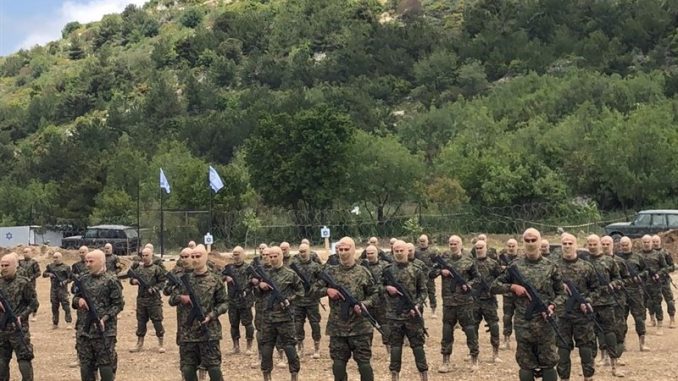 2023 Hezbollah drill in Aaramta. Photo by Tasnim News Agency, CC BY 4.0, Wikipedia
Exactly a year ago, the confrontation on the northern border between Israel and Hezbollah ended in what appeared to be a clear knockout. Hezbollah was defeated, losing its leaders and senior commanders, headed by Hassan Nasrallah, along with much of its military capabilities. It seemed the group would not recover. Lebanon elected a president, formed a government that declared its commitment to disarm Hezbollah, and the ever-optimistic US administration, detached from reality as usual, promised that a peace agreement between Israel and Lebanon was only a matter of time.
But in wars between Israel and its Arab enemies, there are never absolute victories or final conclusions. We defeat the enemy’s armies, only to discover a few days after a cease-fire is declared that they are still alive and kicking. So it was after the great victories of the 1948 War of Independence and the 1956 Sinai Campaign, and again after the Six-Day War, when Egypt and Syria resumed fire just days after their crushing defeat.
In the current war, history is repeating itself. Iran is restoring its capabilities and preparing for the next round, Hamas remains the undisputed ruler of the Gaza Strip, and Lebanon represents perhaps the most glaring missed opportunity. There was no external pressure on Israel to halt its strikes on Hezbollah, yet we voluntarily agreed to a leaky, dubious cease-fire that everyone knew the group would never honor.
We knew this, and yet we agreed, hoping that Hezbollah, a radical Shiite organization whose very identity is rooted in its struggle against Israel, would suddenly decide to act like a “good child” and disarm. And we hoped that the Lebanese state, which US envoy Tom Barrack accurately described last week as “a failed and dysfunctional state”, would deploy its army against Hezbollah, even though the group is far stronger and far more determined than Lebanon’s own military.
Now, a year after Israel’s major victory in Lebanon, it has become clear that nothing has changed and that the gains of the war are steadily eroding. True, Hezbollah has kept a low profile and refrained from attacking Israel or even responding to Israeli strikes, but not because it has turned into a “Zionist sympathizer.” Like Hamas, it is biding its time, keeping its head down until the storm passes, and waiting patiently for the right moment to strike again.
Meanwhile, Hezbollah has been rebuilding its strength, maintaining strong support among Lebanon’s Shiite community, and even reestablishing weapons smuggling routes from Iran to replace those lost with the fall of Bashar Assad’s regime in Syria.
Israel, for its part, prides itself on its freedom of action in Lebanon and on the blows it has dealt to minor Hezbollah operatives. Yet these actions appear aimed more at shaping public opinion and pleasing the media than at truly crippling the organization. Does anyone seriously believe that Hezbollah, which commands tens of thousands of fighters, will surrender because Israel eliminated 300 of its members over the past year?
Hezbollah has lowered its profile. Gone are the bombastic threats and boasts about its capabilities that once kept Israeli decision-makers awake at night. The organization speaks less, and more softly, but still makes it clear that it will not surrender its weapons and that “the resistance” remains its strategic choice.
Hezbollah calculates its moves in years, not months. For now, the deceptive calm on the northern border may persist. But again, the real question is not whether the terrorist organization will resume its operations against Israel, but when.
Israel would do well to act more decisively to counter the growing threat from the north. And if it chooses not to, it should at least monitor Hezbollah’s every move with vigilance, so that we are not caught off guard once again. The countdown to another confrontation on the Lebanon border has already begun.


Hezbollah is too entrenched in Lebanon to be disarmed by the Lebanese. They would be handing their weapons over to themselves. I would hesitate to under-estimate them in any scenario. The only thing Israel can do to avoid more harm is to preempt any Hezbollah activity. Waiting as before for them to strike first simply gives them the option to choose when, where, how and what they want to strike. As seen on Oct 7, 23, allowing them to strike first can only cause a lot of pain.
The missing question above is why. They need no reason except that they would be free to choose from the other questions.
Before anything else, it would be appropriate if Israel would finish what it started in the south; another two-frontier war isn’t an attractive situation.
Of course in the meantime, dealing a final blow to Iran is another consideration.
Like I said, one frontier at a time…