
Peloni
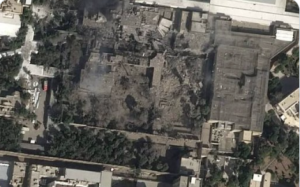 Blast site where Khamenei and dozens of the Iranian leadership were eliminated. Screengrab via X
In a highly recommended article on Tablet, “Seven Myths About the Iran War,” Mike Doran argues that public debate over a potential conflict with Iran is shaped by a series of misleading assumptions that obscure the strategic realities of the situation. He shares a list of seven common myths which have formulated and perpetuated the opposition to tackling the threat from Iran:
- The United States is choosing to initiate a new war rather than responding to an ongoing conflict driven by Iran
- War would inevitably become a large-scale, prolonged catastrophe
- Military action would unify the Iranian population behind the regime
- The Iranian regime is too resilient to be meaningfully weakened by force
- Diplomacy alone offers a sufficient alternative to military pressure
- The United States is isolated rather than supported by regional partners
- Any confrontation would spiral uncontrollably beyond policymakers’ control.
Doran contends that these misconceptions collectively exaggerate the risks and costs of military action while downplaying the dangers of inaction, particularly Iran’s long-running use of proxies and asymmetric warfare across the Middle East. He additionally emphasizes the fact that Iran has long been engaged in sustained hostilities against the US, and the narratives portraying America or its allies as the primary aggressors entirely distorts the honest underlying nature and cause of the conflict. He goes on to challenge the assumption that internal Iranian dynamics would favor regime cohesion in wartime, while drawing attention to Iran’s ongoing and underlying domestic divisions and internal strife.
The article further argues that claims about the futility of military action overlooks the regime’s vulnerabilities as well as the potential success which might arise from targeted operations. Another important facet raise in the article by Doran is his assertion that diplomacy alone ignores how negotiations are shaped by Iran’s strategic behavior and are highly unlikely to succeed without military pressure. Doran also highlights the importance of the broader regional and international context, stressing that alliances and shared interests complicate but also strengthen the strategic position of Iran’s regional and geopolitical opposition. Overall, he maintains that prevailing narratives raised in opposition to the war with Iran are structured on flawed foundational premises, all of which lend themselves towards distorting both the risks of action being taken, but also of the significant consequences which would follow should current trends be allowed to continue.
Source
http://www.tabletmag.com/sections/news/articles/seven-myths-iran-war-michael-doran


The isolationists and democrats persist in denying Israel and the rest of the world the right to defend themselves. On the other hand, they refuse to allow the USA and, grudgingly, Netanyahu the share the glory of defeating this enemy they have not yet accepted as dangerous. Of course, they have been waving the wrong flag all this time too.