
Peloni: The Horn of Africa continues to bear the consequence of Saudi military limitations even as reports in recent days had given some hope that Saudi military challenges might be changing. The loss of Mocha however represents a high value loss to the Kingdom’s backed forces. The Saudis have an interest in returning normalcy to their sphere of influence including Yemen, but they seem to still lack the means by which to achieve such an outcome on their own or even with the threat of the still yet to be demonstrated relevance for Riyadh of their Mecca Agreement with Turkey and Pakistan. A better alliance might have been made with Israel, UAE and Somaliland all of which have a common interest with Riyadh to defeat the Houthis, but it would appear that Riyadh has more interest in seeking support from Islamists than it does in even securing its own back yard.
The advance by the Houthis was anticipated. It also appears that although the Houthis suffered some setbacks on other fronts, this offensive could have wider implications for the region.
By SETH J. FRANTZMAN | Sept 10, 2026
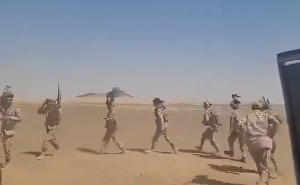 Saudi backed forces rejoicing over gains taking place in recent days ignores the greater challenges which face it in trying to dislodge the Houthi forces from its mountainous positions. Screengrab via Youtube.
After three days of escalating conflict in Yemen, with the Saudi-backed government making gains, the Houthis have struck the city of Mocha on the Red Sea. Their surprise advance was anticipated. Though the Houthis have suffered setbacks on other fronts, this offensive could have wider implications for the strategic Bab al-Mandab Strait in the Red Sea.
Mocha is one of several important ports in Yemen. Along with Hodeidah, it plays a key role on the Red Sea coast. It also sits at the northern end of the strait.
As such, the Houthi strike on the city could potentially lead to bringing the Iranian-backed Houthis closer to closing the Bab al-Mandab Strait in the same way that Iran has attempted to close the Strait of Hormuz.
This would give Iran more influence in the region, despite appearing to lose out on several fronts, with Iranian-backed proxies facing setbacks in Gaza, Lebanon, and Syria, and facing pressure to disarm in Iraq. The Houthis remain one of the most powerful pro-Iranian groups.
Reuters reported that the Houthis took Mocha on Thursday. The full story of what is happening in Yemen remains to be seen because reports are not always accurate. What matters is that the Houthis are trying to amplify their role along the Red Sea.
This comes amid several developments in Yemen and Saudi Arabia.
Houthi control gives Iran greater influence
The Houthis attacked Saudi Arabia this week as fighting increased in Yemen. Riyadh backs the government of Yemen against the Houthis. Saudi Arabia led an intervention in Yemen in 2015.
Now, Arab News in Saudi Arabia has reported that “Saudi civil defense issued an emergency alert for the southwestern province of Khamis Mushait to warn of potential danger for the fourth time in 24 hours.”
The General Directorate of Saudi Civil Defense informed, “The danger has been lifted from Khamis Mushait Governorate. For your safety, continue to follow the instructions of the Civil Defense and completely avoid gatherings and photography. In case of emergencies, call 998.” The warning had been linked to the Houthi conflict.
The Houthis had claimed to target an airbase in the part of southern Saudi Arabia near Yemen. As such, the kingdom was being cautious. This indicates that the Houthis are not wary of continuing to target the kingdom. Meanwhile, Pakistan has expressed support for Saudi Arabia.
Pakistan, Saudi Arabia, and Turkey recently signed onto a defensive pact. There are questions about whether the Houthi attacks might trigger wider support for Riyadh.
Pakistan expresses solidarity with Saudi Arabia
Pakistan’s leader has expressed his “unwavering solidarity” with Saudi Arabia, after Houthi drone and missile attacks on civilian and energy facilities in the kingdom left 73 people wounded, Arab News noted. “At the same time, Pakistan’s Defense Minister Khawaja Asif said that a three-nation defense pact between Pakistan, Saudi Arabia and Turkey could become operational in the event of aggression against the kingdom.”
Many are watching closely to see whether the Saudis will receive support from their new partners.
Iran is also watching to see whether the Houthis can continue to make gains and threaten the Bab al-Mandab Strait. The threat of the Houthis may increase global insecurity and continue to roil energy markets.
There are other issues that will affect the fate of Yemen and the Red Sea coast. Saudi Arabia has been backing the government forces in Yemen. However, the Saudis and the United Arab Emirates have not agreed on policy in Yemen. This may present challenges for the frontlines around Aden and Mocha.
The Yemeni government forces who oppose the Houthis face a challenge in that they control areas around the Houthis, but the Houthis control the high ground and part of the coast.
As such, the Houthis can shift forces along internal lines.
The Yemen government can’t do this. They can’t move forces easily from Jawf, for instance, to Mocha. To do so would require major logistics, and it’s not an easy task. As such, the Houthis enjoy some advantages in being able to shift resources from one front to another. Even when pressed, the Houthis will continue to enjoy this advantage.
The setbacks in Mocha illustrate how a forgotten and low-level conflict in Yemen can potentially reshape the region.


Leave a Reply
You must be logged in to post a comment.