
US CENTCOM is ‘coordinating with both countries to move forward’
Hanan Lischinsky | All Israel News | Published: July 10, 2026
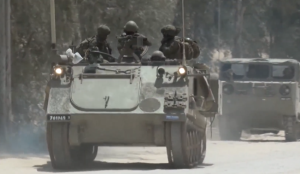 Screengrab via Youtube
The Israeli withdrawal from two “pilot zones” in southern Lebanon is set to begin in the coming days, The Times of Israel (TOI) reported on Thursday, as the next round of negotiations between Lebanon and Israel is set to be held in Rome next week.
The report came around two weeks after the Beirut-Jerusalem agreement had stipulated that the process of the Lebanese Armed Forces taking control over the entire south of the country would start in two zones adjacent to the Israeli-controlled security zone.
It also followed another report saying that Beirut had threatened to pull out of the Rome talks if Israel did not start its withdrawal soon, according to a Lebanese diplomatic source who spoke to Agence France-Presse (AFP).
“Lebanon is stipulating Israel’s withdrawal from two pilot zones in order to participate in the round of negotiations” next Wednesday, the source said.
“The first pilot zone will launch in a matter of days, and further pilot zones are being mapped out and planned. CENTCOM is coordinating with both countries to move forward,” a U.S. official told TOI.
Lebanon has leaned heavily on U.S. pressure on Israel throughout the negotiations. Speaking to the Saudi Asharq Al-Awsat newspaper, Lebanese President Joseph Aoun acknowledged, “we know very well that the U.S. is the only actor capable of exerting pressure on the Israeli government not to attack Beirut’s Dahiyeh district, destroy Lebanese infrastructure, or expand its occupation in southern Lebanon; no other actor is capable of playing such a role.”
“We want the Trump administration to help Lebanon regain all of its territory, and we are not prepared to make any concessions on this matter—not even a single inch. We seek to establish the authority of the state’s institutions throughout Lebanon, not only the Lebanese Army,” Aoun asserted.
The Lebanese president met U.S. Ambassador Michel Issa on Thursday, who confirmed after the meeting that “Preparations [for the withdrawal] are in full swing, and a U.S. military delegation will arrive in Beirut within days to coordinate and establish the implementation mechanism on the ground, since it is essential that there be no vacuum when Israeli forces withdraw from the designated area.”
An Israeli official told TOI that the IDF has made preparations for surrendering control over the areas but has been awaiting instructions from the political leadership.
The Hezbollah-affiliated newspaper Al-Akhbar reported that the head of the Lebanese negotiating delegation, Ambassador Simon Karam, will transmit during the Rome meeting preliminary answers to Israeli concerns about the implementation of the agreement.
The meeting will reportedly be held in three separate parts, with a political, a security, and a “good neighborly relations” committee discussing their respective aspects of the prospective final agreement between the countries.
Meanwhile, both sides have been monitoring the new escalation between the U.S. and the Iranian regime, which could endanger the Lebanon ceasefire if Hezbollah decides to support its Iranian patrons through new attacks on Israel.
The Lebanese newspaper Nidaa al-Watan reported that several countries have reached out to Beirut and Hezbollah to prevent such a scenario, with efforts being hampered by the reported recent breakdown of communication channels between President Aoun and Hezbollah, which has vowed to ignore any results of Aoun’s agreements with Israel.
The report stated that Lebanese Parliament Speaker Nabih Berri, a close ally of the terror group, has so far failed to obtain any guarantees from Hezbollah in this matter.
Meanwhile, Israeli troops have continued searching for and destroying Hezbollah infrastructure throughout the security zone in southern Lebanon.
The Israeli military announced on Thursday that it found two additional, around 200-meter-long tunnel routes in the area of Majdal Zoun, where the IDF recently detonated a massive underground fortress.
“Findings from the activity indicate that the area was heavily fortified and contained extensive terrorist infrastructure. In addition to the significant underground tunnel route previously dismantled in the area, two additional underground routes have now been dismantled,” the IDF said.
“Inside, troops discovered living quarters, three launch shafts aimed toward Israeli territory, and dozens of weapons. In addition, during searches in the area, the troops located a cache of weapons including mortars, launchers, and RPG rockets. Over the past week, brigade troops also eliminated an armed terrorist near one of the tunnel routes.”
On Friday, the military again said that soldiers “located weapons facilities in recent days containing launchers, machine guns, explosive devices, missiles, and additional weapons.”


Leave a Reply
You must be logged in to post a comment.