
IDF in ‘no hurry’ to continue withdrawing, plans to monitor success of Lebanese army
| Published: July 21, 2026
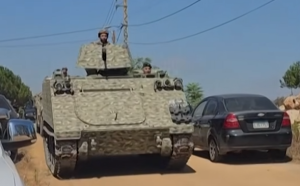 LAF forces deploy to southern Lebananese areas after Israeli withdrawal from the pilot area following agreement brokered by the US. Screengrab via Youtube.
The Israeli and Lebanese military confirmed the start of the pilot program under the Beirut-Jerusalem agreement on Monday, which will see local withdrawals of Israeli troops from areas in southern Lebanon while Lebanese soldiers will replace them.
As part of the tripartite agreement mediated by the U.S., the pilot program is meant to ensure that the Lebanese Armed Forces (LAF) continues the IDF’s work in locating and dismantling Hezbollah infrastructure while preventing the return of the terror group to these areas.
The IDF announced that the pilot began “in cooperation with the U.S. military (CENTCOM) and the Lebanese Armed Forces.”
The LAF confirmed Monday morning that its troops had begun entering the town of Zawtar al-Gharbiyah, after the withdrawal of Israeli troops from there. It also renewed its call to the local residents not to return to their homes “until the security situation stabilizes.”
??????? ??????? ?????? ??????? ??????? ????? ????? ?????? ?? ??????? ????????? ???? ??????? ???????? ???? ????? ???????? ?? ???? ???? ??????? – ??????? ???? ??? ????????? ??????? ?? ?????? ??????? ??????? ?????? ??????MCG4L .
????? ????? ????? ?????? ????????? ??? ??? ?????? ???… pic.twitter.com/636K6UiYwk— ????? ???????? (@LebarmyOfficial) July 21, 2026
The town is the only area where IDF troops were physically present, while the other areas of the pilot, around the villages of Faroun and Srifa, were located outside the IDF-held security zone.
The U.S. State Department noted that “This milestone is a direct outcome of last week’s discussions between Israel and Lebanon in Rome. The United States will continue working closely with both parties to implement the Framework to a successful conclusion.”
IDF sources told Army Radio that the first step is a “test” of the LAF’s ability to exercise its sovereignty in the three villages, and that final arrangements toward a potential full withdrawal from Lebanon have not yet been decided.
The IDF also clarified that it intends to aggressively thwart attempts by Hezbollah to violate the agreement and endanger Israeli troops.
#BREAKING | ?? ?? — Three pilot/experimental withdrawal zones in southern Lebanon — Froun, Srifa, and Zawtar al-Gharbiya — have been activated under the US-mediated Lebanon-Israel framework agreement.
According to analysis, two of the zones align with prior assessments. Only the… pic.twitter.com/rCM17j0bod
— The Global Eye (@TGEThGlobalEye) July 20, 2026
The decision to start the pilot in the three villages was made due to their relative distance from the border, as well as the fact that most of the terrorist infrastructure there has already been addressed, allowing the LAF to concentrate on holding the villages and preventing Hezbollah from returning.
The Israeli military is not in a hurry to continue withdrawing, a senior military official told Ynet News: “There is time” to implement the pilot, he said, adding that the goal is to carefully evaluate the LAF’s performance before continuing. The pilot will also be accompanied by a strict American-led monitoring mechanism.
On the Lebanese side, President Joseph Aoun is set to meet President Donald Trump this week, after meeting Secretary of State Marco Rubio on Monday.
According to the State Department, Rubio “commended the courage of the Government of Lebanon, under President Aoun’s leadership, for their determined effort to reclaim Lebanon’s sovereignty, disarm Hizballah and dismantle its terrorist infrastructure, and move towards peace. The Secretary reaffirmed the commitment of the United States to supporting the successful implementation of the Trilateral Framework and to backing the Government of Lebanon’s efforts to deliver peace, economic recovery, and a better future for the Lebanese people.”
The Hezbollah-affiliated al-Akhbar newspaper cited American diplomats saying Aoun expects “a commitment to ensure a full Israeli withdrawal from Lebanon” from Trump.
In return, the diplomats said, Trump will “make it clear to President Aoun that the price for this is the Lebanese government’s commitment to end Hezbollah’s military presence throughout Lebanese territory.”
The newspaper Al Joumhouria reported that Aoun will press Trump to support a mechanism implementing a sequence of withdrawals, where one successful deployment would automatically lead to the next without a new round of political negotiations each time.
At the same time, the escalating fighting between the U.S. and Iran has cast a new shadow over Lebanon, amid growing concern that Hezbollah could renew the fire against Israel in support of Tehran.
A diplomatic source in Beirut told the Lebanese newspaper Nidaa al-Watan that senior officials received urgent messages, presumably from Washington, to warn Hezbollah against any involvement in the U.S.-Iranian fighting.
The messages stressed this could have dangerous consequences for the state of Lebanon, as the Israeli Air Force would resume strikes across the country and could even target Lebanese state institutions and infrastructure in such a scenario.
Another potential threat to the ceasefire is the situation of the Ali al-Taher ridge near Nabatieh. The area was captured by the IDF, including the massive underground command center located beneath the ridge, where dozens of Hezbollah terrorists are trapped.
Israeli security officials told Ynet News that the standoff has created significant tension within Hezbollah’s leadership, as Israel has offered surrender or death. Progress in the pilot will require a clear resolution regarding this situation, according to the report.
In addition, the command center itself is another source of conflict. Unlike other underground fortresses, the IDF couldn’t capture and demolish it ahead of the ceasefire. Now, Israel will have to decide whether to transfer it intact to the LAF with the hope that it will demolish it, or capture and demolish it before, risking a response from Hezbollah that could endanger the ceasefire.
Israpundit is entirely dependent on readers support. Please help me continue educating people with the truth about what is going on in Israel and around the world.


Leave a Reply
You must be logged in to post a comment.