
Peloni: The tract from Malta led to so much bloodshed, so much terror, and so little justice.
Why the Mediterranean island of Malta went so far to the left and become so politically corrupt.
Barry Shaw | The View from Israel | Apr 06, 2026
 Screengrab via Youtube
The rot that is Malta today began with a philandering Socialist politician named Dom Mintoff who dominated the politics of a small Mediterranean island and was prone to erotic impulses.
This, linked to his narcissistic arrogance drove him into power on this modest tiny island.
Mintoff became a contradiction in terms, a Socialist millionaire.
The connection between Malta and Libya was strengthened when both Dom Mintoff and Muammar Gaddafi rose to power.
Under Mintoff for a number of years in the 80s, Arabic was a compulsory subject if you wanted to enter a Maltese university.
NATO closed its offices in Malta because Mintoff ordered it to do so.
When Israeli agents murdered Palestinian terrorist in Malta in 1995, they were able to so because Fathi Sheqaqi had entered Malta form Libya on a Libyan passport. The Mossad executed Sheqaqi for being the mastermind of several suicide bombings inside Israel. Sheqaqi was the founder of the Palestinian Islamic Jihad but welcomed in Malta though his Libyan connections.
Under Mintoff, Malta hosted a Libyan Cultural Center. Malta also hosted an office of Libyan Arab Airlines.
The connection between Malta and terrorism is wrapped in the infamous Lockerby bombing incident in which a Pan Am plane from Germany on its way to America blew up over the town of Lockerby in Scotland.
Investigators concluded the bomb was placed inside a suitcase that originated from Malta, arriving on an Air Malta flight to Frankfurt before being transferred to the Pan Am plane.
Maltese businessman Tony Gauci was one of the most vital witnesses at the trial of the two men accused of involvement in the Lockerbie airliner bombing 12 years ago.
But his role in the long-running investigation and subsequent trial came only by chance when bomber Abdel Baset Ali Mohmed Al-Megrahi walked into his shop in December 1988, a few weeks before the fatal flight.
Al-Megrahi bought some clothes he later used to fill the suitcase containing the bomb from Gauci’s shop.
Police investigating the blast traced charred shards of a sky-blue baby romper suit, umbrella and adult clothes found in the plane’s wreckage to Gauci’s small family-run shop in the seaside suburb of Sliema, on the Mediterranean island of Malta.
The detective work meant Gauci was involved in the investigation almost immediately.
Sliema, once the focal point of Maltese high society, is still seen as one of the most prestigious addresses on the small island, and is popular all year round with British tourists.
Gauci also identified Al-Megrahi on several previous occasions as the man who bought the clothes.
Iraq also sent their intelligence officers (spies) to Malta to monitor US and Israelis. One such person was Sail Mofaq who posed as a journalist but who was recognized by the Israeli Mossad as a spy and who left Malta in May 1995, going to Iraq via Jordan.
Formerly a British fortress island during World War Two, Malta failed to follow the Western thinking direction of other islands such as Cyprus and Santorini by lurching toward dubious Arab Islamic Middle East. This began under the leadership of Dom Mintoff.
A progression (some would say regression) was the choice of Yasser Arafat
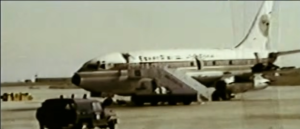
On 23 November 1985, Flight 648 took off at 8 pm on its Athens-to-Cairo route. Ten minutes after take-off, three Palestinian members of Abu Nidal hijacked the aircraft, the same group also responsible for the hijacking of Pan Am Flight 73 a year later. The Palestinian terrorists had the European, Australian, Israeli, and American passengers sit in the front of the aircraft while the rest, including the Greeks and Egyptians were sent to the back.
There was a shoot out on the plane causing it damage.
Libya was the original destination of the hijackers, but due to a lack of fuel, damage from the shootout and negative publicity, Malta was chosen. While approaching Malta the aircraft was running dangerously low on fuel, experiencing serious pressurization problems and carrying wounded passengers. However, Maltese authorities did not give permission for the aircraft to land. The hijackers insisted, and forced the pilots to land.
The Palestinian hijackers began shooting hostages starting with the Israeli female Jewish passengers. Tamar Artzi (aged 24), an Israeli woman, was shot in the head and back. Miraculously, she survived her wounds. The chief hijacker named Rezaq threatened to kill a passenger every 15 minutes until his demands were met. His next victim was Nitzan Mendelson (aged 23), another Israeli woman. Mendelson realized what was to happen so she resisted. Rezaq grabbed her by the hair and led her out onto the staircase before shooting her. She died a week later after being declared brain dead. While tossing Mendelson’s body down the stairs, Rezaq noticed Artzi move. He shot her through the back from the top of the stairs. Again, Artzi survived her wounds. He then targeted three Americans who had their hands tied behind them.
Rezaq called for Scarlett Marie Rogenkamp (aged 38), a U.S. Air Force civilian employee. Making her kneel on the staircase, Rezaq shot her in the back of the head, killing her instantly. Jackie Pflug (aged 30) wasn’t shot until the next morning.
When the U.S. told Maltese authorities that Egypt had a special forces counterterrorism team trained by the U.S. Delta Force ready to move in, they were granted permission to come. The Egyptian commandos began the raid about an hour and a half before it had been planned originally. They blasted open the passenger doors and luggage compartment doors with explosives. Fifty-two passengers – including pregnant women and children – suffocated from the fumes that enveloped the aircraft when the soldiers placed a bomb underneath the fuselage to break into the hold. Another five were shot by them.
The storming of the aircraft killed 54 of the remaining 87 passengers, as well as two crew members and one hijacker. Only one hijacker — Omar Rezaq, who had survived — remained undetected by the Maltese government. Rezaq came out of the cockpit only to be shot in the chest by a commando, throwing a grenade as he went down.
Rezaq removed his hood and ammunition and pretended to be an injured passenger. Egyptian commandos tracked Rezaq to St Luke’s General Hospital and, holding the doctors and medical staff at gunpoint, entered the casualty ward looking for him. He was arrested when some of the passengers in the hospital recognized him.
Maltese incompetence was further displayed when Rezaq was tried in Malta, but with no anti-terrorism legislation, he was tried on other charges.
There was widespread fear that terrorists would hijack a Maltese airplane or perform a terrorist attack in Malta as an act of retribution.
Rezaq received a 25-year sentence. For reasons unclear, Maltese authorities released him some seven years later, in February 1993, and allowed him to board an airplane to Ghana. His release caused a diplomatic incident between Malta and the U.S.
Eventually, Nigerian authorities denied him entry into the country and handed him to FBI agents. He was brought before a U.S. court and, on 8 October 1996, sentenced to life imprisonment with a no-parole recommendation.
Malta has maintained a long-standing, supportive relationship with Yasser Arafat and the Palestinian cause, anchored in recognizing the PLO since 1974. Arafat frequently communicated with Maltese leadership, and in 1997, Malta hosted a, symbolic handshake involving him. Notably, Suha Arafat, his widow, lived in Malta for several years.
The marriage between Arafat and Suha was not made in heaven. According to widow Arafat it was made in hell.
The 49-year-old Suha married Arafat in 1990 when she was 27. Arafat was 61 when the two wed.
Suha said that during their 14 year marriage, which ultimately ended with Arafat’s death in 2004, she tried leaving him countless times, but that Arafat prevented her from doing so.
“I tried to leave to leave him hundreds of times, but he wouldn’t let me. Everyone knows he wouldn’t permit me to leave. Especially those in his servitude, they know very well what it was like.”
Possibly Arafat’s dalliance with young boys was against her will. Let it not be said that Arafat died of AIDS.
However, Arafat’s widow was richly compensated from the millions donated by vacuous Western nations infatuated by the Palestinian cause that enables Arafat’s widow and daughter to live in splendid luxury in Malta.
Let it not be said that Suha Arafat is not a complainer. In November 2008 she was complaining how intolerable life was in her Maltese luxury. This according to the London-based Al Hayat newspaper.
Talk about the lady’s not for turning.
Like Malta itself, she chose her bed. Let her lie on it.


Leave a Reply
You must be logged in to post a comment.