Peloni: The ISF will never work for the very reason that is cited by Cohen below: “[Arab countries] are wary…of being perceived as doing the dirty work of the Israelis, and they are determined not to risk the lives of their soldiers in that regard.”
No matter the composition of the ISF, this would be true. Recognition and ‘peace’ treaties with Israel has hardly changed the reality that Arab states act in tto the stability of their own regimes, which includes satisfying the radicals in their own realm with false representations and baseless condemnations of Israel. Multiple examples might be chosen to exemplify this fact, for instance, with the UAE, whose domestic outlawing of the Muslim Brotherhood contrasts significantly with their call to ‘reform’ the UAE. The Arabs will always have a foreign face which is markedly different from their domestic face, and the reason is that they both serve to support their national interests and the survival of their respective regimes. Unfortunately, Israel is being forced to abrogate its own national interest yet again with the adoption of a farcical security force in Gaza which will seek to support foreign national interests at the expense of that of Israel.
The world is on the cusp of making the same mistake with Hamas that it did with Hezbollah in Lebanon in 2006. Still, there is progress to be made if the involved parties pay attention.
Ben Cohen | FDD | Nov 21, 2025
No doubt, the passage of U.N. Security Council Resolution 2803 on the postwar reconstruction of Gaza was a triumph for American diplomacy. Drafted by the United States and eagerly endorsed by a host of Middle Eastern and Islamic nations on Nov. 17—among them Qatar and Turkey, two of Israel’s most insidious adversaries—the resolution garnered 13 of the 15 votes on the council. Russia and China, two of the five permanent members with the power of veto, decided not to oppose the resolution, meekly abstaining instead.
However, the diplomatic obstacles to securing the resolution’s passage pale in comparison with the political and strategic obstacles confronting its implementation.
Read more…


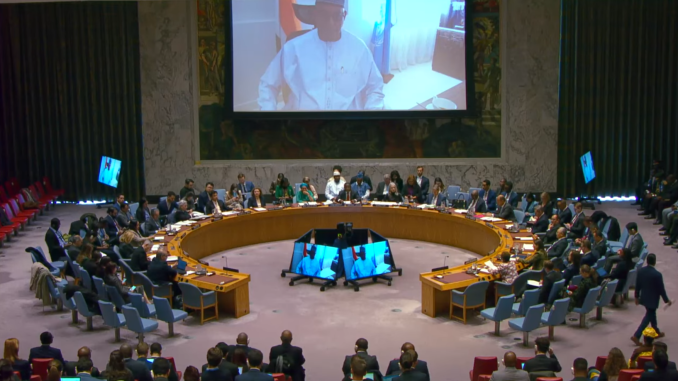



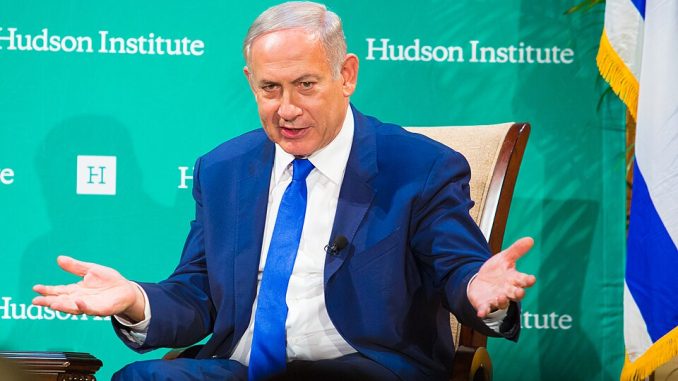 Photo by Hudson Institute – https://www.flickr.com/photos/hudsoninstitute/30498881961/, CC BY 2.0, Wikipedia
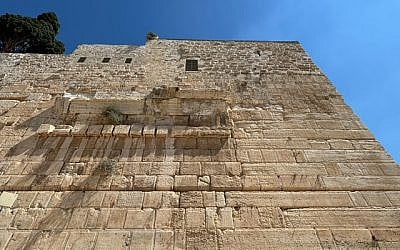 Newly excavated extension of the Western Wall with inscriptions. (Photo by Geoffrey Clarfield).
