
Janet Levy:
Peloni: Oy gevalt! This is must read article. See very brief summary below.
by Armin Rosen | Tablet | July 9, 2026
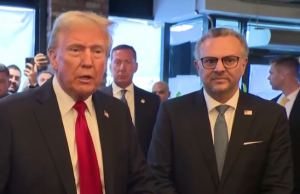 Trump and Massad Boulos during a campaign event in 2024
Click Link to Read Article
https://www.tabletmag.com/sections/news/articles/family-business-armin-rosen
Brief summary:
Armin Rosen examines the rise of Massad Boulos from a businessman in Nigeria to one of the Trump administration’s senior advisers on African affairs, using his career to explore broader changes in the conduct of American foreign policy. In doing so, Rosen offers a great deal of insight into not only the Trump administration, but how American policies might be perceived abroad.
Rosen follows Boulos’ decades in Nigeria, his business relationships with influential figures, and his family connection to Donald Trump through his son Michael’s marriage to Tiffany Trump, the result from which which positioned him to become an unusually and highly influential diplomat in Trump’s second term as president.
Rosen traces begins with Boulos’ long association with Nigeria’s political and business elite, particularly the Chagoury family and President Bola Tinubu, while examining a troubling depiction of the religious violence raised against Christians and Boulos’ public defense of the Nigerian government’s approach on this matter. He also raises questions about Boulos’ broad diplomatic authority, ethics disclosures, and the overlap between his government responsibilities and longstanding business relationships.
Rosen’s essay also follows Boulos’ transition from Middle East adviser to Africa envoy, his involvement in diplomacy across the continent, and includes his efforts at pursuing peace between Rwanda and the Democratic Republic of the Congo, as well as his role in negotiations tied to strategic mineral resources.
Throughout this highly granular report, Rosen shares an image of Boulos as representing a symbol of a larger transformation taking place more generally within American governance, thus making the argument that the second Trump administration increasingly relies on personal relationships, family ties, and business networks rather than traditional diplomatic institutions. Rosen concludes that Boulos’ career illustrates how individual influence and transactional relationships have become increasingly central to the US administration’s approach to foreign policy.


Email received from Paul Schnee:
Boulos became a USA citizen in 1990 and now he’s a VIP in our government?
Let’s be honest. Who can Trump really trust?
@dreuveni
Yes, that is where much of this stems from, but the implications of choosing advisors from personally connected allies/family relations rather than from traditional sources of diplomats has some very unfavorable consequences, both for the governance which might come from using these alternatively sourced diplomats, but also from the perspective of foreign nations whose expectations from the US will likewise reciprocate to the implication of America openly embracing cronyism among the president’s highest advisors.