
Peloni: This is an important initiative.
by
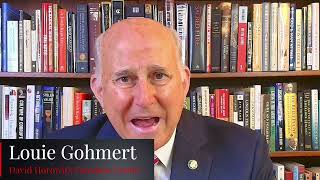 Video Loads At Bottom
In just the last four weeks…
- Judge Kate Menendez, a public defender appointed by Biden, issued an injunction blocking the arrest of anti-ICE rioters and using pepper spray against them.
- Judge Mustafa T. Kasubhai, a Marxist Biden appointee and the third Muslim federal district court judge, blocked the Justice Department’s access to voting data in an investigation of ineligible voters in Oregon.
- Judge Arun Srinivas Subramanian, also a Biden nominee, blocked the Trump administration from freezing billions in funding to Minnesota and other states suffering from severe fraud.
- Judge Sparkle Sooknanan, a former foreign national appointed by Biden, ruled that Trump couldn’t hold illegal alien gang members at Gitmo.
- Judge Ali Amir, also a former foreign national and the first Muslim federal lifetime appointee, also by Biden, ordered the restoration of the security clearance for a lawyer for a Russiagate figure.
- Finally, Judge James Boasberg, an Obama appointee, demanded that the Trump administration negotiate with the Venezuelan regime to bring back the 137 Venezuelan Tren de Aragua gang members who had been deported back to their homeland.
Federal judges are out of control. Some of them are naturalized foreigners. Others are radical activists who ignore the law and are carrying out a judicial coup against President Trump.
That’s why the David Horowitz Freedom Center is launching the Judicial Accountability Project to hold federal judges who abuse the law, violate their responsibilities and behave badly, responsible.
One ongoing incident sums up why we decided to tackle this.
Rep. Louie Gohmert, who was a sitting member of Congress at the time, had his cell phone records subpoenaed for three months. Even more shockingly, we still don’t even know the name of the judge who authorized the spying because his “signature is illegible”.
Anonymous federal judges should not be able to authorize spying on political opponents.
The great barrier to holding federal judges accountable has been the perception that the only remedy is the high bar of impeachment. Speaker Michael Johnson recently said that he would be willing to move to impeach Judge Boasberg and Judge Deborah Boardman.
But a growing number of legal experts, including Rep. Gohmert, a former Texas state chief judge, have examined the constitutional framework for removing judges, and found that it does not necessarily require impeachment.
As former Rep. Gohmert, a senior fellow with the David Horowitz Freedom Center, wrote in a recent article, “Article III, Section 1 of the U.S. Constitution states, ‘The Judges, both of the supreme & inferior Courts, shall hold their Offices during good Behavior…’ It does not say that the judges will hold their offices until they resign, die, or commit ‘a high crime or misdemeanor.’ It just says that they stay on their bench while their ‘behavior’ is good.”
Are federal judges behaving themselves?
To answer that question, the David Horowitz Freedom Center launched the Judicial Accountability Project, as a joint venture of Front Page Magazine and our sister project, Discover the Networks, to conduct public interest investigative journalism, to assemble detailed histories of federal judges and areas of potential misconduct that fall afoul of the ‘good behavior clause’.
John Perazzo at Discover the Networks has assembled a compendium of profiles that investigate the words and actions of federal judges who have failed, in one or more ways during the course of their careers as jurists, to perform their professional duties in a manner consistent with the standards articulated in the official “Code of Conduct for United States Judges.”
As John notes, “among the most frequent and objectionable transgressions of such activist judges are instances where they have willfully:
- usurped the policymaking power that the Constitution assigns exclusively to the Executive Branch, and not to the Judicial;
- usurped the lawmaking power that the Constitution assigns exclusively to the Legislative Branch, and not to the Judicial;
- injected their own personal politics and ideologies into their deliberations and legal rulings; and
- disregarded the laws requiring that they recuse themselves from any case where there is even the slightest question about their potential bias, prejudice, or conflict of interests.
The objective of the Judicial Accountability Project is to bring public attention to the words and actions of judges who fail to demonstrate the “good Behavior” mandated by the Constitution; who fail to carry out their professional duties in a manner that is free of political partisanship, bias, or corruption; and who fail to honor the boundaries that distinguish the power of the judiciary from the powers of the legislative and executive branches.
In the coming weeks and months, we will bring attention to John’s fine work by highlighting the most egregious abuses of the ‘misbehaving judges’ as they happen and we will seek action.
The Judicial Accountability Project’s profiles of over a dozen judges (including Judge Boasberg and Judge Boardman) will grow and we will bring attention to the constitutional responsibilities of members of Congress, in a non-partisan manner, of their power to use the lower ‘good Behavior’ standard rather than the high standard of impeachment to bring order to the court.
If you know of any violations by federal judges that we have not yet covered, drop us a line because the ultimate power in this country was never meant to lie with judges, but with the people, and that balance of power is what the Judicial Accountability Project will restore.


https://www.jns.org/news/u-s-news/federal-judge-dismisses-complaint-against-anti-israel-groups-that-protested-outside-nj-synagogue
These judges must be removed. A system of punishment must be instated to properly deal with them so that they cannot rule from the bench as they have been doing. If the Judicial Accountability Project can achieve that, get them started up and running. However, additional ways to ensure that judges act in accordance with the constitution is mandatory and whatever system or law is introduced to make sure they do must be enforceable and then the judges must be monitored to ensure that they stop their irresponsible actions right away. There may be some kind of court of appeal for judges who stepped aside from their task, but if they appeal and are refused, they must be gone and depending on their misstep, punished accordingly. We may even need a special prison for them because their incarceration with people they previously judged might be fatal.
Finally, wrong rulings must be corrected. There can be no two ways about this.
I’m reminded of one of my favorite films, “A Stranger in Town (1943) is a drama-comedy film about a vacationing Supreme Court Justice, John Josephus Grant (Frank Morgan), who goes incognito to a small, corrupt town and helps a local lawyer, Bill Adams (Richard Carlson), run for mayor to fight the crooked officials. The justice, posing as a hunter, uses his legal knowledge to guide the lawyer in a fight against the corrupt mayor and his cronies, culminating in a dramatic courtroom reveal of his true identity. Directed by Roy Rowland, the film is known for its lighthearted yet patriotic tone, with a runtime of about 67 minutes. ”
Amazon Prime Video has it streaming to rent for $1.99