
by Con Coughlin • Gatestone Institute • March 8, 2026
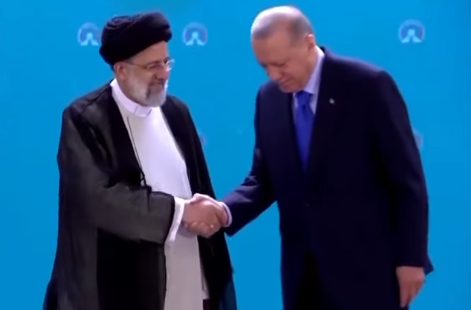 Turkey’s Pres. Erdogan meets Iranian Supreme Leader Ayatollah Khamenei. Screengrab via Youtube. Source: Turkey’s Pres. Erdogan meets Iranian Supreme Leader Ayatollah Khamenei. Screengrab via Youtube.
- Now, following the demise of Iran’s Supreme Leader, Ayatollah Ali Khamenei, as well as scores of other prominent members of the regime, countries that have previously tried to maintain cordial relations with the ayatollahs face a stark choice: do they want to maintain their ties with known Islamist extremists, or forge closer ties with the US and its allies?
- What if, however — Washington and Jerusalem should both carefully note — they choose both? With the Iranian threat gone, what would prevent them from complying with Trump’s demands of the moment and enjoying the benefits of modernity — and then, when he is no longer in office, continue supporting terrorism, religious extremism and jihad (holy war)?
- Just because one is happy to have a roaring economy — as we already see with Qatar — that does not necessarily mean one will be happy with what is already being reported as “concern” about Israel’s increased standing in the region.
- The only GCC member state opposed to confronting Iran was — predictably — Qatar, a state that has tried to maintain ties with the ayatollahs while becoming one of the main backers of Hamas terrorists in Gaza.
- Turkish President Recep Tayyip Erdogan publicly condemned the joint US-Israeli attack on Iran while saying he is “saddened” by the elimination of Khamenei and offering his “condolences” to the people of Iran.
- Erdogan’s reaction is indicative of the close ties he has developed with Iran’s ayatollahs, and his opposition to the notion of the emergence of a democratic, Western-aligned government in Tehran.
- Turkey, which remains a member of the Nato alliance, has done its best to undermine the Trump administration’s military campaign against Iran, denying US forces vital access to its air, land and maritime space to conduct operations against the ayatollahs.
- The Trump administration certainly needs to take note of the long-term hostile conduct of so-called allies such as Turkey, Qatar and Pakistan as the US and Israel attempt to destroy Iran’s nuclear program once and for all, and especially in rebuilding Gaza.
- At the very least, if Turkey is not prepared to support the US military in times of crisis and no longer acts as an ally — and is indeed acting contrary to US interests — then the White House would do well to conclude that the US and its allies should cease all military cooperation with it.
US President Donald J. Trump’s decision to launch his devastating military campaign against Iran’s ayatollahs means that countries, such as Turkey and Qatar, which have previously been ambivalent about their attitude towards Tehran, will now need to undertake a serious reappraisal of where their true interests lie.
Prior to Trump launching “Operation Epic Fury”, the military campaign designed to eliminate Iran’s ability to produce nuclear weapons, ballistic missiles or support its proxies once and for all, several important regional players sought to remain neutral as the tensions deepened between Washington and Tehran over Iran’s nuclear programme.
Even though they claimed to be allies of the US, they also sought to maintain links with the ayatollahs, even when it became abundantly clear that the Trump administration was determined to confront Iran over its clear delaying tactics in the recent round of nuclear negotiations.


Leave a Reply
You must be logged in to post a comment.