
Peloni: Having VP Vance take the lead on any negotiations would be a disturbing development. While Trump makes his own decisions, the use of Vance in negotiations may be signalling the limit for US resolve has been met. If so, we are back to hoping that the Iranians maintain their hard line positions and continue to refuse Trump’s demands.
Gulf countries lose patience, US ground troops still en route
| Published: March 24, 2026
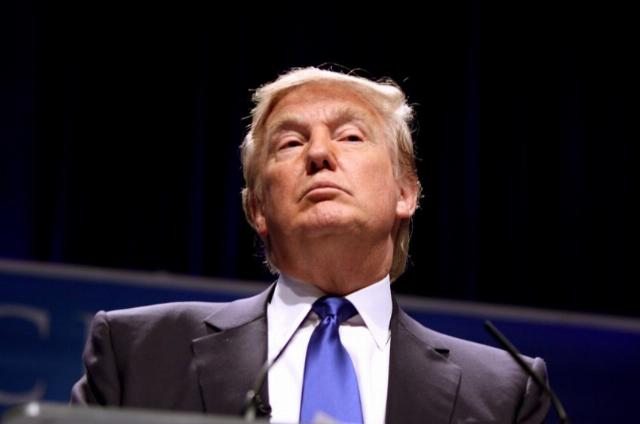 Trump. Gage Skidmore via Flickr, https://www.flickr.com/photos/gageskidmore/5440392565 CC BY-SA 2.0. Wikipedia
U.S. President Donald Trump’s surprise announcement of talks that could lead to the end of the war in Iran came after several days of covert discussions, but a myriad of questions remain to be answered before the weapons will fall silent.
According to Trump, the initiative for negotiations came from Iran: “They want very much to make a deal. We’d like to make a deal too,” Trump said Monday, adding, “They called. I didn’t call. They want to make a deal, and we are very willing to make a deal.”
A source involved in the talks told Israel’s Channel 12 News that both sides were willing to talk. “The Iranians were open to it, and the Americans also wanted to advance because of the markets and oil prices.”
According to the Wall Street Journal (WSJ), talks had been underway since Thursday through Middle Eastern intermediaries, with U.S. officials saying that the discussions signaled hope for a settlement.
Foreign ministers from Egypt, Turkey, Saudi Arabia and Pakistan gathered in Riyadh on Thursday to attempt to mediate negotiations between Washington and Tehran. The first challenge they had to overcome was finding an address in Iran, as Ali Larijani, who had effectively run the regime for the past months, had just been assassinated.
Officials told the newspaper that Egyptian intelligence officials managed to open a communication channel with Iran’s Islamic Revolutionary Guard Corps (IRGC).
Ynet News reported that, in the end, talks were held on a regular mobile phone line between Iran’s Foreign Minister, Abbas Araghchi, and Trump’s envoys, Steve Witkoff and Jared Kushner.
Israel reportedly didn’t receive an immediate update and wasn’t directly involved in the talks.
An intriguing aspect of the talks is the question of who approved them in Iran, and who is truly in charge there.
According to Ynet, Araghchi emphasized during the talks that “I am here after we received the consent and blessing of Mojtaba Khamenei to close the matter as soon as possible, as long as our conditions are met.”
A senior Israeli official explained that Araghchi intended to reinforce the idea that Mojtaba Khamenei, who is reportedly still being treated in a hospital and had been rumored dead, is in charge. “On the other hand,” said the official, “it was very important for him that the Americans know he came with authorization from those in power.”
Meanwhile, another report from Channel 12 stated that the U.S. has lingering frustrations with Araghchi since the failed negotiations before the war, and sees him as lacking real authority in the talks.
One source involved in the talks described him as “a fax machine who only passes messages,” adding the U.S. wants to engage with Iran’s parliament speaker Mohammad Bagher Ghalibaf, who is seen as the real power behind the scenes.
Media reports suggested that Ghalibaf could travel to Islamabad for the meeting. However, Kan News also reported that a private plane had already traveled from Tehran to Islamabad over the weekend, possibly to take part in negotiations.
The report noted that the Israeli Air Force maintains full control over the skies of Tehran, and, therefore, the plane would have had to receive approval from Israel before taking off for Pakistan.
A future U.S. delegation for talks in Islamabad could be led by Vice President JD Vance, according to other reports. Vance and Israeli Prime Minister Benjamin Netanyahu spoke on Monday, officials told WSJ, while Trump reportedly spoke with Pakistan’s army chief and de facto ruler, Asim Munir.
Meanwhile, the Iranians still haven’t confirmed that they intend to participate in negotiations, while framing Trump’s announcement as a surrender.
“Fearing a response from Iran, Trump backed down from his 48-hour ultimatum,” Iranian state broadcaster IRIB said, and Ghalibaf himself denied that talks had taken place, however, without explicitly ruling out future talks.
Arab officials told WSJ that, for the Arab countries, opening the Strait of Hormuz remains the top priority. They said that Gulf countries are advocating for the strait to be overseen by a neutral committee guaranteeing safe access for all ships.
However, the IRGC has reportedly responded to this proposal by proposing to put the strait under Iran’s authority, allowing it to collect fees from ships that transit the waterway, as Egypt does with the Suez Canal, a proposal the Gulf countries roundly rejected.
Saudi Arabia, in particular, is not ready to allow Iran to have the upper hand in the strategic waterway.
Arab mediators have expressed skepticism that the U.S. and Iran could quickly reach an agreement, WSJ added, while the Gulf countries reportedly “are inching” toward joining the fight against Iran as they continue to be under attack from the regime.
Saudi Arabia has now agreed to let the U.S. military use its King Fahd air base, people familiar with the decision told the newspaper, while the UAE is weighing whether to send its military into the fight.
Presidential Advisor Anwar Gargash has made clear the UAE would not agree to a ceasefire that leaves the Iranian threat intact, and the emirates have recently shut down the Iranian Hospital and Iranian Club in Dubai in the latest step targeting Iranian assets in the country.
Meanwhile, thousands of U.S. ground troops remain en route to the region, despite the negotiations.
The U.S. is sending two Marine Expeditionary Units, each with about 2,200-2,500 Marines, aboard three warships to the area. In addition, the New York Times reported that the deployment of a combat brigade from the Army’s 82nd Airborne Division and some elements of the division’s headquarters staff is being considered, as well.
Defense officials told the NYT that the move hasn’t yet been ordered by the Pentagon or U.S. Central Command, but described it as “prudent planning.”


Leave a Reply
You must be logged in to post a comment.