
Peloni: Good input from J.E. Dyer as always. Specifically, addressing the matter of Caroline Glick‘s potential appointment to be the NY Consul, I think it is a great choice. I think back to more than a decade ago when Caroline provided one of the all time best responses to the blind condescending demonstrations of European antisemitism which could not have been improved upon even if it had not been a spontaneous response. The point, of course, of the NY Consul should not be one of antagonism nor of abuse, but as Caroline so adeptly demonstrated in that famous exchange in the link above, one can and should directly address such gross displays of Jew Hatred directly and appropriately even while maintaining an air of decorum but still addressing outrageous dog whistles of Jew Hatred. I believe Caroline would be perfect in the role of the NY Consul.
Iran, and radical themes, in interesting times.
J.E. Dyer, a retired Naval Intelligence officer, blogs as The Optimistic Conservative, May 31, 2026
 Feature image: Tanker traffic in the Strait of Hormuz. Social media.
National Review’s 70th anniversary issue in October 2025 reminded us of the long-running, thematic Cold War column “The Protracted Conflict,” written for many years by James Burnham (and later continued by Brian Crozier, until the Soviet Union met its demise in the early 1990s).
It’s interesting to ponder that the Cold War effectively dated from 1917 to 1992, a period of 75 years. Some Cold War polemicists consider its beginning to have been in about 1947, when the World War II alliance of the “Atlantic” powers (principally the U.S. and UK) with Stalin’s USSR faded from any semblance of cooperation. (Appropriately enough, a key element of that turning was Stalin’s attempt to gain dominant political influence over Iran [as well as Greece], in part by threatening Iran with military force. America’s counter to this move was what became known as the Truman Doctrine.)
That take on the Cold War, it is increasingly obvious, was a largely fatuous view of the nature of the World War alliance. The Soviet Union was fighting an intense hybrid, geopolitical war against the liberal West from the first moments of the 1917 revolution, and never had any good-faith alliance with us.
We may appreciate the sacrifice of Russian soldiers and the Russian people, without being sentimental about any alignment with Stalin. He was subverting and imposing totalitarian dominance on Eastern Europe before the world war even ended. His sponsorship of Communist movements in the West had made inroads into media, academia, and Western governments well before 1939. Their coin was blood, and their message was slavery for conquered peoples: slavery to vicious torture prisons and an ideology full of nihilist resentments and vindictiveness.
NR’s pundits’ view of the “protracted conflict” ran for a much shorter period. It started in 1955, and found its themes and character superannuated by mid-1992. All told, its lively years numbered about 37.
Ping One
The point to ponder in 2026, in my view, is that the hybrid war being waged against America by revolutionary Iran, now in its 48th year, has outrun the career of the “Protracted Conflict” column. NR has been writing quite a lot about this more recent protracted conflict, in every one of the completed 47 years since 1979.
In those 47 completed years, the Iranian regime’s radical vision hasn’t wavered. Where Stalinism proposed a globe being sucked by proxy into a Soviet Socialist black hole, Iran’s revolutionary doctrine proposes a global caliphate being prepared for a Mahdi. The principal obstacles to it are the Great Satan (the U.S.), the Little Satan (Israel), and the Sunni blasphemers who took the wrong fork in the road centuries ago, and now breathe entirely too much Islamic oxygen.
That thought is a reminder, like the one in NR’s 70th, that neither the U.S. nor Israel ended up in a pitched conflict with Iran because of some damn-fool thing out of Gaza on 7 October 2023, rootless in history and explained by the fanciful “Palestinian” narrative. The conflict has been brewing since before a radicalized Iran took over the “revolutionary” mantle thrown off by post-Nasser Egypt with the Israel-Egypt peace accords.
No sooner had Jimmy Carter’s paper-waving Camp David success dropped than Iran was wracked by an Islamic revolution, the Shah was forced out, and within about 18 months the American embassy had been taken hostage, and Iran and Iraq were at war. The years afterward saw the U.S. and Israel pointedly targeted by Iran’s mullahs. The Soviet Union and its proxies trained Iran’s proxies in nihilist bomber and other terrorist tactics, not solely but still especially including Hezbollah in Lebanon.
Hezbollah has since gone beyond troubling Lebanon, Syria, and other locations in the Middle East to become a major crime-syndicate presence in the Western hemisphere, hand-in-glove with Central American cartels, with Russian crime syndicates in the post-Soviet 1990s, and with Chinese syndicates in our own day. Hezbollah and its acolytes imported from Syria and Lebanon achieved high-level positions in the governments of Hugo Chavez and Nicolas Maduro in Venezuela. And with regard to direct involvement by Iran, links were observed in the late 2000s and 2010s between Iran and Venezuela, Nicaragua, Colombian factions, Bolivia, Ecuador, and of course Cuba.
This is why there was a global-leverage, global-impact aspect to Trump’s “pivot” in 2025 to fighting Maduro and the cartels in Central America. As I pointed out last fall, refocusing on Venezuela and Central America would rob Iran of resources, operational latitude, and opportunities the mullahs were cultivating to hold the United States at risk. And so it has.
I recount all this to set the stage for a pair of X posts (mine) from a couple of days ago on the subject of the U.S.-Iran talks. I will let the comments stand on their own. The stage of history needed to be set for them, but I think they can be engaged without extensive elaboration.
@OptimisticCon https://t.co/sk8ntLtz6K
— Herb Glatter (@herbyg72) May 30, 2026
Israel stepped up to the plate BIG TIME.
the chess pieces are moving around the board at a dizzying pace— Herb Glatter (@herbyg72) May 30, 2026
Ping Two
I’ll be much briefer on Ping Two, which relates to the U.S. naval blockade of Iran. A lot of commentators feel that they have a “gotcha” with the point that the U.S. has not been pursuing every single ship that – by profile – is breaking the blockade, by heading to or from an Iranian port.
And it’s true: we haven’t been pursuing every ship. In the Strait of Hormuz, that’s because a lot of ships are using the territorial waters of Iran and Oman (and in the easterly direction, Pakistan) to evade the U.S Navy.
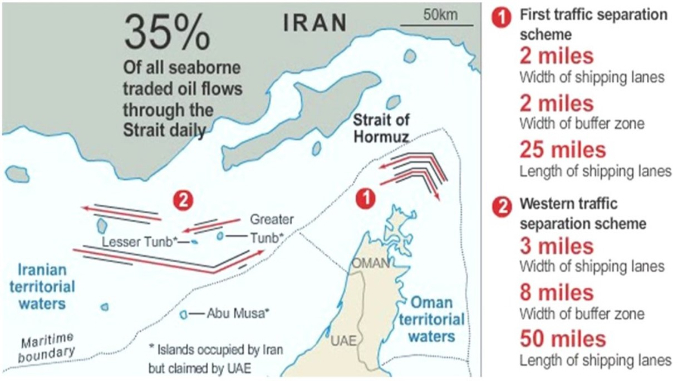 Traditional trait of Hormuz traffic scheme showing territorial waters boundaries in the immediate vicinity of the strait. Image from OptimisticConservative.com
Obviously we don’t have Iran’s permission to detain ships in its territorial waters. Apparently, we don’t have Oman’s permission to do that either (or Pakistan’s). Thus, detaining ships in those waters would create cross-national incidents.
Please see the X posts below for more. Regarding our decision not to create cross-national incidents in order to stop every ship, our choice has been to not escalate that way in the process of enforcing the blockade. (In some cases we’ve chosen instead to interdict blockade runners further out in international waters, as we’ve reportedly done a handful of times in the Indian Ocean.) So sue us.
International waters in the GOO.
I keep the reminders going that the US isn't entering Iran's or Oman's territorial waters to detain, redirect, or disable ships violating the blockade.
It's no gotcha that a number of ships have avoided US force by remaining in the SOH-littoral… https://t.co/dG0fWP6ule
— J.E. Dyer ?? (@OptimisticCon) May 30, 2026
Incident to the blockade, sea mines have been spotted in the waters off Oman, apparently recently (i.e., within the last few days). Please see the X post for more on that.
This looks like a Maham-1 moored contact mine. Probably placed very recently.
H.I. Sutton/Covert Shores has more on the mine type (link below).
Max mooring depth is 100 meters, or about 50 fathoms (300 ft). Off Oman's coast, there's a limited area in the Gulf of Oman where that… https://t.co/JwM90bSNAh pic.twitter.com/9PaaSOdllG
— J.E. Dyer ?? (@OptimisticCon) May 31, 2026
Ping Three
I write this ping in response to an op-ed at Jerusalem Post, expressing support for Israel to appoint Caroline Glick as Consul General to the Israeli consulate in New York.
Writer Philip Jacobs, an Israeli-American sociologist and entrepreneur, makes a case largely about the potential benefits of a Glick appointment for Jewish Americans, and I’ll let him make his case for that.
My interest is in the extreme Islamist/Communist radical and anti-Israel profile of New York City’s Mayor Zohran Mamdani, and the need for strong counterpoints to it.
Across the board, America needs strong voices countering the trend of Mamdani’s proclamations and premises.
Caroline Glick could be such a voice, as a matter of speaking to Israeli policy and interests. Mamdani is clearly going to make a big point of using the city government of New York to advance “Palestinianism” – which effectively is too often support for Hamas and Hezbollah – and express hostility to Jews and Israel. The mayor of New York has no business doing that, and the probability of safety concerns for Israeli visitors increases with each day he’s in office.
It’s not for Ms. Glick to arbitrate such matters for a U.S. state, of course. Consuls typically keep a low profile and restrict themselves to consular services, government-approved speeches, and attending ceremonial events. But Ms. Glick would be welcome to me as a diplomat with a particular reputation, whose selection would give President Trump an Israeli posture to tacitly endorse.
She is smart and well-equipped to not exceed her remit as an Israeli diplomat. That said, the last thing New York needs as it faces an onslaught of mainstreamed antisemitism and radical partisanship for incendiary causes is key public figures running away from the problem. Minnesota and Michigan have shown us what comes of that.
America must not let our big cities become hotbeds of foreign-operated radicalism, for a “red-green” alliance that delights in afflicting not just the “comfortable” but everyone else. It’s not for foreign diplomatic delegations to get mixed up in American politics, of course. But it is good for the representatives of our international partners to be fearless in their representation, and not be induced or triangulated into ill-judged silence.
Mamdani’s radical profile directly mirrors the aftermath of the 10/7 attacks by Hamas in 2023, when a highly-organized consortium of radicals concentrated in New York was ready to launch disruption, threats, and violence in the city. Jews are a principal target, though not the only one. Ignoring that elephant in the room, as if everything is ops normal and Mamdani is just playing games, is bad for America in every way, not just bad for Israeli interests or Jews in America.
A useful comparison would be with sending Ric Grenell to speak America’s mind in Germany. I don’t think Trump’s Washington, D.C. needs that ministry so much. Israel already has a fine ambassador in Yechiel Leiter. But Mamdani’s and Hochul’s New York does.
New York matters. And I hasten to emphasize that choosing a consul general, including the rulebook for its consul general’s functions, is Israel’s call. It’s not my opinion that should prevail.
But a weak-mouthed Israeli consul general would be a lost opportunity, leaving the wrong impression through silence. Caroline Glick could actually make a good deal out of her reputation and presence, even in silence. But as a uniquely placed member of Israel’s delegation in the United States, and courageous expositor of Israeli interests in general, she would also be an excellent representative, when the occasion is proper, to leave the right impression through speech.


Leave a Reply
You must be logged in to post a comment.