MenuThere is no diplomatic solutionIsrael should declare three nos; no to nuclear Iran, no to two-state solution, no to bi-national state
Hamas to Win in the Knesset What It Lost in Gaza, and Iran Is Watching
Peloni
Video Loads Below
The October 27 election results have been ratified with the Right bloc holding 53 seats, the opposition holding 48, and Arab parties with a record of 19 seats. There is no 61-seat majority to be reckoned at the moment, but a minority government could take office with 49 votes if Arab parties abstain in favor of controlling the political choices of the govt it chooses to support.
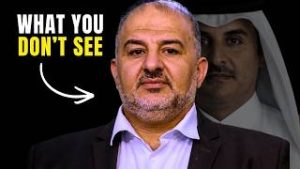
Moshe Davis demonstratates how this provides the Arabs with a de facto veto over all security decisions, even as the leaders of those parties consider October 7th to be a formative historic event, refuse to label Hamas a terrorist organization, and depict the Gaza war as an act of genocide. Referencing the 2022 government collapse which came about over a routine Judea and Samaria law, Davis emphasizes that coalition math, rather than military math, will be the driving decisions on Iran, buffer zones, and operations in the north if this scenario comes to be. Davis outlines 8 urgent security goals which need to be pursued, from continuing the Iran campaign to curbing Qatari influence and reminds the viewers that poltical parties which reject the state’s character should not be provided the means by which to control the fundamental aspects of the nation’s survival.
Israpundit
is entirely dependent on readers support. Please help me continue educating people with the truth
about what is going on in Israel and around the world.
Actually, what is more likely is that the Haredi will join with Eisenkot, provided a mutually agreed upon draft law can be written. If this occurs Eisenkot will be PM with coalition of 61 MKs and no need for Arabs.
Liberman drops veto on haredi parties in coalition, opposition in talks with UTJ – report
The bloc is reportedly discussing the possibility of drafting a more lenient military conscription law.
NOVEMBER 5, 2026
Yisrael Beytenu chairman Avigdor Liberman has dropped his veto on forming a government with haredi (ultra-Orthodox) parties, opening the door for the opposition bloc to begin discussions with United Torah Judaism (UTJ), N12’s Amit Segal reported on Thursday
The bloc is reportedly discussing the possibility of drafting a more lenient military conscription law, and the current assumption is that Shas would be forced to support the move as well, under pressure from Rabbi Lando.
UTJ, a longtime coalition partner of Prime Minister Benjamin Netanyahu, declined to recommend a candidate for prime minister to President Isaac Herzog during the party’s consultation earlier on Thursday.
UTJ’s decision to abstain came amid reported tensions between the haredi party and Netanyahu, and it benefits the opposition bloc seeking to replace him. Opposition party leaders have recently signaled greater openness to including haredi parties in their coalition.
A potential coalition led by Yashar chairman Gadi Eisenkot and including United Torah Judaism (UTJ) would hold 55 seats in the Knesset, falling short of the 61-seat majority needed to form a government. However, it would reduce Netanyahu’s bloc to just 46 seats, potentially allowing Eisenkot to form a minority government with Ra’am and the Joint List abstaining.
United Torah Judaism party head MK Yaakov Asher alongside members of his party at the party’s election headquarters in the ultra-Orthodox city of Bnei Brak,
Liberman has long maintained he would not join gov’t with Netanyahu, Arab parties
Yisrael Beytenu denied the report in a statement to The Jerusalem Post.
“We are not aware of any such thing. Nothing has changed since the briefing was given,” the party stated.
During the Monday briefing, Liberman ruled out joining a unity government with Netanayhu, along with the option of a minority government that would be reliant on support from the Arab parties. However, his stance regarding joining a coalition with Shas and UTJ appeared to be more lenient.
Liberman stated that whoever would accept his set of principles and a conscription law to draft the haredim, he would “have no problem with.”
Liberman has repeatedly ruled out joining a government with haredi parties in recent years, citing fundamental disagreements over military conscription and issues related to religion and state. He has previously declared that Yisrael Beytenu would not sit with either Arab or haredi parties, describing them as “non-Zionist elements” and arguing that anyone who refuses military service should be considered an evader.
His opposition to compromising on haredi conscription has also shaped coalition negotiations, most notably in 2019, when his refusal to support a compromise on a military draft law helped derail Netanyahu’s efforts to form a government, triggering a political deadlock that led to five elections being held between 2019 and 2022.

 Video Loads Below

Actually, what is more likely is that the Haredi will join with Eisenkot, provided a mutually agreed upon draft law can be written. If this occurs Eisenkot will be PM with coalition of 61 MKs and no need for Arabs.