


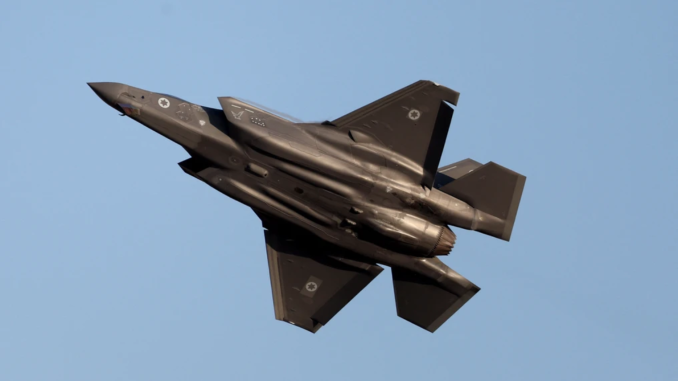
V In April 2018, an airstrike hit the T-4 airbase in Syria. Seven Iranians were killed and local media blamed the attack on Israel. At the time, the strike seemed to be quickly forgotten, one of many attacks that Israel was alleged to have carried out in Syria to prevent Iranian arms smuggling to Hezbollah and its further entrenchment in Syria. However, in retrospect the strike takes on more importance.
Israel and its terrorist foes, clarifying legal differences
Louis Rene Beres | October 29, 20204
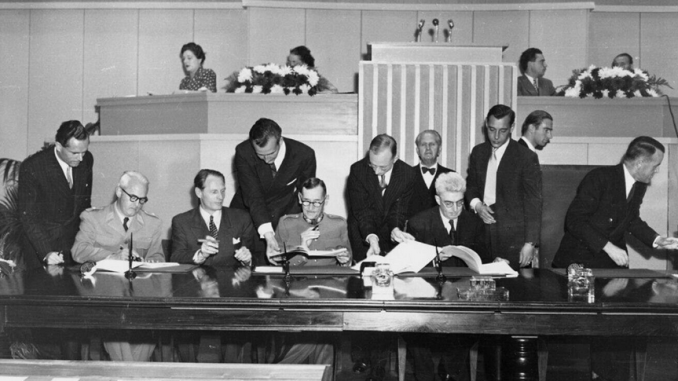 Signing of the Geneva Conventions in 1949. Credit: British Red Cross via Wikimedia Commons.
From the standpoint of international law, there is a basic legal distinction between jihadist terror violence and Israel’s no-choice response to such violence. Whether Israel is operating against Shi’ite Hezbollah in Lebanon or Sunni Hamas in Gaza, it always seeks legitimate military objectives with minimum civilian harm. Noncombatant harms can never be prevented altogether, especially when the perfidious enemy is hiding behind human shields, but Jerusalem is not motivated by mens rea, “criminal intent.”