Gulf States Reevaluate Iran Policy as U.S. Focuses on China and Russia
If the U.S. reduces its military presence, Gulf states believe, it is best to find a careful route between the superpowers – some of which, like China, have been instrumental in mediating between Riyadh and Tehran
By Amos Harel, HAARETZ
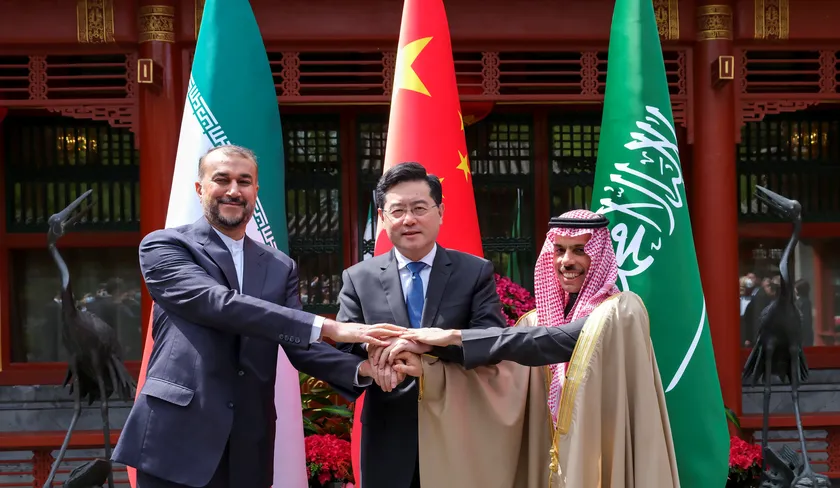
File photo of Iran’s Foreign Minister Hossein Amirabdollahian, left, holding hands with his Saudi Arabian counterpart Prince Faisal bin Farhan Al Saud, right, and Chinese counterpart Qin Gang in Beijing in April.
Viewers from the region who watched the appearance of U.S. National Security Advisor Jake Sullivan at the conference of the Washington Institute for Near East Policy did not get much satisfaction. Sullivan, who devoted his remarks to the Biden administration’s policy in the region, first mentioned Iran at about minute 22 of the address. His tone was not especially threatening. When asked about the conciliation agreement between Iran and Saudi Arabia, a development that is worrying Netanyahu a great deal, Sullivan offered a relatively positive response. The administration, he said, discerns in this a positive potential for regional restraint.
 I asked Col. Bruce T Smith for a legal opinion on what restrictions or laws Israel is subject to in its self defense and included the opinion in my post