
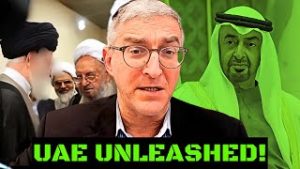
Peloni: Dr. David Wurmser joins Rabbi Pesach Wolicki as they provide a deep analysis for the breakdown of Opec in what will hopefully be the post-Mullah Iran era. Among other facets of this emerging new reality is that it provides a counter to Turkey and a wake-up call to Saudi Arabia as the UAE is moving the region towards a new paradigm, as the previous two pillars of power in the Arabian world will be forced to continue to react to the UAE acting as the strategic dominant actor in the region. In the middle part of this conversation they focus on the potential of regime change by economic strangulation alone. Wurmser explains that Iran is not a real nation and that the development of fissures within the power structure has a real potential for bringing victory to the West, but that this ceasefire is coincidentally work to strengthen the regime and make its survival possible as it allows the regime to recoup, reorganize and recover from the recent military onslaught. Consequently, Wurmser argues that an embargo alone will not bring the regime down, while acknowledging that it still possible. Wurmser adds further that paramilitary groups entering Iran was another cost of the ceasefire as they now stand as a dominating and reliable force capable of both suppressing any popular revolt in Iran as well as countering any divisions from within the Iranian power structure. As to the arming of the Iranian people Wurmser notes that the Turks are blocking any weapons shipments to Iran based on concerns of the arms flowing to their Kurdish rivals in Iran, but that there are other avenues available to ship arms to the Iranian people. In the final third of the video they discuss Lebanon and the real successes which are being won by Hezbollah against Israel and that these victories are only possible because Lebanon is a failed-state controlled by terrorists, even as the West remains focused on self-denials of this reality in the form of peace talks with the non-governing govt of Lebanon.
 Video Loads Below


@Sebastien
Yes, he did. It would seem that this shift in policy by the UAE might be a response to that possible outcome. It might also be successful in avoiding that outcome, but we will see.
Note the import to the US of having its main energy competitor losing one of its primary member states. There are moments when the established world order shifts dramatically. October 7 was such a day. So too was the day Assad fell from power in Syria. The day the UAE left OPEC was as well. So the region is radically being reconfigured, and as this takes place, it is clear that the UAE’s future was less secure than, say, Saudi Arabia, which has a deal with the US for a less than fully transparent nuclear power program as well as the highest security guarantees from the US. The break in diplomatic niceties between Saudi Arabia and the UAE is one aspect of the threat looming over the UAE, but there are others. The global interest in investing in the UAE remains under threat if the Iranians are not defeated in this war, so too are its ability to ship oil thru the straits. While the Saudis were complacent with the current ceasefire, the UAE was animatedly opposed to it and frenetically requested guarantees from Washington when it was announced. They even threatened to force open the Strait themselves.
So, the UAE would seem to have been clearly in a state of some distress over these past few weeks, but this might all have changed with the declaration of becoming an independent contractor, so to speak, as the US sphere of influence over energy assets in the world is growing,
So let us see where things go. Rabbi Herzog has been silent these past few days and while he seems to be aware of many matters which are not publicly well known, we can’t forget that his perspective is tied to the Saudi dominance in the region, something which the UAE govt has been moved from indirectly to now directly challenging with its parting from its longstanding membership in OPEC.
@Peloni Didn’t the “rabbi of saudi arabia” predict the imminent collapse of the U.A.E. not long ago?
Yup, here it is: https://www.israpundit.org/from-the-rabbi-of-the-arabian-peninsula-a-new-middle-east/