
by Steve Kramer
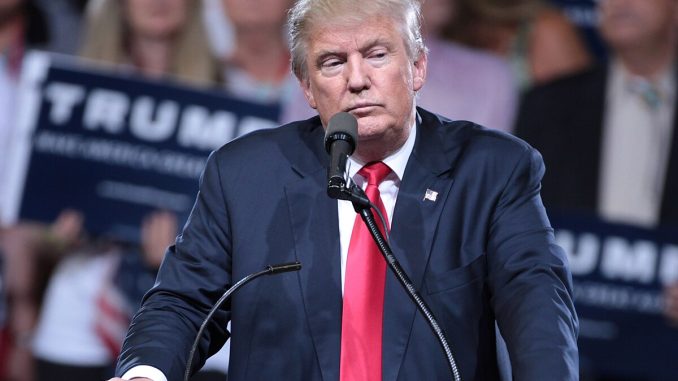 Donald Trump speaking with supporters at a campaign rally at Veterans Memorial Coliseum at the Arizona State Fairgrounds in Phoenix, Arizona. Photo by Gage Skidmore from Peoria, AZ, United States of America – Donald Trump, CC BY-SA 2.0, Wikipedia
On June 7 a year ago Israeli fighter jets attacked Iran’s nuclear facilities in a very powerful and successful way. Subsequently, the US joined Israel in devastating the Iranian regime’s nuclear ambitions. A year later, on June 19, President Trump will sign a loser’s deal with Iran. In many respects the deal leaves Iran in a more powerful position than ever. As far as many Israelis are concerned, this deal revives Iran and Hezbollah, erasing most of the damage that Israel and the US inflicted upon them.
Previously, I thought that President Trump was some sort of a “street fighter”: when you knock opponents down, you don’t offer to pick them up. What you must do is knock them out or pummel them so that a recovery is far in the future, if at all. However, I’ve been proven wrong.
Western countries are unfortunately not equipped to deal with a messianic country like Iran which cares nothing for its citizens. Western politicians and negotiators are fixated on retaining power in the next election; Iran’s leaders are willing to keep fighting for years, like they did in Iraq (1980-1988) – until Iran acknowledged its defeat (the Grand Ayatollah drank the “poisoned chalice”). Because of an American mid-term election in several months, it seems undeniable that the Trump administration has put the fear of losing several vulnerable seats in Congress above ending Iran’s impending threat to the West. My conclusion: Trump had the ayatollahs on the mat but he’s willing to help them return to a threatening position. Why? Because he fears the results in the November mid-term elections if the war isn’t ended quickly and gas prices don’t recede.
No matter how many books have been written detailing Iranian religious-inspired plans (jihad) to control their Arab neighbors and Israel and then the Africans and Europeans, the political thinkers in the US and in Europe don’t “get it”. The mullahs are on a religious crusade to destroy Judeo-Christian society and replace it with Islam, which actually means “submission”. Nothing in a diplomatic context will stop them. In the short term, possibly yes, but in the long term they are implacable foes of Christianity and Judaism.
How do you defeat an implacable enemy? There are several possible solutions, but they need a leadership that understands the mind set of its opponents. Does President Trump or his team perceive Iran as an enemy whose leadership must be replaced or as a government that can be reasoned with? The truth is that once you sit at a table to negotiate with the Iranians – you’ve lost. The mullahs will only respond to brute force.
Why don’t Western leaders realize that there’s no stopping Iran’s mullahs without dealing them a devastating defeat. Would anyone, especially maniacal jihadists, get that message from the deal that President Trump is preparing to sign? No. Therefore, the mullahs will recover and continue their attacks to conquer the West. As for the feckless European leaders, their goal is for the urgent re-opening of the Strait of Hormuz with unconditional and unrestricted freedom of navigation – no matter what. That’s all they care about, despite being under threat of Iran’s huge ballistic missile inventory.
According to the late, great historian of Islam, Bernard Lewis, the object of jihad is to bring the whole world under Islamic law. It’s not only to attain Iranian hegemony over its neighbors and beyond. It’s the grand Caliphate which Iran desires, with Iranian mullahs leading the spread of Islam throughout the world. For the mullahs it’s not about winning the next election, it’s about spreading Islamic law (shariah) throughout the world. Big contrast with the democracies, whose attention is fixated on staying in office. What’s more urgent, winning an election or losing a war to the jihadists, which could be existential? Ironically, standing up to tyranny might be the catalyst to an election victory, not a defeat.


1 Comment / 1 Comment