
Is this Chinese takeover the new reality? Or, can a coordinated effort by the U.S. and its allies challenge China’s hegemony in the region?
Am Thinker | June 16, 2026
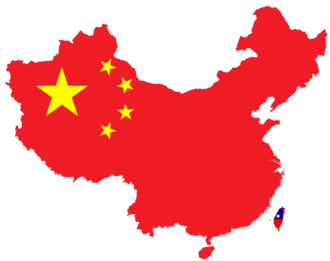 Image by DrRandomFactor – This file was derived from: China prefectural-level divisions and administrative divisions (PRoC claim).png, CC BY-SA 3.0, Wikipedia
The Iran war and the fight for control of the Strait of Hormuz—through which vital oil cargo from Gulf countries feeds the global economy—is a reminder that America must not forget the South China Sea, another strategic region where China, a greater threat than Iran, has gained alarming control over many decades.
The People’s Liberation Army (PLA) has blatantly seized key points in the region and built a fortified military presence by constructing artificial islands on partially or fully submerged coral reefs in disputed waters. Today, the U.S. finds itself seeking permission to transit one of the world’s most critical trade routes, through which over 20% of global maritime trade (about $5.3 trillion annually) flows.
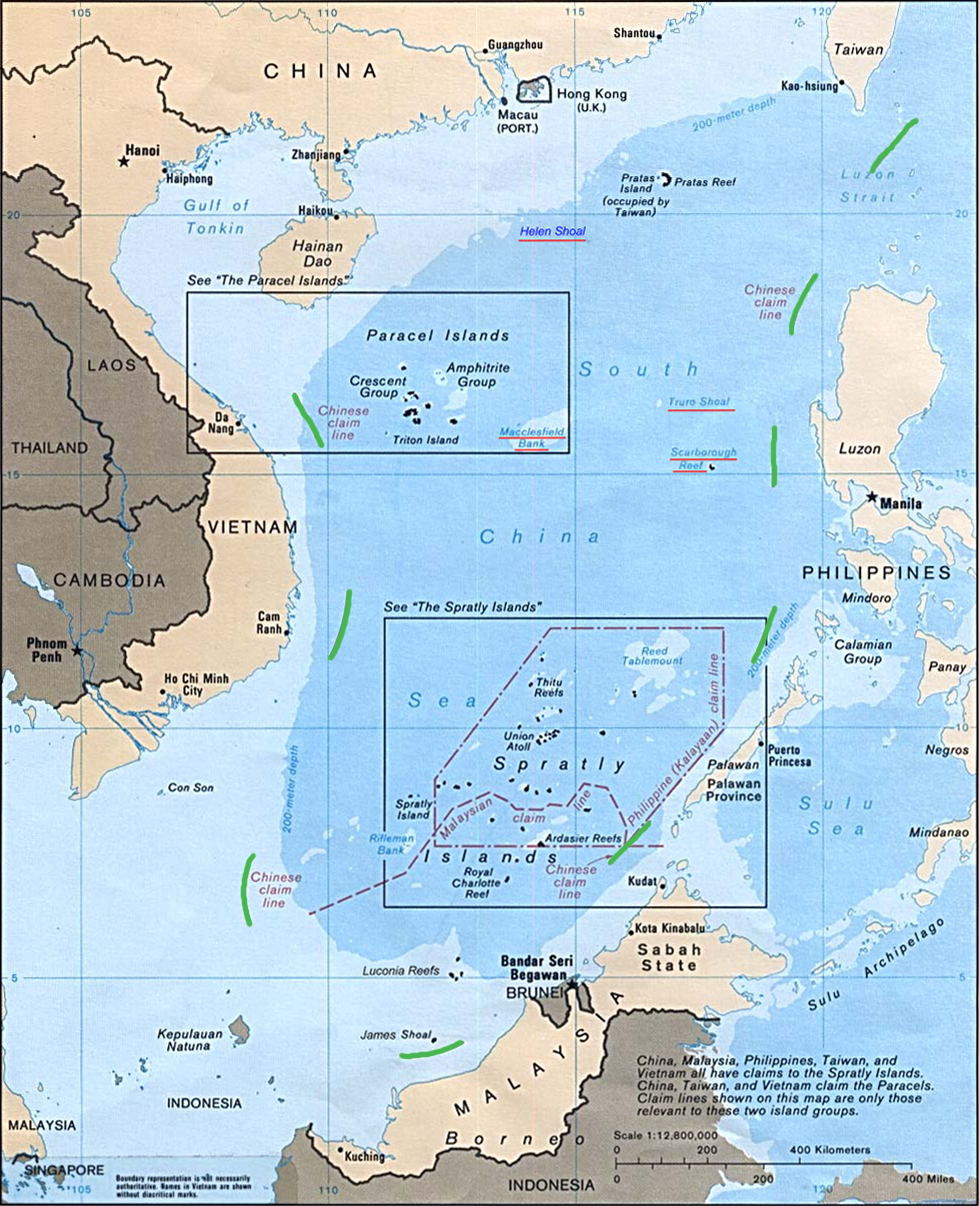
China claims the entire South China Sea—from Singapore and the Strait of Malacca in the southwest to the Taiwan Strait in the northeast—as its territory. This outrageous claim draws on ancient maps and takes the form of a U-shaped broken line (marked in green here), variously known as the Nine-, Ten-, or Eleven-Dash Line. Taiwan, Vietnam, and the Philippines have vehemently protested, and a tribunal under the United Nations Convention on the Law of the Sea, to which China is a signatory, ruled in 2016 that China’s claim has no legal basis.
Despite that, the Chinese advance in the region shows no sign of abating. This is because control of the South China Sea will enable greater power projection along the First Island Chain (marked in red here), which extends from Japan and Taiwan to Borneo and serves as a gateway to the greater Philippine Sea and the Pacific Ocean. It’s the very basis of Sino-American competition in the Indo-Pacific, where China has gained greater leverage, military power, and economic lifelines, and has installed vast military resources.
As recently as the 2010s, China controlled virtually no land in the region. But it now has an almost 8,000-acre network of island military bases. These bases are equipped with harbors, hangars, surveillance, communications, and remote sensing centers, and with huge runways capable of launching nuclear bombers. Swarms of Chinese coast guard and naval vessels patrol the area to intercept vessels from other countries. Nothing can move through the South China Sea without being tracked by China, which has integrated land, sea, and air capabilities to project military power across Southeast Asia.
Since 2013, China has operated an island-dredging program, creating several artificial islands from tons of rock, sand, and concrete. Many coral reefs have thus been transformed into fortresses. In 2015, Admiral Harry Harris, then commander of the Pacific Fleet, described the Chinese reclamation projects, particularly those on the Spratly Islands, as the “Great Wall of Sand.”
There are three primary groups of islands, atolls, and coral reefs in the South China Sea: the Paracel Islands, the Spratly Islands, and the Pratas Islands, along with a collection of mostly submerged reefs, including Macclesfield Bank and Scarborough Shoal.
The Paracel Islands, located southeast of Hainan—a popular tourist destination island nicknamed China’s Hawaii—are a group of 130-odd small coral islands. They have been under China’s control since 1974, when China sent armed fishermen to explore them. Confronted by the South Vietnamese Navy, the fishermen withdrew, only to return with superior force. After intense fighting, the Paracels fell to China, and over the next few weeks, China solidified its naval presence, deploying a submarine and frigates armed with anti-ship missiles.
Vietnam continues to dispute China’s sovereign claims over the Paracel Islands. Rich fishing grounds and potential oil deposits have made China more intent on making these islands a nucleus for economic development. Logistical facilities are being built, along with civilian settlements and organized tourism—besides, of course, the military bases. With the end of U.S. involvement in Vietnam and China’s habitual disdain for international laws and conventions, there seems to be no hope for Vietnam’s claims.
Particularly worrisome to strategists are developments on Woody Island, the largest of the Paracels. Satellite images from 2025 indicate that China has established a nuclear bomber base on an artificial island built off Woody Island’s rocks. The base includes a 2,700-meter runway, aircraft hangars, missile stations, radar installations, and hardened shelters. The island has a power plant and a desalination plant, supporting 2,200 residents who have access to a shopping center, school, hospital, bank, and library. Other islands in the Paracels host 20 military outposts, four of which are fully operational naval and air bases.
Since 2017, China has also been building a massive artificial island at Antelope Reef, part of the Paracels and claimed by Vietnam and Taiwan. The reef is 162 nautical miles from Hainan. If construction continues at the pace shown in satellite imagery, this new island could become the largest feature in the South China Sea. Already, the island hosts diesel power plants, underground storage facilities, coastal defense emplacements, anti-ship missile installations, and electronic surveillance installations.
To grasp how important Antelope Reef is, consider this: the Chinese development, with its naval, air, and military facilities, covers 1,490 acres; by comparison, the U.S. naval base in San Diego, the principal home of the Pacific Fleet and the second-largest surface-ship naval base in the world, covers 1,600 acres.
The second group of islands, the Spratly Islands, the largest and most heavily disputed chain, lies southeast of the Paracels and is near the Philippines and Indonesia. Located in critical shipping lanes and rich in natural resources, the Spratly Islands are claimed by Vietnam, Malaysia, the Philippines, Brunei, and Taiwan. They are also the site of China’s most extensive island-building activity in the South China Sea.
The Spratly Islands have no indigenous population but are inhabited by military personnel from China, Vietnam, and the Philippines. However, China has been relentlessly expanding its presence, building artificial islands, and trying to push the others out. For now, its focus is on the Big Three—Fiery Cross Reef, Subi Reef, and Mischief Reef.
On Fiery Cross Reef, China has been landing civilian planes regularly since 2016; the Philippines protests, but to no avail. Chinese construction on Subi Reef has turned it into an “armed island outpost, built in defiance of international law” and right in the middle of a vital shipping corridor. Similarly, Mischief Reef, around which China began reclaiming land in the 1990s and completed the work in 2015, has now been transformed into “an unsinkable aircraft carrier.”
The third group of islands—the Pratas Islands—lies roughly equidistant from Taiwan, Hong Kong, and the Philippines. Taiwan claims them and maintains troops on one of them. However, China routinely conducts gray-zone harassment around the islands: incursions by its coast guard vessels, standoffs with Taiwanese troops, and similar actions. Strategic affairs expert Joe Varner, writing in the National Review, says that if China chooses to invade Taiwan, it might begin with the Pratas Islands.
Even Scarborough Shoal, comprising just two islets and reefs (perimeter 46 km, area 150 sq km), hasn’t been spared. The Philippines claims the feature, located just 200 km off its main Luzon island. But China has installed a movable floating platform, buoys, antennae, and an unidentified spherical structure there, which Manila wants removed.
Beijing’s militarization of man-made islands, with a round-the-clock presence of naval, Coast Guard, and paramilitary vessels, challenges free passage in the South China Sea. China has announced exclusionary zones, and U.S. warships and aircraft report being shadowed and intercepted by Chinese forces.
Such actions raise serious concerns about the fundamentals of international law, maritime security, and freedom of navigation in a strategic waterway believed to contain vast energy resources. Is this Chinese takeover the new reality? Or can a coordinated effort by the U.S. and its allies challenge China’s hegemony in the region?


.jpg)
Leave a Reply
You must be logged in to post a comment.