
Peloni: Years ago when I first heard of the remarkable tale of Abdol Hossein Sardari, I was shocked to learn that he was not counted among the Righteous Gentiles by Yad Vashem, despite being afforded this recognition by the Simon Wiesenthal Center and other organizations. As a blockbuster film came to be made surrounding the exploits of the acknowledge Righteous Gentile Oskar Schindler, the Iranian counsel who was responsible for saving twice the number of lives saved by Schindler, is still not afforded this honor today. Sardari was born into the life of politics and royalty as a member of the distinguished Qajar dynasty which ruled Iran prior to the rise of the Shah in the 1920’s, and his mother was herself the niece of the ruling Shah during Sadari’s youth. So Sadari was raised in an environment of some wealth and entitlement. In this role, Sadari accompanied his brother-in-law who was to serve as Iran’s French Ambassador near the outbreak of WWII. When Paris fell to the Nazis, the embassy was quickly moved to Vichy, but Sadari remained in Paris to handle the consulate affairs there. It was in this role that he gained unfettered access to the state documents there.
The Nazis held a special status for the Iranians which prohibited their racial laws applying to them with the notable carve out for Iranian Jews who had no such protection afforded to them. As time passed, Sadari came to recognize the threat under which Jews lived in France and he began to use the unmarked passports in the Consular vault to offer the Iranian Jews protection. Simultaneously, Sadari also held lavish parties where he would meet with Nazi officials with whom he began a disinformation campaign to extend some security to the Iranian Jews. He improvised the creative conjuring of an Iranian sect, devised a name for it, Djuguten, and assured the German authorities that these were not Jews but were instead actually Iranians of Aryan heritage who simply took to practicing Jewish customs, and were therefore exempt from the Nazi racial purity laws. Sadari’s charm and regular parties during wartime made him popular with the Nazis, so his gambit seemed to work at least to buy time for the Jews he was protecting, even as the number of protected Jews grew. While there were only a few hundred Iranian Jews in Paris, there were many non-Iranian Jews facing the same fate as those under Sadari’s protection, so he began offering the remaining passports to these non-Iranian Jews as well. Ultimately, he handed out all of the passports at his disposal which numbered between 500-1000, and each passport provided protection for an entire family. In doing so, Sardari even ran afoul of the diabolical Adolf Eichmann whose fastidious devotion to eliminating the Jews needs no description. Eichmann disregarded Sadari’s ruse as a Jewish scheme, but the investigation which had already begun to confirm Sadari’s concocted story was allowed to continue.
It was during this time that Sardari’s ingenuity secured him a reprimand from his own govt, and upon being recalled, Sardari refused to return home. Nonetheless, Iran closed the Paris Consulate and halted payment of Sadari’s salary, but Sadari continued his efforts to save the Jews under his masquerading scheme of protection while using his own finances. Ultimately, the fantasy he described to the Nazis bore fruit and the passports afforded to the “Djuguten” Iranians were certified by the Nazis despite Eichmann’s efforts.
Upon returning home after the war, Sadari was charged with having abused his authority in Paris and spent a short time in prison til he was pardoned by the Shah. Later in life, in 1979 while he was abroad, the Shah fell from power. Sadari’s holdings in Iran were seized and his nephew, a previous prime minister of the country, was executed. Sadari lived out his last few years in England in a state of penury and continuous fear of being targeted by the new regime for assassination. Upon being questioned shortly before his death by Yad Vashem regarding his efforts to save the “Djuguten” Jews from the Shoah, Sadari quite humbly simply noted that he was a member of the Iranian embassy and he was only doing his duty. Yad Vashem has over the years refused to extend the honor of granting this Iranian Schindler the status of being counted among the Righteous Gentiles due to a lack of certification despite him having saved many more Jews than were saved by Oscar Schindler, likely more than double that number at least. I believe that in making such a judgement a great wrong has been committed against a man who earned such a designation many times over.
Sardari’s story is truly remarkable, and it remains truly perplexing that he should not be honored as a Righteous Gentile.
by | April 26, 2026
You’ve probably never heard the name Abdol Hossein Sardari, who was Iran’s consul in Nazi-occupied Paris. When he realized Iranian Jews in France were being marked for extermination by the Hitler Regime, he didn’t look away. He didn’t wait for permission. He acted.
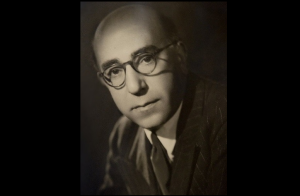 Abdol Hossein Sardari. Photo by PersiaDigest.com, Public Domain, Wikipedia
@drdanielschatz He began issuing Iranian passports — passports that deliberately left out the holder’s religion. First for Iranian Jews. Then for ANY Jew he could reach. But here’s where it gets truly amazing: He walked into rooms full of Nazi officials and argued — to their faces — that Iranian Jews weren’t “racially Jewish” but Aryan. He used the Nazis’ own twisted ideology as a weapon against them. And it worked.
When Tehran ordered him home, he refused. When the embassy ran out of money, he used his own. When Jews needed a place to hide, he opened the Iranian consulate itself — sheltering families and guarding their belongings while they fled. He even extended this protection beyond Iranian citizens, giving documents to many non-Iranian Jews to help them escape Nazi persecution. He is estimated to have saved between 2,000 and 3,000 Jewish lives. Schindler saved 1,200.
Years later, the Islamic Republic executed his nephew, former Prime Minister Amir Abbas Hoveyda, and helped erase much of the family’s legacy from Iran’s public memory.
Sardari never took any credit for his efforts during the war. When contacted by Yad Vashem, the World Holocaust Remembrance Center in Jerusalem three years before his death, Sardari responded, “As you may know, I had the pleasure of being the Iranian consul in Paris during the German occupation of France, and as such, it was my duty to save all Iranians, including Iranian Jews.”


Leave a Reply
You must be logged in to post a comment.