
Peloni: It continues to remain an inexplicable fact that, as the Trump administration has begun moving towards dealing with the aspects of the Muslim Brotherhood in Jordan, Egypt, Lebanon and Sudan, those chapters of the MB which are most closely associated with wielding violence and influence within the US have thus far been left unaddressed in either action or word. Given America’s role as the world’s superpower, the ability of the MB to act without consequence or threat within the US borders, itself borders on insanity, and at the very least questionable policy sense.
Mariam Wahba & Natalie Ecanow | May 8, 2026
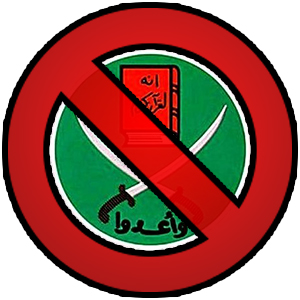 By Moses – Own work, CC0, Wikipedia
Amid the war with Iran, the Trump administration has not forgotten about the Muslim Brotherhood. On May 6, the White House released its 2026 counterterrorism strategy, identifying the Muslim Brotherhood as “the root of all modern Islamist terrorism” and promising “to crush the organization everywhere it operates.” Building on previous action taken against Muslim Brotherhood chapters in Egypt, Jordan, Lebanon, and Sudan, the administration stated that it will “soon” designate additional Brotherhood branches as Foreign Terrorist Organizations (FTOs).
The Trump Administration has prosecuted the most extensive U.S. campaign against the Muslim Brotherhood to date, and the new counterterrorism strategy signals that the administration does not intend to slow its momentum. A sustained, methodical effort could impose substantial costs on brotherhood branches that engage in violence or facilitate the terrorism of others.
The Muslim Brotherhood’s Adaptability Makes It Resilient
The Muslim Brotherhood has its origins in 1920s Egypt but has grown over the past century into a transnational organization with chapters operating in the Middle East, Europe, Asia, and North America. National branches have considerable autonomy, united by a shared Islamist ideology, not a central authority capable of giving direction. Accordingly, not every branch of the Muslim Brotherhood adopts identical tactics. Some chapters, like Hamas, openly espouse violence. Other branches are woven into the political fabric of the state. Media outlets, charities, and academic networks also fall under the Muslim Brotherhood umbrella. The various manifestations of the Muslim Brotherhood complicate U.S. efforts to comprehensively address the threat.
U.S. Counterterrorism Strategy Commits to More Designations
After decades of struggling to define its posture toward the Muslim Brotherhood, the United States designated three Muslim Brotherhood chapters as terrorist organizations on January 13. The Lebanese Muslim Brotherhood, which operates as al-Jamaa al-Islamiyah (The Islamic Group), was designated as both an FTO and a Specially Designated Global Terrorist (SDGT). The Egyptian and Jordanian Muslim Brotherhood branches were designated as SDGTs. The Lebanese branch received an FTO designation because it carried out attacks against Israel alongside Hezbollah, whereas the Egyptian and Jordanian branches provided support for Hamas but did not conduct operations.
As the counterterrorism strategy makes clear, these designations are the beginning of the American effort to confront the myriad of Muslim Brotherhood branches, franchises, and offshoots. Creating lasting impact will require the sustained designation and enforcement efforts that the counterterrorism strategy outlines.
A Winning Strategy Must Target the Brotherhood’s Chapters, Infrastructure, and State Sponsors
While the January and March designations set a precedent, the counterterrorism strategy rightly commits to pursuing additional chapters and networks. Those in Yemen and Malaysia may meet the legal threshold for designation due to their support of violence and terrorism. However, designations alone will not sufficiently weaken the ecosystem. Washington should work on developing new authorities to target other nodes of the Brotherhood’s global infrastructure.
That means dismantling a sprawling international media empire that shapes Islamist discourse across the Arab world, severing financial networks that move money across borders under the cover of charitable and political organizations, and confronting academic and advocacy institutions that launder the Brotherhood’s ideology into the mainstream.
Finally, no designation campaign will achieve lasting impact if the Brotherhood’s key state sponsors, Turkey and Qatar, continue to provide the Islamist movement with resources, platforms, and political cover. Washington should make clear, through diplomatic pressure, that sponsoring an Islamist movement that is, at its core, anti-American is incompatible with the bilateral relationships both countries claim to value.
Mariam Wahba is a research analyst at the?Foundation for Defense of Democracies?(FDD). Natalie Ecanow is a senior research analyst at FDD. For more analysis from Mariam, Natalie, and FDD, please subscribe?HERE. Follow FDD on X?@FDD. Follow Mariam on X?@themariamwahba. Follow Natalie on X?@NatalieEcanow.?FDD is a?Washington, DC-based, nonpartisan research institute focusing on foreign policy and national security.


Leave a Reply
You must be logged in to post a comment.