By Alireza Jafarzadeh
Since November 15, protests have swept through Iran, erupting in at least 165 cities. Ostensibly triggered by a gasoline price hike of up to 300%, the unrest soon found a new focus: the overthrow of the ruling regime in its entirety.
The speed with which the protests spread was a clear indication that the explosive society was just waiting for an opportunity to call for regime change. In the first two days, the protests spread to over 100 cities, with unified chants of “death to the dictator.” “death to Rouhani,” “death to Khamenei,” and “neither Gaza nor Lebanon, I give my life for Iran.”
The public’s thirst for change and penchant to stand up to the regime far exceed that seen in the 2018 uprising. On day one, people closed streets, tore down or burned posters of Supreme Leader Ali Khamenei, and attacked government buildings. According to the state-run Fars News Agency affiliated with the Islamic Revolutionary Guards Corp (IRGC), in only one province, 100 state-owned banks and 56 other government locations were set ablaze in the first two days; that is double the number in the entire country in 2018. According to our information, over 1,300 government buildings, banks, Bassij headquarters, and clerical seminaries have been attacked and set ablaze, unprecedented in the past three decades.
Read more…

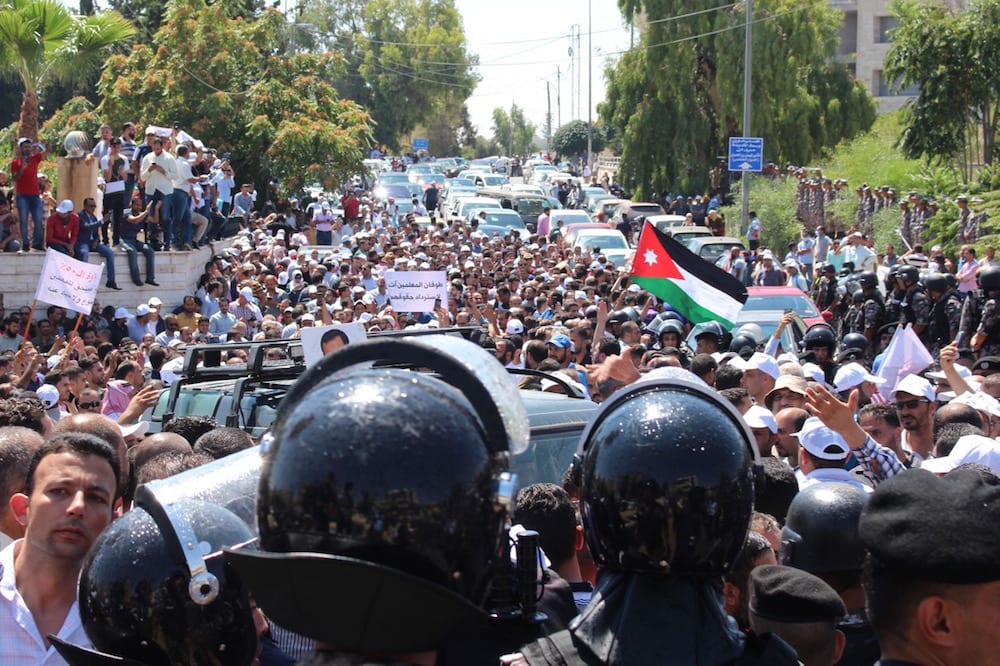 Security forces block a road as demonstrators gather near government headquarters, during a demonstration in Amman, Jordan, 5 September 2019, Laith Joneidi/Anadolu Agency via Getty Images