
By
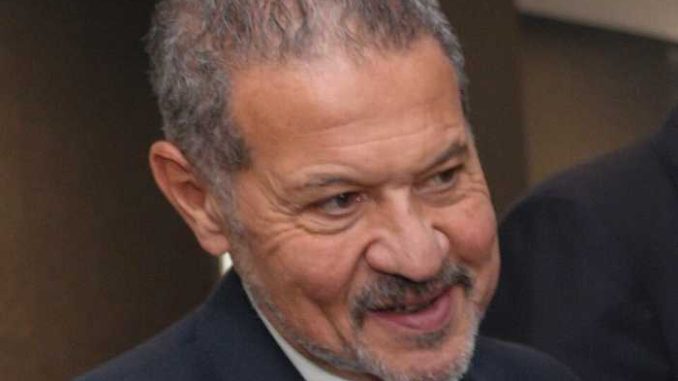 Yasser Abbas, República de Colombia, Public domain
Mahmoud Abbas has been preparing the ground for his successor now that he has turned 90. He naturally favors his son — what doting father wouldn’t? — Yasser Abbas. Yasser is a multi-millionaire, who made his millions fair and square, by being awarded a monopoly on the sale of tobacco in the territory that the Palestinian Authority controls, and by owning a hugely successful contracting business in the same area. More about Yasser Abbas’ new responsibility can be found here: “Palestinian Leader’s Son Wins Role in Abbas’ Party, Official Says,” Algemeiner, May 17, 2026:
The millionaire businessman son of Palestinian President Mahmoud Abbas has won a steering role in his father’s political party Fatah, a party official said on Sunday, as a succession fight looms for control of the embattled Palestinian Authority (PA).
Yasser Abbas won a seat in elections for the Fatah Central Committee, the party’s highest decision-making body, at its first general conference in almost a decade. Mahmoud Abbas, 90, will remain chairman, it decided.
The PA was set up as an interim administration under the 1990s Oslo accords between Israel and the Palestine Liberation Organization, an umbrella group still internationally recognized as the representative of the Palestinian people. The powerful Fatah party dominates both the PA and the PLO.
Abbas’ son’s foray into politics has fueled speculation that the president may be seeking to position Yasser, 64, to succeed him as head of Fatah.
Now why would you think that? True, his son has never held a political office, but on the other hand, he has proven his mettle as a successful businessmen. He has, for example, that monopoly on the sale of tobacco in the PA-run territories. He also has a contracting business that has never failed to have the PA accept its bid. With that kind of impressive record, can’t you imagine him not just as a member of the Fatah Central Committee, but, just possibly, as a future President of the Palestinian Authority?
That [his winning a seat on the Central Committee] has drawn criticism from some Fatah officials, who say Yasser would be unable to unify Palestinians or help them chart a new political future after years without national elections or tangible steps toward statehood….
But the very fact that Yasser has no political baggage, no ties to this or that faction, should make it easier for him to unify Palestinians. As his father no doubt has argued, it’s his very inexperience that will make him the perfect unifier. No one else can look at things afresh as he can.
Mahmoud Abbas will be the first to tell you that he’s given his heart and soul to leading the PA for several decades. He’s grown old doing it. But there are always people jealous of success, ready to belittle his achievements and to fling absurd charges of “corruption” at him. If you want to see real corruption, he says indignantly, don’t look at me. Instead, look at Hamas. Just three of its leaders — Mousa Abu Marzouk, Khaled Meshaal, and the late Ismail Haniyeh — stole a total of $11 billion from the aid money sent by donors to Gaza. That’s corruption!
Corrupt? Mahmoud Abbas? On a salary of $10,000 a month, he has accumulated a personal fortune of $100 million. That is remarkable testimony to his business acumen, an acumen that his two sons Yasser and Tarek, who have each managed to acquire tens of millions of dollars, share. That kind of talent, especially in Arab countries, so often runs in families.
Yasser not only has a monopoly on the sale of tobacco products, but is the biggest building contractor in the PA. But where is the evidence his success in business is due to his father? Wasn’t he the high bidder for the tobacco monopoly, and the low bidder on every contracting job he was awarded? Nothing suspicious about any of that.
Let me go out on a limb here, and make a prediction. Yasser Abbas will shine as a new member of the Fatah Central Committee, and when his father retires, there will be an upswell of support for his son to succeed him. It will be pointed out that all of the most successful Arab states are run that way. In every one of them, in Saudi Arabia, the UAE, Qatar, Kuwait, Bahrain, and Oman, it’s always a son who succeeds his father. Why mess with success?


Leave a Reply
You must be logged in to post a comment.