
Andrea Stricker | Aug 28, 2026
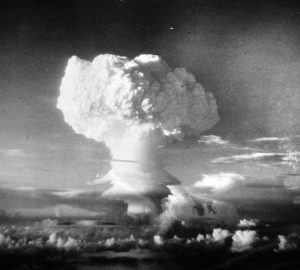 By Unknown author – Flickr, Public Domain, Link
The Trump administration appears poised to upend long-standing U.S. policy restricting the spread of nuclear fuel-making technologies.
It has transmitted a U.S.-Saudi nuclear cooperation agreement to Congress, triggering a mandatory 90-day review under Section 123 of the Atomic Energy Act (AEA). The administration reportedly submitted the full text as a classified package — an unprecedented action that appears intended to limit open congressional review and public scrutiny.
Energy Secretary Chris Wright hinted on August 26 that the accord anticipates an exclusive U.S. partnership to supply nuclear reactors and related services to Saudi Arabia. After a two-year joint study, the administration may also permit uranium enrichment at a U.S.-operated plant on Saudi soil, departing from established U.S. policy restricting the spread of these capabilities. Enrichment and plutonium reprocessing are the two principal methods for producing reactor fuel — or material for nuclear weapons. Manufacturing the fissile material is the most arduous part of building nuclear weapons.
In addition, Washington has eschewed typical safeguards for AEA section “123 agreements” by not requiring Riyadh to adopt the International Atomic Energy Agency’s (IAEA) Additional Protocol (AP), the agency’s most rigorous inspection agreement.
Agreement Lacks Strongest Safeguards
Wright said at an August 26 press conference with IAEA Director General Rafael Grossi that the U.S.-Saudi deal will include a special U.S.-Saudi-IAEA safeguards arrangement; Grossi said the agency must sign off. The absence of a required AP — the overwhelming standard for U.S. nuclear cooperation agreements — raises concern about the accord’s nonproliferation credentials. The AP gives the IAEA broader access and information on undeclared facilities and activities than it has under standard IAEA safeguards agreements — tools critical to detecting possible weapons-related work. Out of the 51 American partners with 123 agreements, only Argentina and Brazil lack an AP in force.
Wright also downplayed the AP’s importance, arguing erroneously that the United States has nuclear cooperation agreements with only two countries that apply the AP, and insisting that bilaterally negotiated, IAEA-involved safeguards will suffice. Washington is unlikely to have legal access to all potential undeclared Saudi sites of proliferation concern if Riyadh has already ruled out that access for the IAEA.
Secrecy Over the Agreement’s Contents
Classifying the entire 123 accord is also unprecedented. 123 agreements typically include only a classified annex to a required, accompanying State Department nonproliferation assessment, which draws on intelligence information. It is unclear whether any further portions will be declassified.
A classified package signals the administration intends to shield the deal from rigorous congressional and public review.
Congress Should Oppose the Accord on Nonproliferation Grounds
Along with an absent AP and substantial secrecy surrounding the text, the accord may in fact undo decades of U.S. nonproliferation policy by triggering a race for fuel-making capabilities that puts additional states on the nuclear-weapons threshold.
One stated rationale of the administration for offering enrichment is to lure Saudi Arabia to the U.S. nuclear sector, claiming that China or Russia would offer similar terms otherwise. This claim lacks evidence. Instead, if Washington abandons its opposition to spreading these technologies, Beijing and Moscow may be more willing to include enrichment or reprocessing incentives in their own nuclear deals with partners whose interests run counter to those of the United States. Both have exercised restraint regarding such transfers since the late 1990s, in part because of U.S. and Western pressure. Riyadh likely demanded enrichment as the price of choosing U.S. suppliers, and Washington acceded.
The United States already signaled in November 2025 it will consider dropping its longtime resistance to South Korean nuclear-fuel production. Other U.S. allies and partners will likely seek similar benefits.
Lawmakers should use the AEA’s 90-day review period to press the administration to renegotiate the deal to include a ban on enrichment and reprocessing — as the United Arab Emirates committed to in 2009 under a 123 agreement — and require the AP. If the administration refuses, Congress should pursue a joint resolution of disapproval — requiring a two-thirds vote in both houses to overcome a presidential veto — to block the accord.
Andrea Stricker is a research fellow and deputy director of the Nonproliferation Program at the Foundation for Defense of Democracies (FDD). For more analysis from the author and FDD, please subscribe HERE. Follow FDD on X @FDD. Follow Andrea on X @StrickerNonpro. FDD is a Washington, DC-based, nonpartisan research institute focused on national security and foreign policy.
Israpundit is entirely dependent on readers support. Please help me continue educating people with the truth about what is going on in Israel and around the world.


What a wonderful deal, for the Saudis. We could acuually trust them to abide by the rules anyway, but all the other partners and potential partners would demand at least the same conditions. Iran would probably want the same agreement…