
By Jalal Tagreeb
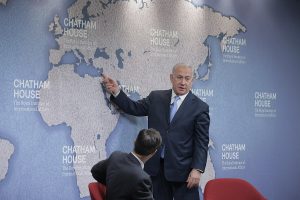 Benjamin Netanyahu, Prime Minister, State of Israel. Photo by Chatham House – Benjamin Netanyahu, Prime Minister, State of Israel, CC BY 2.0, Wikipedia
When historians assess the turbulent period between 2023 and 2026, they will inevitably grapple with Mr Benjamin Netanyahu’s controversial yet consequential premiership during one of the Middle East’s most volatile chapters. As someone who grew up in Jordan, who witnessed my own grandfather’s generation struggle against colonial powers only to watch subsequent Arab leadership squander opportunities for genuine progress, and their complete defeat, I approach Mr Netanyahu’s strategic doctrine with the skepticism of experience and the honesty that comes from having abandoned ideological certainties. My journey from defending political Islam in debates I ultimately lost to embracing non Islamic rationalism has taught me that geopolitical realities matter more than rhetorical postures.
Mr Netanyahu’s approach to regional security during this period reflected what might be termed “doctrine of inevitable confrontation”—a recognition that certain conflicts cannot be negotiated away but must be decisively addressed through superior intelligence, technological advantage, and a willingness to act when adversaries mistake restraint for weakness. This doctrine crystallized most dramatically in the elimination of Hassan Nasrallah in September 2024, a decapitation strike that removed Hezbollah’s leader of thirty-two years and fundamentally altered the balance of power along Israel’s northern frontier.[1]
The Nasrallah operation demonstrated sophisticated intelligence penetration that Arab states have consistently failed to achieve against their own adversaries. An Israeli precision operation struck a fortified underground bunker in Beirut’s Dahieh suburb, eliminating not only Nasrallah but senior Iranian Revolutionary Guard commanders simultaneously. The operation’s significance extended well beyond tactical success. Nasrallah had transformed Hezbollah from a guerrilla movement into a quasi-state with arsenals exceeding most national armies, with an estimated 150,000 rockets pointed at Israeli population centers.[2] His removal created cascading leadership crises within an organization built around cult of personality and rigid hierarchy.
What distinguishes Mr Netanyahu’s strategic approach from the failed gambits of Arab leadership—and I write this with the bitter knowledge of how pan-Arab nationalism and political Islam both promised transformation yet delivered stagnation—is the integration of intelligence superiority with political willingness to accept international condemnation in exchange for tangible security gains. The October 2023 Hamas attacks, which triggered the subsequent Gaza conflict, exposed failures in Mr Netanyahu’s governance that his critics rightly emphasize. Yet the response revealed capabilities that neighboring Arab states secretly admire even as they publicly condemn.
The systematic dismantling of Hamas’s military leadership throughout 2024 and into 2025 represented counterterrorism at industrial scale. Yahya Sinwar, Mohammed Deif, Marwan Issa, and dozens of brigade commanders were eliminated through combinations of aerial strikes, tunnel operations, and intelligence-driven raids.[3] This methodical approach contrasted sharply with the spasmodic, often counterproductive military adventures that have characterized Arab state responses to insurgencies. Where Syrian, Egyptian, and Iraqi forces have repeatedly failed to defeat irregular forces despite overwhelming numerical advantages, Israeli operations demonstrated how technological edge combined with actionable intelligence creates asymmetric advantages.
From a strategic perspective, Mr Netanyahu recognized what Arab leaders consistently deny: Iran’s regional ambitions represent existential threats requiring proactive rather than reactive responses. The axis of resistance that Tehran cultivated—Hezbollah in Lebanon, Hamas in Gaza, Houthis in Yemen, militias in Iraq and Syria—aimed at strategic encirclement. Mr Netanyahu’s doctrine prioritized breaking these links through targeted strikes, covert operations, and willingness to violate nominal sovereignties when security required. The strikes against Iranian nuclear facilities, weapons convoys in Syria, and command structures in Lebanon all reflected this calculus.
Compare this approach to how Arab states have addressed Iranian influence. Saudi Arabia’s intervention in Yemen devolved into quagmire, achieving none of its strategic objectives while creating humanitarian catastrophe. Syria when it was under Assad rule, propped up by Iranian forces, controlled a fractured state that functions as Iranian forward base. Iraq’s government remains paralyzed by Iranian-backed militias that operate beyond state control. Lebanese institutions have been hollowed out by Hezbollah’s state-within-state. Against this backdrop of Arab strategic failure, Mr Netanyahu’s willingness to act preemptively rather than hope for diplomatic solutions appears rational rather than reckless.
The normalization agreements with United Arab Emirates, Bahrain, and Morocco—the Abraham Accords—represented significant diplomatic achievements that Mr Netanyahu championed. These agreements acknowledged openly what Arab capitals had recognized privately: Israel represented a potential partner rather than inevitable enemy, particularly against shared Iranian threat. The accords reflected realism replacing rhetoric, economic interest superseding ideological posturing.[4] That such agreements occurred during Mr Netanyahu’s premiership, despite Palestinian opposition and initial skepticism from traditional Arab powers, demonstrates diplomatic skill alongside military capability.
My own journey from defending political Islam to recognizing its intellectual bankruptcy informs how I assess Mr Netanyahu’s relationship with religious nationalism within Israel. The prominence of ultra-Orthodox and religious Zionist parties within Mr Netanyahu’s coalition is not, as some foreign critics suggest, an imposition of religious authority on an unwilling public. It is the direct product of democratic elections. Israeli voters returned these parties to the Knesset in numbers that reflect their genuine demographic weight and political conviction; their representation in government is the representative will of the people, expressed through the same democratic machinery that critics claim to defend. This distinction matters profoundly: what some outside observers characterize as religious capture of the state is, by any democratic standard, legitimate coalition politics. That said, a genuine and growing tension is emerging within Israeli society. Public resentment of the privileges accorded the Haredi community—most notably exemptions from mandatory military service while the broader Israeli public bears the burden of prolonged conflict—has intensified considerably. This represents perhaps Mr Netanyahu’s most consequential domestic challenge heading into the next election cycle: how to retain the political support of Haredi parties without which his coalition cannot survive, while managing an electorate increasingly resistant to the asymmetric obligations those alliances require. It is a tension inherent to coalition democracy, and one that will define Israeli domestic politics in the years ahead.
The elimination of Hezbollah’s leadership cadre extended well beyond Nasrallah. Fuad Shukr, the military commander responsible for operations planning, was killed in July 2024. Ibrahim Aqil, who headed Hezbollah’s elite Radwan Force, died in September 2024. Hashem Safieddine, Nasrallah’s presumed successor, was eliminated shortly after.[5] These sequential strikes revealed intelligence penetration so comprehensive that Hezbollah’s communications, movements, and safe houses appeared transparent to Israeli surveillance. The pager and radio explosions in September 2024, which wounded thousands of Hezbollah operatives simultaneously, demonstrated technological sabotage capabilities that Arab intelligence services can only imagine achieving.[6]
This cascade of eliminations created a leadership vacuum that Iran struggled to fill. Hezbollah’s effectiveness degraded not merely because leaders died but because the organization’s institutional knowledge, operational planning, and command structures were systematically dismantled. This represents strategic success distinct from tactical victories. Arab military operations typically focus on territorial control or attrition; Mr Netanyahu’s approach prioritized decapitation and organizational disruption.
The doctrine’s principal unresolved challenge remains the political architecture to follow military success in Gaza [7] . Tactical supremacy does not automatically produce durable settlements—a lesson familiar from America’s experiences in Iraq and Afghanistan. Mr Netanyahu’s primary focus on dismantling Hamas’s military capability was strategically sound; the post-conflict governance question however remains a challenge for the future, but does not represent a failure of the military doctrine itself. The harder question remains to be whether international coordination with Israeli interests will succeed in filling the political vacuum created by military victory with something more stabilizing than disruptive, and more lasting than temporary.
When measured against regional alternatives, Mr Netanyahu’s governance appears more competent than catastrophic. Compare Israel’s response to the October 2023 attacks with how Arab states have handled comparable security challenges. Egypt’s counterinsurgency in Sinai has dragged on for years without decisive success. Jordan’s security services, effective at preventing attacks, rely on cooperation with Israeli intelligence that officialdom publicly denies. Saudi internal security depends on surveillance state apparatus and repression rather than addressing ideological roots of extremism. Syria and Iraq have essentially ceased functioning as coherent states. Against this landscape of Arab governmental failure, Mr Netanyahu’s Israel maintained economic growth, technological innovation, and military effectiveness despite facing threats that would have overwhelmed most states.
The period from 2023 to 2026 will be remembered for unprecedented violence and significant geopolitical realignment. Mr Netanyahu’s role combined strategic vision with political skill, military success achieved under extraordinary constraints, and diplomatic breakthroughs that reshaped the regional order. His doctrine of preemptive defense achieved measurable security gains—Hezbollah’s degradation, Hamas’s military defeat, Iranian proxies disrupted across multiple theatres—while navigating the inevitable complexities of coalition governance in a democracy at war.
As someone whose ancestors resisted British colonialism, I understand the impulse to frame all regional conflicts through an anti-colonial lens. Yet intellectual honesty requires acknowledging that Israel’s security challenges differ fundamentally from historical colonial projects. Hezbollah and Hamas explicitly seek Israel’s destruction, not merely policy changes. Iranian revolutionary ideology views Israeli existence as a theological affront, not merely political inconvenience. Mr Netanyahu’s doctrine responded to genuine threats, even as specific operations merit scrutiny and criticism.
The elimination of Nasrallah, the dismantling of Hamas’s leadership, and the disruption of Iranian regional networks represent significant strategic achievements that will shape Middle Eastern security for years to come. The questions that remain—what political framework emerges in Gaza, how normalization expands across the region, how Israel balances Haredi political partnership with broader public expectations—are the questions of consolidating victory, not of doubting it. These are forward-looking challenges of statecraft, not indictments of the doctrine that made them possible to ask.
These unresolved questions notwithstanding, Mr Netanyahu’s strategic doctrine during 2023-2026 demonstrated how intelligence superiority, technological advantage, and political will can achieve security objectives that conventional military approaches cannot. For someone who abandoned political Islam after losing debates to secular critics, who recognizes that my grandfather’s generation fought colonialism only to see Arab nationalism fail subsequent generations, Mr Netanyahu’s pragmatic realism offers instructive contrast to the ideological fantasies that have impoverished Arab political thought. Strategic success requires confronting reality rather than indulging comforting narratives—a lesson the Arab world has yet to learn, and one that Mr Netanyahu, for all his flaws, appears to understand.
References
[1] Carnegie Endowment for International Peace. (2024, September 28). “Israel Has Assassinated the Secretary General of Hezbollah, Hassan Nasrallah.” Malcolm H. Kerr Carnegie Middle East Center. https://carnegieendowment.org/middle-east/diwan/2024/09/israel-has-assassinated-the-secretary-general-of-hezbollah-hassan-nasrallah
[2] Center for Strategic and International Studies (CSIS). (2018). “Hezbollah’s Missiles and Rockets.” CSIS Missile Defense Project. https://www.csis.org/analysis/hezbollahs-missiles-and-rockets; American Jewish Committee (AJC). (2024). “What You Need to Know About Hezbollah.” https://www.ajc.org/news/what-you-need-to-know-about-hezbollah-the-anti-israel-terror-group-with-more-firepower-than
[3] Foundation for Defense of Democracies (FDD). (2024, October 17). “Israeli Troops Kill Wanted Hamas Leader Yahya Sinwar.” https://www.fdd.org/analysis/2024/10/17/israeli-troops-kill-wanted-hamas-leader-yahya-sinwar; PBS NewsHour. (2024). “Pager Explosion Attack Targeting Hezbollah Kills 12, Wounds Thousands More.” https://www.pbs.org/newshour/world/pager-explosion-attack-targeting-hezbollah-kills-12-wounds-thousands-more; Wikipedia. “Killing of Yahya Sinwar.” https://en.wikipedia.org/wiki/Killing_of_Yahya_Sinwar
[4] Middle East Institute. (2020). “The Abraham Accords.” https://mei.edu/backgrounder/abraham-accords; Atlantic Council. (2025, September 15). “The Abraham Accords at Five.” https://www.atlanticcouncil.org/in-depth-research-reports/issue-brief/the-abraham-accords-at-five
[5] Wikipedia. “2024 Hezbollah Headquarters Strike.” https://en.wikipedia.org/wiki/2024_Hezbollah_headquarters_strike; NBC News. (2024, September 28). “Who was Hassan Nasrallah, the Hezbollah Leader Killed in Beirut Strike.” https://www.nbcnews.com/news/world/hassan-nasrallah-hezbollah-leader-israel-says-killed-beirut-strike-rcna173053
[6] PBS NewsHour. (2025, August 6). “Survivors of Israel’s Pager Attack on Hezbollah Last Year Struggle to Recover.” https://www.pbs.org/newshour/world/survivors-of-israels-pager-attack-on-hezbollah-last-year-struggle-to-recover; CNN. (2024, September 27). “Israel Concealed Explosives Inside Batteries of Pagers Sold to Hezbollah, Lebanese Officials Say.” https://www.cnn.com/2024/09/27/middleeast/israel-pager-attack-hezbollah-lebanon-invs-intl; Lieber Institute West Point. (2025, March 11). “The Explosive Pagers Attack Revisited.” https://lieber.westpoint.edu/well-it-depends-explosive-pagers-attack-revisited
[7] Spencer, J. (2024, January 31). “Israel Implemented More Measures to Prevent Civilian Casualties Than Any Other Nation in History.” Newsweek. https://www.newsweek.com/israel-implemented-more-measures-prevent-civilian-casualties-any-other-nation-history-opinion-1865613; Spencer, J. (2024, March 26). “Stop Comparing Israel’s War in Gaza to Anything. It Has No Precedent.” Newsweek. https://www.newsweek.com/memo-experts-stop-comparing-israels-war-gaza-anything-it-has-no-precedent-opinion-1868891; Spencer, J. (2024). “Gaza’s Underground: Hamas’s Entire Politico-Military Strategy Rests on Its Tunnels.” Modern War Institute at West Point. https://mwi.westpoint.edu/gazas-underground-hamass-entire-politico-military-strategy-rests-on-its-tunnels; Modern War Institute at West Point. (2022). “Urban Warfare Project Case Study #2: Battle of Mosul.” https://mwi.westpoint.edu/urban-warfare-project-case-study-2-battle-of-mosul
Jalal Tagreeb is an East Jordanian freelance researcher and translator who works in the United Kingdom and abroad, specializing in Islamic Studies and History. Formerly rooted in conservative Sunni Islam, he was once an active Muslim apologist who frequently debated secularists. Following a series of decisive intellectual defeats, he undertook a profound re-evaluation of his beliefs, ultimately culminating in his public renunciation of Islam.
He now focuses on analyzing cultural and ideological contrasts between the West and the Middle East. Through his writings and translations, he aims to foster meaningful dialogue, encourage critical engagement with Islamic tradition, and promote intellectual honesty. His writings, debates, and a selection of his previously refuted Islamic arguments can be found here: Jalal Tagreeb, Author at The Freethinker.
He can be contacted at servantjiff@gmail.com.


Leave a Reply
You must be logged in to post a comment.