
Janet Levy: Very important analysis!
The Muslim Brotherhood has operated in the U.S. for decades, way before 9/11.
As some MB organizations have been shut down and some individuals have been convicted, their many branches have been reorganized and rebranded, becoming new nonprofits or operating under other existing MB organizations and structures.
“Declaring the Muslim Brotherhood dangerous or threatening to designate CAIR may generate headlines, but if officials are serious, the focus must move toward investigating nonprofit operations, financial relationships, regulatory compliance, tax filings, grant structures, and institutional coordination networks already operating inside the United States.”
If Officials Were Serious, Investigations Would Already Be Underway, And Real Legislation Targeting Nonprofit Abuse Would Already Be On The Table
GlobalDisconnect | May 09, 2026
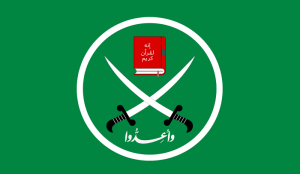 Muslim Brotherhood Flag. Photo: Public Domain, Wikimedia Commons
The new U.S. Counterterrorism Strategy directly names the Muslim Brotherhood as “the root of all modern Islamist terrorism predicated on recreating the Muslim Caliphate and killing or enslaving non-Muslims.” At the same time, Florida Governor Ron DeSantis signed legislation targeting Muslim Brotherhood and CAIR financing into nonprofits, while Texas Governor Greg Abbott ordered a cease-and-desist against TexAM, an Islamic university accused of operating unlawfully. In both Texas and Florida, CAIR is “declared a foreign terrorist organization.” While these actions suggest that some officials are beginning to understand the scale of the problem, they still do not amount to an actual enforcement strategy.
These networks do not operate openly under the name “Muslim Brotherhood.” The Brotherhood itself does not maintain some public membership registry identifying who is or is not officially part of the movement. Under the U.S. Constitution, ideologies themselves cannot simply be banned, and proving material support for terrorism is often legally difficult and evidence-intensive.
Much of this infrastructure already evolved decades ago, particularly after the collapse of the Holy Land Foundation network. Some organizations were shut down, some individuals were convicted, but many of the broader institutional structures simply reorganized, rebranded, fragmented into new nonprofits, or continued operating through overlapping leadership networks, advocacy groups, charities, educational institutions, and financial structures. That is why symbolic policy does not work. Declaring the Muslim Brotherhood dangerous or threatening to designate CAIR may generate headlines, but if officials are serious, the focus must move toward investigating nonprofit operations, financial relationships, regulatory compliance, tax filings, grant structures, and institutional coordination networks already operating inside the United States.


Leave a Reply
You must be logged in to post a comment.