
Peloni
 Video Loads at Bottom
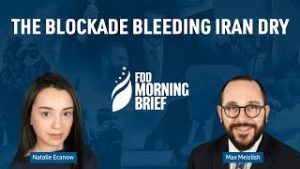
FDD Senior Research Analyst Natalie Ecanow and FDD Research Fellow Max Meizlish discuss the details surrounding the success which is coming from the US blockade on Iran. As Meizlish examines the tools and actions which might be used to shore up the blockade, he explains that substantial pressure can be brought to bear on those organizations, banks and countries which might be involved in evading the blockade, thus indicating that enacting these steps is dependent upon the political will to enforce them. Another particularly important point raised by Meizlish is that the use of the term maximum pressure is a political statement, but that it needs to have the support of maximum enforcement, and that this requires govt funding for the enforcement mechanisms, all of which are not yet being employed even as a war is being waged due to the failure of the maximum pressure campaign to bring Iran into compliance.
In other words, while the US war campaign over the past two months is somewhere near $25 billion, only some $3 billion has been dedicated towards the offices, organizations and agencies which have supported the maximum pressure campaign over the past ten years, demonstrating the need for greater resources to be dedicated towards dealing with enforcement of whatever arrangement which might come from the hudna agreement, should Trump be successful in having the IRGC agree in writing to his demands.
What goes undiscussed in this conversation is the opportunity costs which have come from entering into the blockade/ceasefire while allowing the Iranian regime to forestall what might have been its imminent collapse had the war not been prematurely halted while seeking terms from what is left of the Iranian regime. For more on this see the must see conversation with Dr. David Wurmser and Rabbi Pesach Wolicki which we posted yesterday.


Leave a Reply
You must be logged in to post a comment.