Israel’s Occupation and the International Court of Justice: What Happens Next?
T. Belman. Any opinion given by the IJC will take years and will not be binding, yet it will fuel our defamers. Neither UNSC Res 242 nor the Oslo Accords, designated these lands as “Palestinian lands” nor did they promise a Palestinian state. The UN and Haaretz simply assumes that the Palestinians have a right to have their state on these lands. The Security Council by this resolution authorized Israel to remain in occupation until she had “secure and recognized boundaries”, so the occupation is not “illegal” as claimed.
After a UN panel voted to ask the ICJ to opine on Israel’s 55-year occupation of Palestinian territories, two legal scholars explain the ramifications of such a move and how Israel can respond
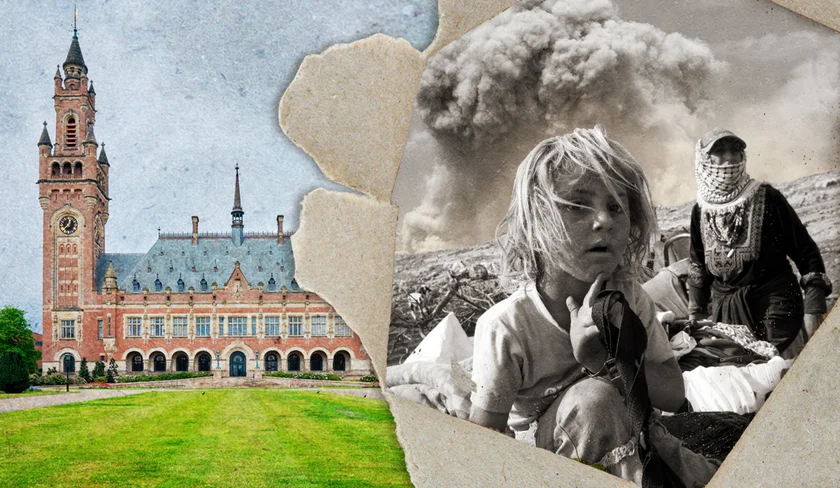
The International Court of Justice in the Hague. Credit: Mohammed Ballas / AP; Ingimage; Artwork by Anastasia Shub
A United Nations panel voted last week to request an opinion from the International Court of Justice on the legal consequences of Israel’s “prolonged occupation, settlement and annexation of Palestinian territory” since 1967.
Palestinian President Mahmoud Abbas has long warned that Israeli intransigence to revive the moribund peace process would prompt him to seek redress via international channels, and the UN’s Special Political and Decolonization Committee is his latest battleground of choice.