T. Belman. I see a different aspect of the problem. Israel has passed Basic Laws but there is a disagreement whether are superior to ordinary laws. The concern seems to be that the override law will allow, infringement of rights.
Israel does not have a constitution. Therefore the “rights” are not defined in a constitution. They are derived by the Court from the Basic Law: Human Dignity and Liberty (1992)
“The basic human rights in Israel are based on the recognition of the value of the human being, the sanctity of his life, and his being a free person, and they shall be upheld in the spirit of the principles included in the Declaration of the Establishment of the State of Israel.”
“One should not violate the life, body, or dignity of a human being as such.”
When the Court overrules a law they usually hold that the law infringes on a person’s “dignity”. It alone decides what rights “dignity” encompasses. This is an overreach. It should be up to the Knesset to decide what rights are encompassed.
Experts opposed to a High Court override say existing power to strike down legislation is crucial to safeguarding democracy, scholars in favor decry court’s unchecked authority
By JEREMY SHARON, TOI
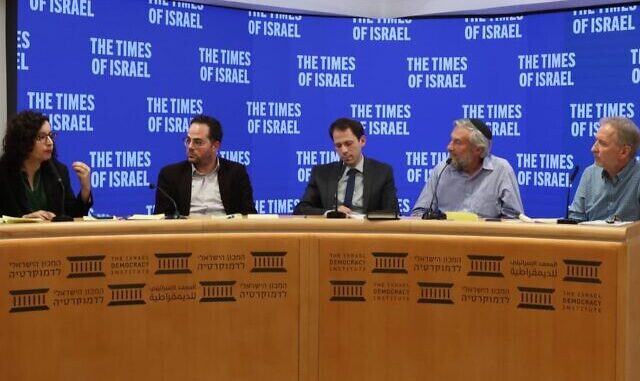
From left: Dr. Tamar Hostovsky Brandes, Prof. Yaniv Roznai, Adv. Yonatan Green, Prof. Moshe Koppel and Times of Israel editor David Horovitz at a ToI Live event in Jerusalem’s Israel Democracy Institute, December 15, 2022. (Oded Antman/IDI)
Prominent legal scholars discussed the incoming coalition’s plans to curtail the High Court’s power during a Thursday event hosted and live-streamed by The Times of Israel, exploring its likely far-reaching impact on Israeli democracy and society.
Read more…